Datenquellen:
PubChem, NIST Chemistry WebBook, CRC Handbook of Chemistry and Physics (103rd ed.)
Zuletzt aktualisiert: 2026-06-25
Regulatorischer Status der Substanz
Keine Einträge für diese CAS-Nummer in den geprüften Beschränkungslisten (SVHC-Kandidatenliste, REACH Anhang XVII; Datensätze unvollständig – dies ist keine Konformitätsbestätigung). CLP-Einstufung und Transportstatus (ADR): siehe Abschnitt GHS und Sicherheitsdatenblatt (SDS).
📚 Bibliografia książkowa oczekuje na wygenerowanie. Kuratowane podręczniki ogólne są dostępne poniżej; specyficzne dla CAS książki Google Books można pobrać z panelu administratora.
National Institute of Standards and Technology. 2024. "NIST Chemistry WebBook, SRD 69." Gaithersburg, MD: NIST. Accessed 2025-01-01. ↗
Spectral Database for Organic Structure Determination (SDBS). 2024. National Institute of Advanced Industrial Science and Technology (AIST), Japan. Accessed 2025-01-01. ↗
Ulrich, Eldon L., Hideo Akutsu, John F. Doreleijers, Yoko Harano, Yannis E. Ioannidis, Jundong Lin, Miron Livny, et al. 2008. "BioMagResBank." Nucleic Acids Research 36 (D1): D402–D408. [DOI ↗]
Horai, Hisayuki, Masanori Arita, Shigehiko Kanaya, Yoshito Nihei, Tasuku Ikeda, Kazuhiro Suwa, Yuya Ojima, et al. 2010. "MassBank: A Public Repository for Sharing Mass Spectral Data for Life Sciences." Journal of Mass Spectrometry 45 (7): 703–714. [DOI ↗]
Linstrom, P.J., and W.G. Mallard, eds. 2024. NIST Chemistry WebBook, NIST Standard Reference Database Number 69. Gaithersburg, MD: National Institute of Standards and Technology. ↗
McDonald, M. Shane, Mike McAvoy, and Ajit Bhalerao. 1988. "JCAMP-DX: A Standard Form for Exchange of Infrared Spectra in Computer Readable Form." Applied Spectroscopy 42 (1): 151–162. [DOI ↗]
PubChem. 2024. "PubChem Compound Database." National Library of Medicine, National Institutes of Health. Accessed 2025-01-01. ↗
Spektren werden bei Bedarf aus 9 Quellen abgerufen. Jedes Spektrum wird in unserer Datenbank gespeichert — beim nächsten Öffnen erfolgt keine Anfrage an die externe API. Laden Sie JCAMP-DX / CSV / PNG zu jedem Spektrum herunter, ohne zu suchen.
Daten werden über MolGod_Spectra_Remote_Fetcher (JCAMP-DX-Parser) abgerufen und in der Tabelle wp_molgod_spectra_cache gespeichert. Keine doppelten Downloads, keine erneuten Anfragen an NIST bei späteren Aufrufen. Lizenzen werden eingehalten (veröffentlicht wird nur ein Deep-Link plus eigene Visualisierung).
Daten werden live aus mehreren Quellen abgerufen (Priority-Chain). JCAMP-DX / CSV / PNG stehen unter jedem Spektrum zum Download bereit. ⓘ Eine Quelle ★★☆☆☆ⓘ Eine Quelle ★★☆☆☆
IR — Fourier-Transform-Infrarot
IR — Fourier-Transform-Infrarot wird geladen…
MS — Massenspektrometrie (EI 70eV)
MS — Massenspektrometrie (EI 70eV) wird geladen…
MolGod_DFT_SP5
🧮 Vergleich DFT vs. Experiment (IR)
Überlagerung des experimentellen IR-Spektrums mit dem theoretisch berechneten Spektrum nach der B3LYP/6-31G*-Methode (Skalierungsfaktor 0.9614, Scott & Radom 1996).
Becke, Axel D. 1993. "Density-Functional Thermochemistry. III. The Role of Exact Exchange." Journal of Chemical Physics 98 (7): 5648–5652. Definition des B3LYP-Funktionals.
Scott, Anthony P., and Leo Radom. 1996. "Harmonic Vibrational Frequencies: An Evaluation of Hartree–Fock, Møller–Plesset, Quadratic Configuration Interaction, Density Functional Theory, and Semiempirical Scale Factors." Journal of Physical Chemistry 100 (41): 16502–16513. Skalierungsfaktoren für DFT (z. B. 0.9614 für B3LYP/6-31G*).
Merrick, Jeffrey P., Damian Moran, and Leo Radom. 2007. "An Evaluation of Harmonic Vibrational Frequency Scale Factors." Journal of Physical Chemistry A 111 (45): 11683–11700. Aktualisierung von Scott & Radom — Skalierungsfaktoren für neuere DFT-Funktionale.
Lee, Chengteh, Weitao Yang, and Robert G. Parr. 1988. "Development of the Colle-Salvetti Correlation-Energy Formula into a Functional of the Electron Density." Physical Review B 37 (2): 785–789. LYP-Korrelation — Ergänzung zu Becke 1993 für B3LYP.
Hehre, Warren J., Robert Ditchfield, and John A. Pople. 1972. "Self-Consistent Molecular Orbital Methods. XII. Further Extensions of Gaussian-Type Basis Sets." Journal of Chemical Physics 56 (5): 2257–2261. Definition des 6-31G*-Basissatzes (Split-Valence + Polarisation).
Johnson, Russell D., III, ed. 2022. "NIST Computational Chemistry Comparison and Benchmark Database (CCCBDB)." NIST Standard Reference Database 101, Release 22. https://cccbdb.nist.gov. Benchmark für theoretische Werte — Ausweichlink im Widget.
Cramer, Christopher J. 2004. "Essentials of Computational Chemistry: Theories and Models." 2nd ed. Chichester: Wiley. Lehrbuch zu DFT-Methoden und der Berechnung von Schwingungsfrequenzen.
Jensen, Frank. 2017. "Introduction to Computational Chemistry." 3rd ed. Chichester: Wiley. Moderne Computerchemie — Basissätze und Methoden für Schwingungsspektren.
Foresman, James B., and Æleen Frisch. 2015. "Exploring Chemistry with Electronic Structure Methods." 3rd ed. Wallingford, CT: Gaussian, Inc. Praktischer Gaussian-Leitfaden — IR + Raman + NMR mittels DFT.
MolGod_SPECGUIDE_SP6
🎓 Leitfaden zur Spektreninterpretation (für Studierende)
Automatisch generierte Erläuterungen zu jeder Bande im Spektrum — warum sie dort auftritt, wo sie auftritt, und was sie über die Struktur aussagt.
IR (infrared) (490 Peaks)
Das IR (infrared)-Spektrum enthält 490 identifizierte Banden. Die nachstehende Analyse erläutert, was jede davon strukturell bedeutet und warum sie im jeweiligen Bereich auftritt.
Keine erkannten Gruppen — Banden außerhalb der Standardbereiche.
📚 Bibliografie (Chicago)
Field, Leslie D., Sev Sternhell, and John R. Kalman. 2013. "Organic Structures from Spectra." 5th ed. Chichester: Wiley. Ein studentisches Übungsbuch (Begleiter zum Interpretationsleitfaden).
Williams, Dudley H., and Ian Fleming. 2008. "Spectroscopic Methods in Organic Chemistry." 6th ed. London: McGraw-Hill. Ein Klassiker der narrativen Spektreninterpretation — erklärt, "warum der Peak hier liegt".
Crews, Phillip, Jaime Rodríguez, and Marcel Jaspars. 2009. "Organic Structure Analysis." 2nd ed. New York: Oxford University Press. Ein Workflow für die mehrparametrige strukturelle Interpretation.
McLafferty, Fred W., and František Tureček. 1993. "Interpretation of Mass Spectra." 4th ed. Mill Valley, CA: University Science Books. MS-Fragmentierungsmechanismen — McLafferty-Umlagerung, m/z 29 = CHO.
Reusch, William. 2013. "Virtual Textbook of Organic Chemistry: Spectroscopy." East Lansing, MI: Michigan State University. https://www2.chemistry.msu.edu/faculty/reusch/VirtTxtJml/Spectrpy/spectro.htm. Ein offener didaktischer Leitfaden zu IR/NMR/MS/UV — ideal zur Erläuterung funktioneller Gruppen.
Hesse, Manfred, Herbert Meier, and Bernd Zeeh. 2007. "Spektroskopische Methoden in der organischen Chemie." 8th ed. Stuttgart: Thieme. Das deutsche Standardlehrbuch zur Spektreninterpretation.
Lampman, Gary M., Donald L. Pavia, George S. Kriz, and James R. Vyvyan. 2010. "Spectroscopy." 4th ed. Belmont, CA: Cengage Learning. Ein Arbeitsbuch mit integrierten interpretativen Erläuterungen.
Kalsi, P. S. 2010. "Spectroscopy of Organic Compounds." 6th ed. New Delhi: New Age International. Ein vollständiges Lehrbuch zur Interpretation von IR/NMR/MS/UV-Spektren.
MolGod_MS_SP7
🔎 Spektrensuche (JCAMP-DX)
Laden Sie eine JCAMP-DX-Datei (.jdx, .dx, .jcm) hoch — das System berechnet die Cosine-Ähnlichkeit zu allen Spektren in der Datenbank und zeigt die TOP 10 Treffer an.
📚 Bibliografie (Chicago)
McLafferty, Fred W., ed. 2018. Wiley Registry of Mass Spectral Data. 11th ed. Hoboken, NJ: Wiley. Eine MS-Referenzbibliothek (~775k Spektren).
Stein, Stephen E., and Donald R. Scott. 1994. "Optimization and Testing of Mass Spectral Library Search Algorithms for Compound Identification." Journal of the American Society for Mass Spectrometry 5 (9): 859–866. Der Cosine- und Dot-Product-Algorithmus von NIST MS Search.
McDonald, Robert S., and Paul A. Wilks Jr. 1988. "JCAMP-DX: A Standard Form for Exchange of Infrared Spectra in Computer Readable Form." Applied Spectroscopy 42 (1): 151–162. Die JCAMP-DX-Spezifikation (erweitert auf 5.01 für NMR/MS).
McLafferty, Fred W., and František Tureček. 1993. "Interpretation of Mass Spectra." 4th ed. Mill Valley, CA: University Science Books. Cosine-Similarity-Matching und MS-Fragmentierung — die Grundlage des Suchalgorithmus.
Sumner, Lloyd W., Alexander Amberg, Dave Barrett, Michael H. Beale, Richard Beger, Clare A. Daykin, Teresa W.-M. Fan, et al. 2007. "Proposed Minimum Reporting Standards for Chemical Analysis." Metabolomics 3 (3): 211–221. MSI Level 1-4 — Standards für die Konfidenzstufe des spektralen Matchings.
Stein, Stephen E. 1999. "An Integrated Method for Spectrum Extraction and Compound Identification from Gas Chromatography/Mass Spectrometry Data." Journal of the American Society for Mass Spectrometry 10 (8): 770–781. Der AMDIS-Algorithmus — Dekonvolution + Library-Match (NIST).
Lindon, John C., George E. Tranter, and David W. Koppenaal, eds. 2017. "Encyclopedia of Spectroscopy and Spectrometry." 3rd ed. Amsterdam: Academic Press. Enzyklopädische Einträge zum Thema Spectral Library Searching.
Smith, Brian C. 2011. "Fundamentals of Fourier Transform Infrared Spectroscopy." 2nd ed. Boca Raton, FL: CRC Press. FT-IR und das JCAMP-DX-Format für Transmissionsspektren.
Larkin, Peter. 2017. "Infrared and Raman Spectroscopy: Principles and Spectral Interpretation." 2nd ed. Amsterdam: Elsevier. Grundlagen des IR/Raman-Library-Matchings und der Peak-Vorverarbeitung.
📐Physikalische & chemische Eigenschaften (DB)
8 Felder MolGod-Score: Keine Quelle
Haynes, William M., ed. 2024. CRC Handbook of Chemistry and Physics. 105th ed. Boca Raton: CRC Press/Taylor & Francis. ISBN 978-1-032-55554-4. ↗
National Institute of Standards and Technology. 2024. "NIST Chemistry WebBook, SRD 69." Gaithersburg, MD: NIST. Accessed 2025-01-01. ↗
Yaws, Carl L. 2014. The Yaws Handbook of Physical Properties for Hydrocarbons and Chemicals. 2nd ed. Oxford: Gulf Professional Publishing.
PubChem. 2024. "PubChem Compound Database." National Library of Medicine, National Institutes of Health. Accessed 2025-01-01. ↗
Marrero, J., and R. Gani. 2001. "Group-Contribution Based Estimation of Pure Component Properties." Fluid Phase Equilibria 183–184: 183–208. ↗
Joback, K. G., and R. C. Reid. 1987. "Estimation of Pure-Component Properties from Group-Contributions." Chemical Engineering Communications 57 (1–6): 233–243. ↗
Sangster, J. 1997. Octanol-Water Partition Coefficients: Fundamentals and Physical Chemistry. Chichester: Wiley. ISBN 978-0-471-97397-3.
Mannhold, Raimund, and Han van de Waterbeemd. 2001. "Substructure and Whole Molecule Approaches for Calculating Log P." Journal of Computer-Aided Molecular Design 15 (4): 337–354. ↗
Perrin, Ditlev D., Boyd Dempsey, and E. P. Serjeant. 1981. pKa Prediction for Organic Acids and Bases. London: Chapman and Hall. ISBN 0-412-21090-5.
Constantinou, Leonidas, and Rafiqul Gani. 1994. "New Group Contribution Method for Estimating Properties of Pure Compounds." AIChE Journal 40 (10): 1697–1710. ↗
Ertl, Peter, Bernhard Rohde, and Paul Selzer. 2000. "Fast Calculation of Molecular Polar Surface Area as a Sum of Fragment-Based Contributions and Its Application to the Prediction of Drug Transport Properties." Journal of Medicinal Chemistry 43 (20): 3714–3717. ↗
🔄 Umrechner für Konzentrationseinheiten LIVEMolGod_UNITCONV_1
/* translators: %s, %d itd. to wartosci dynamiczne wstawiane do komunikatu. */
Geben Sie die Konzentration L-tyrosine in einer beliebigen Einheit ein — der Rest wird automatisch berechnet.
Cohen ER, Cvitaš T, Frey JG, Holmström B, Kuchitsu K, Marquardt R, Mills I, Pavese F, Quack M, Stohner J, Strauss HL, Takami M, Thor AJ (2007)
g/L ↔ molarity
c (mol/L) = (g/L) / MW
±0.1% (depends on MW precision)
Cohen ER, Cvitaš T, Frey JG, Holmström B, Kuchitsu K, Marquardt R, Mills I, Pavese F, Quack M, Stohner J, Strauss HL, Takami M, Thor AJ (2007)
mmol/L ↔ molarity
c (mol/L) = mmol/L × 10⁻³
Exact
Cohen ER, Cvitaš T, Frey JG, Holmström B, Kuchitsu K, Marquardt R, Mills I, Pavese F, Quack M, Stohner J, Strauss HL, Takami M, Thor AJ (2007)
Celsius ↔ Kelvin
T(K) = t(°C) + 273.15
±0.01 K (ITS-90 scale)
BIPM (Bureau International des Poids et Mesures) (2019)
Celsius ↔ Fahrenheit
T(°F) = T(°C) × 9/5 + 32
±0.1 °F
Thompson A, Taylor BN (2008)
density-corrected % ↔ molarity
c (mol/L) = (%w/w × ρ × 10) / MW, ρ in g/mL
±0.1% when ρ known to 3 decimals
Cohen ER, Cvitaš T, Frey JG, Holmström B, Kuchitsu K, Marquardt R, Mills I, Pavese F, Quack M, Stohner J, Strauss HL, Takami M, Thor AJ (2007)
📚 Bibliographie (8 autoritative Quellen)
Thompson A, Taylor BN (2008). Guide for the Use of the International System of Units (SI). NIST Special Publication 811 · DOI: 10.6028/NIST.SP.811-2008 → Primary SI standard for US scientific usage
Cohen ER, Cvitaš T, Frey JG, Holmström B, Kuchitsu K, Marquardt R, Mills I, Pavese F, Quack M, Stohner J, Strauss HL, Takami M, Thor AJ (2007). Quantities, Units and Symbols in Physical Chemistry — The IUPAC Green Book. RSC Publishing, 3rd ed. · DOI: 10.1039/9781847557889 · ISBN: 978-0-85404-433-7 → Canonical IUPAC guide for chemistry quantities/units
BIPM (Bureau International des Poids et Mesures) (2019). The International System of Units (SI), 9th edition. BIPM · ↗ → International SI definitions (incl. redefined kilogram 2019)
ISO/IEC (2022). Quantities and units — Part 1: General. International Organization for Standardization — ISO 80000-1:2022 · ↗ → General rules for physical quantities and units
ISO/IEC (2019). Quantities and units — Part 9: Physical chemistry and molecular physics. International Organization for Standardization — ISO 80000-9:2019 · ↗ → Concentration / molality / amount-of-substance conventions
Tiesinga E, Mohr PJ, Newell DB, Taylor BN (2021). CODATA recommended values of the fundamental physical constants: 2018. Rev. Mod. Phys. 93(2):025010 · DOI: 10.1103/RevModPhys.93.025010 → Avogadro, gas constant, molar volume (2019 SI revision)
IUPAC (2019). Compendium of Chemical Terminology — the IUPAC Gold Book (online). IUPAC · DOI: 10.1351/goldbook → Definitions of mass fraction, molality, normality, ppm, activity
Mills IM, Cvitaš T, Homann K, Kallay N, Kuchitsu K (1988). Quantities, Units and Symbols in Physical Chemistry. Blackwell Scientific Publications, 1st ed. · ISBN: 0-632-01773-5 → Historical predecessor of IUPAC Green Book
🧪 Assistent zur Lösungsvorbereitung WIZARDMolGod_PREP_1
Rumble, John R., ed. 2023. CRC Handbook of Chemistry and Physics. 104th ed. Boca Raton, FL: CRC Press. [link ↗]
International Association for the Properties of Water and Steam (IAPWS). 1997. "Release on the Static Dielectric Constant of Ordinary Water Substance." IAPWS R8-97. [link ↗]
Reichardt, Christian, and Thomas Welton. 2011. Solvents and Solvent Effects in Organic Chemistry. 4th ed. Weinheim: Wiley-VCH. https://doi.org/10.1002/9783527632220. [link ↗]
Hansen, Charles M. 2007. Hansen Solubility Parameters: A User's Handbook. 2nd ed. Boca Raton, FL: CRC Press. https://doi.org/10.1201/9781420006834. [link ↗]
IFA. n.d. "Water." GESTIS Substance Database. Institut für Arbeitsschutz der Deutschen Gesetzlichen Unfallversicherung. Accessed April 25, 2026. [link ↗]
Rumble, John R., ed. 2023. CRC Handbook of Chemistry and Physics. 104th ed. Boca Raton, FL: CRC Press. [link ↗]
Reichardt, Christian, and Thomas Welton. 2011. Solvents and Solvent Effects in Organic Chemistry. 4th ed. Weinheim: Wiley-VCH. https://doi.org/10.1002/9783527632220. [link ↗]
Snyder, Lloyd R., Joseph J. Kirkland, and John W. Dolan. 2010. Introduction to Modern Liquid Chromatography. 3rd ed. Hoboken, NJ: Wiley. https://doi.org/10.1002/9780470508183. [link ↗]
Smallwood, Ian M. 1996. Handbook of Organic Solvent Properties. London: Arnold. https://doi.org/10.1016/B978-0-340-64578-9.X5000-9. [link ↗]
Reichardt, Christian, and Thomas Welton. 2011. Solvents and Solvent Effects in Organic Chemistry. 4th ed. Weinheim: Wiley-VCH. https://doi.org/10.1002/9783527632220. [link ↗]
Hansen, Charles M. 2007. Hansen Solubility Parameters: A User's Handbook. 2nd ed. Boca Raton, FL: CRC Press. [link ↗]
Rumble, John R., ed. 2023. CRC Handbook of Chemistry and Physics. 104th ed. Boca Raton, FL: CRC Press. [link ↗]
Smallwood, Ian M. 1996. Handbook of Organic Solvent Properties. London: Arnold. [link ↗]
National Institute of Standards and Technology. n.d. "Methane, dichloro- (CAS 75-09-2)." NIST Chemistry WebBook, SRD 69. Accessed April 25, 2026. [link ↗]
Hansen, Charles M. 2007. Hansen Solubility Parameters: A User's Handbook. 2nd ed. Boca Raton, FL: CRC Press. [link ↗]
International Agency for Research on Cancer. 1999. "Dichloromethane." IARC Monographs on the Evaluation of Carcinogenic Risks to Humans 71: 251–315. [link ↗]
Reichardt, Christian, and Thomas Welton. 2011. Solvents and Solvent Effects in Organic Chemistry. 4th ed. Weinheim: Wiley-VCH. [link ↗]
Armarego, Wilfred L. F., and Christina Li Lin Chai. 2009. Purification of Laboratory Chemicals. 6th ed. Oxford: Butterworth-Heinemann. https://doi.org/10.1016/B978-1-85617-567-8.50003-3. [link ↗]
Hansen, Charles M. 2007. Hansen Solubility Parameters: A User's Handbook. 2nd ed. Boca Raton, FL: CRC Press. [link ↗]
National Institute of Standards and Technology. n.d. "Furan, tetrahydro- (CAS 109-99-9)." NIST Chemistry WebBook. Accessed April 25, 2026. [link ↗]
Smallwood, Ian M. 1996. Handbook of Organic Solvent Properties. London: Arnold. [link ↗]
National Institute of Standards and Technology. n.d. "Hexane (CAS 110-54-3)." NIST Chemistry WebBook. Accessed April 25, 2026. [link ↗]
Hansen, Charles M. 2007. Hansen Solubility Parameters: A User's Handbook. 2nd ed. Boca Raton, FL: CRC Press. [link ↗]
Snyder, Lloyd R., Joseph J. Kirkland, and John W. Dolan. 2010. Introduction to Modern Liquid Chromatography. 3rd ed. Hoboken, NJ: Wiley. [link ↗]
Agency for Toxic Substances and Disease Registry. 1999. Toxicological Profile for n-Hexane. Atlanta, GA: U.S. Department of Health and Human Services. [link ↗]
International Agency for Research on Cancer. 1999. "Chloroform." IARC Monographs on the Evaluation of Carcinogenic Risks to Humans 73: 131–182. [link ↗]
National Institute of Standards and Technology. n.d. "Methane, trichloro- (CAS 67-66-3)." NIST Chemistry WebBook. Accessed April 25, 2026. [link ↗]
Hansen, Charles M. 2007. Hansen Solubility Parameters: A User's Handbook. 2nd ed. Boca Raton, FL: CRC Press. [link ↗]
Reichardt, Christian, and Thomas Welton. 2011. Solvents and Solvent Effects in Organic Chemistry. 4th ed. Weinheim: Wiley-VCH. [link ↗]
Löslichkeitstheorie (angewandt bei der Kompatibilitätsvorhersage):
Yalkowsky, Samuel H., and Shri C. Valvani. 1980. "Solubility and Partitioning I: Solubility of Nonelectrolytes in Water." Journal of Pharmaceutical Sciences 69 (8): 912–922. https://doi.org/10.1002/jps.2600690814 — General Solubility Equation (GSE): logS = 0.5 − logP − 0.01(MP−25).
Hansen, Charles M. 2007. Hansen Solubility Parameters: A User's Handbook. 2nd ed. Boca Raton, FL: CRC Press. https://doi.org/10.1201/9781420006834 — HSP triplet (dD, dP, dH) + wzór Ra.
Reichardt, Christian, and Thomas Welton. 2011. Solvents and Solvent Effects in Organic Chemistry. 4th ed. Weinheim: Wiley-VCH. https://doi.org/10.1002/9783527632220 — E_T(30) polarity scale, solwatochromia.
Snyder, Lloyd R., Joseph J. Kirkland, and John W. Dolan. 2010. Introduction to Modern Liquid Chromatography. 3rd ed. Hoboken, NJ: Wiley. https://doi.org/10.1002/9780470508183 — Eluotropic series, polarity index.
PubChem Compound Database — CAS 60-18-4 lookup ↗ — logP (XLogP3), water solubility experimental + predicted.
Vollständige Bibliografie im Akkordeon REFERENZEN (am Ende der Seite) — Chicago Manual of Style 17th ed., Author-Date.
🛡️ Sicherheit — CAS 60-18-4MolGod_SAFEHUB_MAIN
Hinweis zu Datenbeschränkungen. Die Sicherheitsinformationen auf dieser Seite dienen nur zur Information und ersetzen kein vollständiges Sicherheitsdatenblatt (SDS). Konsultieren Sie vor der Verwendung des Produkts das aktuelle Sicherheitsdatenblatt des Herstellers sowie die GHS/CLP-Leitlinien. Die CLP-Einstufung bezieht sich auf die reine Bulk-Substanz, nicht auf handelsübliche Zubereitungen.
MolGod_GHS_SF1
GHS/CLP-Einstufung — Verordnung (EG) Nr. 1272/2008 + UN GHS Rev. 9 (2021).
⚠ Achtung (Warning)
❗GHS07Reizend / gesundheitsschädlich
🛡 Sicherheitshinweise (P)
P261 — Einatmen von Staub/Rauch/Gas/Nebel/Dampf/Aerosol vermeiden.
⚠ Einstufung basierend auf einem Konsens der Quellen (PubChem / Meldungen der Lieferanten) — nicht gegen die harmonisierte Einstufung in Anhang VI (CLP) verifiziert. Der Gefahrenumfang kann breiter sein als die amtliche Einstufung; vor der Verwendung mit dem aktuellen Sicherheitsdatenblatt des Lieferanten verifizieren.
Übersetzungen: CLP-Verordnung (EG) 1272/2008, Anhang III und IV. Daten: PubChem/NLM.
MolGod_TOX_SF2
☢️ Toxikologische Daten (IARC + EPA CTX)
🧬 IARC-Karzinogenitätseinstufung
IARC-Klassifizierung:
Kein individueller IARC-Eintrag für diese CAS
Keine eigene IARC-Monografie in den geprüften Verzeichnissen — dies ist KEINE Bestätigung für das Fehlen einer krebserzeugenden Wirkung. Prüfen Sie die CLP/GHS-Klassifizierung (Abschnitt CMR / GHS).
🔬 Arbeitsplatzgrenzwerte (PubChem × NIOSH/OSHA)
ℹ️ GHS-Meldungen der Lieferanten (Selbsteinstufung — nicht verbindlich)
Keine harmonisierte CLP-Klassifizierung (Anhang VI) für diese CAS-Nummer verfügbar. Die nachstehenden Codes sind aggregierte Selbsteinstufungen der Lieferanten (ECHA-C&L-Meldungen, bereitgestellt über PubChem) — sie sind KEINE harmonisierte Klassifizierung und können redundant sein. Verbindliche Quelle bleibt das Sicherheitsdatenblatt (SDB) des Lieferanten.
Höchstes gemeldetes Warnsignal: Warning
(gemäß Angaben der Meldenden, nicht verbindlich)
International Agency for Research on Cancer (IARC). 2024. "IARC Monographs on the Identification of Carcinogenic Hazards to Humans." Lyon: IARC. 🔗
U.S. EPA. 2024. "ECOTOX Knowledgebase." Washington, DC: U.S. Environmental Protection Agency. 🔗
ECHA. 2024. "Chemical Safety Assessment." European Chemicals Agency. 🔗
U.S. National Toxicology Program. 2024. Report on Carcinogens. 15th ed. Research Triangle Park, NC: National Institute of Environmental Health Sciences. 🔗
GESTIS. 2024. "GESTIS Substance Database." Institute for Occupational Safety and Health of the German Social Accident Insurance (DGUV). 🔗
U.S. EPA. 2024. "CompTox Chemicals Dashboard." Washington, DC: U.S. Environmental Protection Agency. 🔗
ECHA. 2023. "Regulation (EC) No 1272/2008 on Classification, Labelling and Packaging of Substances and Mixtures (CLP), Annex VI — Harmonised Classification." European Chemicals Agency. 🔗
Leist, Marcel, et al. 2014. "Consensus Report on the Future of Animal-Free Systemic Toxicity Testing." ALTEX 31 (3): 341–356. [DOI]
Hartung, Thomas. 2009. "Toxicology for the Twenty-First Century." Nature 460 (7252): 208–212. [DOI]
Lenga, Robert E., ed. 2008. The Sigma-Aldrich Library of Chemical Safety Data. 2nd ed. Milwaukee: Sigma-Aldrich.
Slikker, William Jr., et al. 2004. "Dose-Dependent Terminal and Tissue Residues After Chronic Exposure." Toxicological Sciences 81 (2): 253–279. [DOI]
Calabrese, Edward J., and Linda A. Baldwin. 2003. "Toxicology Rethinks Its Central Belief." Nature 421 (6924): 691–692. [DOI]
Hodge, Harold C., and J. Harvey Sterner. 1949. "Tabulation of Toxicity Classes." American Industrial Hygiene Association Quarterly 10 (4): 93–96. [DOI]
⚠️ GENERISCHES Verfahren, abgeleitet aus der GHS-Klassifizierung (keine kuratierten Daten für diese CAS). Verwenden Sie stets das aktuelle Sicherheitsdatenblatt (SDB) des Lieferanten.

1. Lüften; Kontakt mit Haut/Augen sowie Einatmen von Staub vermeiden.
2. Mechanisch in einen Behälter aufnehmen; Rückstände mit Wasser abspülen.
3. Rutschige/kontaminierte Fläche kennzeichnen.
4. Bereich mit Wasser abwaschen; Rückstände und Absorptionsmittel als gefährlichen Abfall behandeln.
🛢️ Große Verschüttung (>1L)
1. Bereich beschränken; PSA: Handschuhe, Schutzbrille, bei Staubbildung Halbmaske.
2. Eindämmen und mechanisch aufnehmen; gemäß Klassifizierung der Entsorgung zuführen.
3. Mechanisch in einen gekennzeichneten UN-Behälter aufnehmen; einem befugten Unternehmen (BDO) übergeben.
4. Vorfall gemäß Arbeitsschutzverfahren melden; bei Freisetzung in die Umwelt die Woiwodschaftsinspektion für Umweltschutz (WIOŚ) benachrichtigen.
🩹 Erste Hilfe
🧴 Haut
1. Kontaminierte Kleidung entfernen.
2. Haut mit viel Wasser für ≥15 min abspülen.
👁️ Augen
1. Mit Wasser ≥15 min spülen, Augenlider gespreizt; Kontaktlinsen herausnehmen.
2. Augenarzt bei anhaltender Reizung.
🫁 Einatmen
1. An die frische Luft bringen, bequeme Lagerung.
2. Bei Atemnot — Sauerstoff / Arzt.
🍽️ Verschlucken
1. Mund mit Wasser ausspülen; KEIN Erbrechen auslösen.
2. Giftinformationszentrum: +48 42 631 46 24.
🌍 Umwelt:
Wasser: MEDIUM; Boden: LOW; ❌ Nicht in die Kanalisation einleiten; Abfallschlüssel: 16 05 06*
European Chemicals Agency (ECHA). 2020. Guidance on the Compilation of Safety Data Sheets — Section 6: Accidental Release Measures. ECHA.
[Link ↗]
European Parliament and Council. 2008. Regulation (EC) No 1272/2008 (CLP) — Hazard classes and H-statements. Official Journal of the European Union L 353.
[Link ↗]
National Institute for Occupational Safety and Health (NIOSH). 2023. Pocket Guide to Chemical Hazards — NIOSH Pocket Guide to Chemical Hazards. CDC.
[Link ↗]
U.S. Occupational Safety and Health Administration. 2024. 29 CFR 1910.120 — Hazardous Waste Operations and Emergency Response (HAZWOPER). U.S. Code of Federal Regulations.
[Link ↗]
National Fire Protection Association. 2018. NFPA 472: Standard for Competence of Responders to Hazardous Materials/Weapons of Mass Destruction Incidents. NFPA.
[Link ↗]
European Parliament and Council. 2012. Directive 2012/18/EU on the Control of Major-Accident Hazards Involving Dangerous Substances (Seveso III). Official Journal of the European Union L 197: 1–37.
[Link ↗]
U.S. National Institute for Occupational Safety and Health. 2024. NIOSH Pocket Guide to Chemical Hazards. Centers for Disease Control and Prevention.
[Link ↗]
European Chemicals Agency. 2020. Guidance on the Compilation of Safety Data Sheets (SDS), Version 3.1. ECHA.
[Link ↗]
Quellen: GHS/CLP-Klassifizierung (PubChem/SDB) — generischer Fallback · ECHA Guidance on SDS (Abschn. 6) · NIOSH Pocket Guide.
Nur Richtwerte — befolgen Sie im Notfall stets die Anweisungen des Lieferanten + die lokalen Arbeitsschutzvorschriften.
📋 Vollständige BDO-Liste:bdo.mos.gov.pl ↗
— offizielles Register des Ministeriums für Klima und Umwelt. Abfallübergabeschein (KPO):BDO-Vorlage
obligatorisch für jede Lieferung gefährlicher Abfälle.
European Commission. 2014. Commission Decision 2014/955/EU on the list of waste pursuant to Directive 2008/98/EC. Official Journal of the European Union. Decyzja 2014/955/UE. [link ↗] — European List of Waste (LoW) — 6-stellige EWC-Codes + Sternchen für gefährlich
Ministerstwo Klimatu i Środowiska Rzeczypospolitej Polskiej. 2020. Rozporządzenie Ministra Klimatu z dnia 2 stycznia 2020 r. w sprawie katalogu odpadów. Dziennik Ustaw RP 2020 poz. 10. [link ↗] — Polnischer Abfallkatalog — Umsetzung der Entscheidung 2014/955/EU
Główny Inspektorat Ochrony Środowiska (GIOŚ). 2024. Baza Danych O Odpadach (BDO) — System rejestracji firm utylizacyjnych. Ministerstwo Klimatu i Środowiska. [link ↗] — Zentrales BDO-Register — vollständige Liste der zur Abfallwirtschaft befugten Unternehmen
Polska — Sejm RP. 2012. Ustawa z dnia 14 grudnia 2012 r. o odpadach. Dz.U. 2013 poz. 21 (z późn. zm.). [link ↗] — Nationales Gesetz — definiert die Pflichten des Abfallerzeugers + Registrierung in der polnischen Abfalldatenbank (BDO)
Furr, A. Keith, ed.. 2000. CRC Handbook of Laboratory Safety. CRC Press. — Klassifizierung von Laborabfällen + Trennverfahren (Kapitel Waste Management); EN 374:2013 Handschuhstandards für Personen, die mit gefährlichen Abfällen umgehen.
Pohanish, Richard P.. 2017. Sittig's Handbook of Toxic and Hazardous Chemicals and Carcinogens. Elsevier. — Abfallklassifizierung pro CAS + Unverträglichkeiten — Eingabe für das EWC-Mapping.
Lewis, Richard J.. 2012. Sax's Dangerous Properties of Industrial Materials. Wiley. — Reaktivität + Lagerverträglichkeit von Abfällen (Oxidationsmittel vs. brennbare Stoffe — getrennte Ströme).
NIOSH. 2024. Pocket Guide to Chemical Hazards. U.S. Department of Health and Human Services. [link ↗] — PEL/REL/IDLH pro CAS — Grundlage für die beim Abfalltransport erforderliche PSA (KPO — Abfallübergabeschein).
OSHA. 2024. Occupational Chemical Database — Hazardous Waste Operations (HAZWOPER). Occupational Safety and Health Administration. [link ↗] — 29 CFR 1910.120 — Schulungen + PSA für den Umgang mit gefährlichen Abfällen.
European Parliament and Council. 2008. Directive 2008/98/EC on waste (Waste Framework Directive). Official Journal of the European Union L 312/3. [link ↗] — Abfallhierarchie (Vermeidung → Verwertung → Beseitigung); definiert "gefährlichen Abfall".
European Parliament and Council. 2009. Regulation (EC) No 1272/2008 (CLP) on classification, labelling and packaging of substances and mixtures. Official Journal of the European Union L 353. [link ↗] — CLP-Klassifizierung von H-Sätzen → Mapping auf EWC * (Sternchen = gefährlich).
United Nations Economic Commission for Europe (UNECE). 2023. European Agreement concerning the International Carriage of Dangerous Goods by Road (ADR 2023). UNECE. [link ↗] — ADR — Anforderungen an den Transport gefährlicher Abfälle (KPO — Abfallübergabeschein + UN-Nummer + Klassen 1–9).
IPCS INCHEM. 2024. International Programme on Chemical Safety — Waste Management Guidelines. WHO/UNEP/ILO. [link ↗] — Internationale Leitlinien zur Neutralisation + Entsorgung pro CAS.
European Parliament and Council. 2006. Regulation (EC) No 1013/2006 on Shipments of Waste. Official Journal of the European Union L 190: 1–98. [link ↗] — Grenzüberschreitende Verbringung gefährlicher Abfälle — Notifizierungs- + Zustimmungspflichten vor dem Export
ℹ️ Checkliste der regulatorischen Pflichten dla CAS 60-18-4.
Status basierend auf: ADR 2023 (Tabelle A), REACH Anhang XVII, CLP Anhang VI (harmonisierte Einstufung), Gefahrenklasse aus der m14-spill-DB, SVHC, GIS und der polnischen NDS-Liste. Grundsatz: keine Daten = keine Aussage (wir erklären NICHT "keine Beschränkungen" ohne Grundlage).
So gewährleisten Sie die Konformität: Das Etikett muss enthalten: GHS-Piktogramme, das Signalwort (Gefahr/Achtung), H-Sätze (Gefahrenhinweise) und P-Sätze (Sicherheitshinweise), Herstellerangaben. Erforderlich seit 2010 (Stoffe) und 2015 (Gemische).
So gewährleisten Sie die Konformität: Laborpersonal: Erstschulung (allgemeine Unterweisung + arbeitsplatzbezogen) + Auffrischung alle 5 Jahre (oder alle 3 Jahre für ingenieurtechnische Positionen). Dokumentation in der Personalakte.
So gewährleisten Sie die Konformität: Die BDO-Registrierung ist für Erzeuger gefährlicher Abfälle verpflichtend. Für jede Lieferung ist eine Abfallübergabekarte (KPO) erforderlich. Jahresbericht bis zum 15. März des Folgejahres.
Rechtsgrundlage: Ustawa z 14 grudnia 2012 r. o odpadach (Dz.U. 2013 poz. 21)
So gewährleisten Sie die Konformität: Keine ADR-Daten im MOL-GOD-Datensatz für diese CAS-Nummer. Nehmen Sie NICHT an, dass keine Beschränkungen bestehen — überprüfen Sie vor dem Versand die Transporteinstufung in ADR 2023 (Tabelle A) und in Abschnitt 14 des Sicherheitsdatenblatts (SDS).
Rechtsgrundlage: Umowa europejska ADR 2023 + Ustawa z 19 sierpnia 2011 r. o przewozie towarów niebezpiecznych
So gewährleisten Sie die Konformität: Importeure/Hersteller ab ≥1 Tonne/Jahr müssen die Substanz bei der ECHA registrieren (technisches Dossier + Chemical Safety Report bei ≥10 t). Prüfen Sie die ECHA Annex VI / registered substances list.
So gewährleisten Sie die Konformität: Nicht bestätigt in der SVHC-Kandidatenliste (REACH Art. 59) im MOL-GOD-Datensatz (unvollständiger Datensatz). Das Fehlen ist KEINE Bestätigung — prüfen Sie die aktuelle ECHA-Kandidatenliste. Die Kandidatenliste ist NICHT Anhang XIV.
⚪REACH Anhang XIV (Zulassungsliste)nicht zutreffend
So gewährleisten Sie die Konformität: Nicht bestätigt auf der REACH-Anhang-XIV-Zulassungsliste im MOL-GOD-Datensatz (unvollständiger Datensatz). Das Fehlen ist KEINE Bestätigung — prüfen Sie die ECHA-Zulassungsliste.
Rechtsgrundlage: Rozporządzenie (WE) 1907/2006 (REACH) Załącznik XIV — autoryzacja
⚪REACH Anhang XVII (Verwendungs-/Vermarktungsbeschränkungen)nicht zutreffend
So gewährleisten Sie die Konformität: Nicht im MOL-GOD-Beschränkungsdatensatz zu REACH Anhang XVII aufgeführt (unvollständiger Datensatz). Das Fehlen ist KEINE Bestätigung, dass keine Beschränkungen bestehen — prüfen Sie im Zweifelsfall den konsolidierten Anhang XVII auf den ECHA-Seiten.
Rechtsgrundlage: Rozporządzenie (WE) 1907/2006 (REACH) Załącznik XVII — ograniczenia produkcji/obrotu/stosowania
❓NDS — Höchstzulässige Konzentration am Arbeitsplatzzu überprüfen
So gewährleisten Sie die Konformität: Keine NDS-Daten im MOL-GOD-Datensatz (unvollständiger Datensatz — ~41 von ~600 Substanzen der Liste). Das Fehlen bedeutet NICHT, dass kein NDS existiert — prüfen Sie die vollständige Liste in Dz.U. 2024 poz. 1017 (Verordnung des Ministeriums für Familie und Sozialpolitik vom 4. September 2024) und wenden Sie andernfalls die OEL aus EU-Richtlinien oder von NIOSH/ACGIH empfohlene Werte an.
Rechtsgrundlage: Rozp. MRiPS z 4 września 2024 r. (Dz.U. 2024 poz. 1017) — NDS i NDSCh
So gewährleisten Sie die Konformität: Nie figuruje w dostępnym zbiorze roboczym prekursorów (lista niepełna). Nieobecność NIE jest potwierdzeniem — zweryfikuj wobec zał. I Rozp. (WE) 273/2004 i wykazu GIS przed obrotem.
Rechtsgrundlage: Rozp. (WE) 273/2004 + Ustawa o przeciwdziałaniu narkomanii (Dz.U. 2005 nr 179 poz. 1485)
European Parliament and Council. 2008. Regulation (EC) No 1272/2008 on classification, labelling and packaging of substances and mixtures (CLP). Official Journal of the European Union L 353/1. CLP Regulation 1272/2008. [link ↗] — Einstufung, Kennzeichnung und Verpackung von Stoffen + Gemischen (GHS-Umsetzung in der EU)
European Parliament and Council. 2006. Regulation (EC) No 1907/2006 concerning the Registration, Evaluation, Authorisation and Restriction of Chemicals (REACH). Official Journal of the European Union L 396/1. REACH Regulation 1907/2006. [link ↗] — REACH — Registrierung, Bewertung und Zulassung von Chemikalien; SVHC; SDS Anhang II
Ministerstwo Rodziny i Polityki Społecznej Rzeczypospolitej Polskiej. 2024. Rozporządzenie Ministra Rodziny i Polityki Społecznej z dnia 4 września 2024 r. w sprawie najwyższych dopuszczalnych stężeń i natężeń czynników szkodliwych dla zdrowia w środowisku pracy. Dziennik Ustaw RP 2024 poz. 1017. [link ↗] — NDS und NDSCh für ~600 chemische Substanzen — aktuelle polnische Arbeitsplatzgrenzwerte
United Nations Economic Commission for Europe (UNECE). 2023. European Agreement concerning the International Carriage of Dangerous Goods by Road (ADR), 2023 Edition. United Nations, Geneva. ADR 2023. [link ↗] — Internationales Übereinkommen über den Straßentransport gefährlicher Güter — UN-Nummern, Klassen, Verpackungen
📚 Konsolidierte wissenschaftliche Referenzen — Chicago Author-Date 10 Quellen
Referenzen aus allen Safety-Hub-Registerkarten gesammelt. CAS: 60-18-4 ·
PubChem ↗
Parlament Europejski i Rada UE. 2008. "Rozporządzenie (WE) nr 1272/2008 w sprawie klasyfikacji, oznakowania i pakowania substancji (CLP)." Dz.Urz. UE L 353. [↗]
GHS, Vorschriften
United Nations Economic Commission for Europe (UNECE). 2021. "Globally Harmonized System of Classification and Labelling of Chemicals (GHS), Ninth Revised Edition." United Nations, Geneva. [↗]
GHS
Goldfrank, Lewis R., Robert S. Hoffman, Mary Ann Howland, et al.. 2019. "Goldfrank's Toxicologic Emergencies, 11th ed.." McGraw-Hill Education, New York. ISBN 978-1-25-985961-8.
Pierwsza pomoc, Toksykologia
National Institute for Occupational Safety and Health (NIOSH). 2023. "NIOSH Pocket Guide to Chemical Hazards (DHHS Publ. 2005-149)." U.S. Department of Health and Human Services / CDC, Cincinnati, OH. [↗]
Pierwsza pomoc, PPE, Toksykologia
European Committee for Standardization (CEN). 2016. "EN 374-1:2016 — Protective gloves against dangerous chemicals and micro-organisms." CEN, Brussels. [↗]
PPE
UNECE. 2023. "European Agreement Concerning the International Carriage of Dangerous Goods by Road (ADR 2023)." United Nations, Geneva. [↗]
Utylizacja, Regulacje
National Fire Protection Association (NFPA). 2022. "NFPA 400 — Hazardous Materials Code." NFPA, Quincy, MA. [↗]
Magazynowanie
Urben, P.G. (ed.). 2017. "Bretherick's Handbook of Reactive Chemical Hazards, 8th ed.." Butterworth-Heinemann / Elsevier, Oxford. [↗]
Magazynowanie
Ministerstwo Klimatu i Środowiska RP. 2023. "Baza danych o produktach i opakowaniach oraz o gospodarce odpadami (BDO)." Ministerstwo Klimatu i Środowiska, Warszawa. [↗]
Utylizacja
International Agency for Research on Cancer (IARC / WHO). 2024. "IARC Monographs on the Identification of Carcinogenic Hazards to Humans — List of Classifications." WHO, Lyon. [↗]
Toksykologia
Registerkarten mit eigenen Referenzen (Emergency, PPE, Storage, Waste) enthalten zusätzliche bibliografische Einträge in ihren jeweiligen Abschnitten.
📈Analytische Statistik (t-Test · RSD · Grubbs · Q-Dixon)ICH Q2
MolGod_STATS_1
Fügen Sie eine Serie von Messwiederholungen ein (CSV oder eine Zahl pro Zeile). Der Rechner berechnet Mittelwert, Standardabweichung und 95% CI und erkennt Ausreißer (Grubbs + Dixon Q).
Trennzeichen: Komma, Leerzeichen, Tab, Zeilenumbruch. Min. 3 Messungen.
📐 Statistische Formeln
x̄ = Σxᵢ / n — arithmetisches Mittel
s² = Σ(xᵢ - x̄)² / (n-1) — Stichprobenvarianz
s = √s² — Standardabweichung
RSD% = (s / x̄) × 100% — relative Standardabweichung
Wählen Sie einen Puffer aus der Liste von 20 gängigen Systemen → geben Sie den Ziel-pH-Wert ein → Sie erhalten ein exaktes Rezept mit den einzuwiegenden Massen.
Schritt 1: Puffersystem wählen
Schritt 2: Pufferparameter
Schritt 3: Ihr Rezept
Schritt-für-Schritt-Verfahren:
📐 Berechnungsdetails (Henderson-Hasselbalch)
📜 Rezeptverlauf (letzte 10)
📅Project Planner — Manager für LaborexperimenteNEU
MolGod_PLANNER_1
Planen Sie Ihr gesamtes Laborprojekt: Fügen Sie Experimente mit Reagenzien, Wiederholungen und Dauer hinzu. Sie erhalten ein Gantt-Diagramm, eine Einkaufsliste (mit Links zum Shop!), ein Budget mit 10% Reserve und eine GHS-Risikomatrix.
💡 Melden Sie sich an, um Projekte zu speichern.
Ohne Anmeldung können Sie berechnen, aber nicht speichern.
🔬 HPLC/GC-Methoden (3 Methoden)
📄
Global metabolic profile and multiple phytometabolites in the different varieties of Gastrodia elata Blume
HPLCFrontiers in Plant Science202390% ✓CC-BYResearch method (specificity, robustness)
Säule: C18, 1.9 \u03bcm
Phase: Mobile phase A and B were 0
Detektion: UV 220 nm
Fluss: 0.35 mL/min
Temp.: 80.0 °C
Inj.: 800 \u03bcL
Gradient: , 95% A (0 min–2 min), 95%–5% A (2 min–22…
Zeng X, Li J, Chen T, Li Y, Guo S. Global metabolic profile and multiple phytometabolites in the different varieties of Gastrodia elata Blume. Frontiers in Plant Science. 2023;14:1249456. doi:10.3389/fpls.2023.1249456
Gastrodia elata Blume (Tianma in Chinese), a myco-heterotrophic orchid, is widely distributed in China. Tubers derived from this orchid are traditionally used as both medicinal and edible materials. At present, five primary varieties of G. elata are recorded in the “Flora of China.” Among them, the three main varieties currently in artificial cultivation are G. elata f. elata (GR, red stem), G. elata f. glauca (GB, black stem), and G. elata f. viridis (GG, green stem). In our study, the metabolic profiles and chemical composition of these three varieties were determined via UPLC-MS/MS and HPLC-UV. In total, 11,132 metabolites were detected, from which multiple phytometabolites were identified as aromatic compounds, heteroatomic compounds, furans, carbohydrates, organic acids, and their derivatives. A number of differentially expressed metabolites (DEMs) were annotated as bioactive ingredients. Overall, parishins, vanilloloside, and gastrodin A/B in the GB group were markedly higher, whereas gastrodin, gastrol, and syringic acid were more enriched in the GG or GR groups. Moreover, HPLC fingerprint analysis also found six metabolites used as markers for the identification of Gastrodiae Rhizoma in the Chinese Pharmacopoeia, which were also typical DEMs in metabolomics. Of these, gastrodin, 4-hydroxybenzyl alcohol, citric acid, and adenosine were quantitatively detected, showing a similar result with the metabolomic data. In summary, our findings provide novel insights into the phytochemical ingredients of different G. elata varieties, highlighting diverse biological activities and healthcare value.
Determination of the volatile and polyphenol constituents and the antimicrobial, antioxidant, and tyrosinase inhibitory activities of the bioactive compounds from the by-product of Rosa rugosa Thunb. var. plena Regal tea
HPLC-MSBMC Complementary and Alternative Medicine201890% ✓CC-BYResearch method (specificity, robustness)
Säule: C18, 0.42 \u03bcm
Phase: mobile phase was a gradient elution of water (A) and acetonitrile (B)…
Detektion: MS
Fluss: 1.00 mL/min
Temp.: 25.0 °C
Inj.: 10 \u03bcL
Gradient: elution of water (A) and acetonitrile (B) and was programmed…
Ren G, Xue P, Sun X, Zhao G. Determination of the volatile and polyphenol constituents and the antimicrobial, antioxidant, and tyrosinase inhibitory activities of the bioactive compounds from the by-product of Rosa rugosa Thunb. var. plena Regal tea. BMC Complementary and Alternative Medicine. 2018;18:307. doi:10.1186/s12906-018-2374-7
BackgroundThe phytochemical constituents and biological activities of Rosa rugosa Thunb. var. plena Regal flower cell sap (RFCS) were investigated.MethodsVolatile constituent, such as linalool, phenylethyl alcohol, citronellol, α-bisabolol, were identified by GC-MS. The contents of hyperoside, kaempferol-3-O-rutinosid, rutin, and luteolin as well as the total flavonoid content in RFCS were determined by HPLC and HPLC-MS. The total polyphenol content was evaluated by the Folin-Ciocalteu colorimetric method. The antioxidant activities of RFCS and the standards were evaluated by DPPH and ABTS radical scavenging assays. The tyrosinase inhibitory activities of the rose samples and standard substance were determined by a spectrophotometric method. The antimicrobial effects of RFCS were evaluated in terms of minimum inhibitory concentrations (MICs) and minimum bactericidal concentrations (MBCs) or minimum Fungicidal concentrations (MFCs).ResultsThe rose fraction exhibited a high content of biologically active ingredients. The total content of volatile compounds in RFCS was approximately 48.21 ± 2.76 ng/mL. The total phenolic acid content and total flavonoid content were 0.31 ± 0.01 mg/mL and 0.43 ± 0.01 mg/mL, respectively. Its IC50 value in the DPPH assay was 1120 ± 42 μg/mL, and its IC50 value for ABTS radical scavenging activity was 1430 ± 42 μg/mL.RFCS strongly inhibited L-tyrosine oxidation with an IC50 value of 570 ± 21 μg/mL. Every compound identified in RFCS exhibited broad-spectrum antimicrobial activity. F. nucleatum was most susceptible to RFCS with an MIC of 64 μg/mL and MBC of 250 μg/mL.ConclusionsDue to its rose-like aroma, phenylethyl alcohol may be combined with linalool for use as a natural skin-whitening agent and skin care additive in the and pharmaceutical industries.
Gradient: elution was performed as following: 0–24 min, 20–40% (B); 20–40…
Qu L, Song K, Zhang Q, Guo J, Huang J. Simultaneous Determination of Six Isoflavones from Puerariae Lobatae Radix by CPE-HPLC and Effect of Puerarin on Tyrosinase Activity. Molecules. 2020;25:344. doi:10.3390/molecules25020344
Tyrosinase inhibitors with excellent inhibitory activities and lower side effects have promising applications in the fields of medicine, agriculture, food sciences and cosmetics. In this study, a method for simultaneous separation and determination of six target compounds (puerarin, daidzin, genistein, daidzein, genistin, and formononetin) in Puerariae Lobatae Radix was established by cloud point extraction (CPE) and concentration combined with high performance liquid chromatography (HPLC). To achieve high extraction yields, an ultrasound-assisted extraction method was developed based on a salt-modified Triton X-100 system. The optimal extraction conditions are: surfactant Triton X-100 concentration 0.07 g/mL, liquid-solid ratio 80:1 (mL/g), NaCl addition amount 0.6 g, equilibrium time 40 min, equilibrium temperature 70 °C. Under the optimal conditions, the total maximum extraction yield of the six target isoflavones reached 8.92 mg/g. Using l-tyrosine and l-dopa as substrates, the effects of puerarin on the monophenolase and diphenolase activity of tyrosinase activity were investigated by the enzyme kinetics method. The results showed that puerarin inhibited monophenolase activity with an IC50 of 0.537 mg/mL and activated diphenolase activity. The inhibition type of puerarin on monophenolase and the activation type of puerarin on diphenolase were analyzed by Lineweaver-Burk plots which show that puerarin showed mixed inhibition on monophenolase and mixed activation on diphenolase. Therefore, puerarin can be used as both a tyrosinase inhibitor and a tyrosinase activator.
Radixcloud point extractionstyrosinase inhibitorstyrosinase activatorkinetic analysis
📈 Methodenvalidierung (ICH Q2)
Keine Validierungsdaten. Kontaktieren Sie den Methodenautor.
Löslichkeitstheorie (angewendet in der Verträglichkeitsvorhersage):
Yalkowsky, Samuel H., and Shri C. Valvani. 1980. "Solubility and Partitioning I: Solubility of Nonelectrolytes in Water." Journal of Pharmaceutical Sciences 69 (8): 912–922. https://doi.org/10.1002/jps.2600690814 — General Solubility Equation (GSE): logS = 0.5 − logP − 0.01(MP−25).
Hansen, Charles M. 2007. Hansen Solubility Parameters: A User's Handbook. 2nd ed. CRC Press. https://doi.org/10.1201/9781420006834 — HSP triplet (dD, dP, dH) + wzór Ra.
Stefanis, E., and C. Panayiotou. 2008. "Prediction of Hansen Solubility Parameters with a New Group-Contribution Method." Int J Thermophys 29: 568–585. https://doi.org/10.1007/s10765-008-0415-z
Reichardt, Christian, and Thomas Welton. 2011. Solvents and Solvent Effects in Organic Chemistry. 4th ed. Wiley-VCH. https://doi.org/10.1002/9783527632220 — E_T(30) polarity scale, solwatochromia.
Snyder, Lloyd R., Joseph J. Kirkland, and John W. Dolan. 2010. Introduction to Modern Liquid Chromatography. 3rd ed. Wiley. https://doi.org/10.1002/9780470508183 — Eluotropic series, polarity index.
Van Krevelen, D. W., and K. Te Nijenhuis. 2009. Properties of Polymers. 4th ed. Elsevier. https://doi.org/10.1016/B978-0-08-054819-7.X0001-5 — Hoftyzer–Van Krevelen group contribution dla dD/dP/dH z SMILES.
Marcus, Yizhak. 1998. The Properties of Solvents. Wiley Series in Solution Chemistry, Vol. 4. ISBN 9780471983699 — Vollständige tabellarische Sammlung von 250+ Lösungsmitteln (ε, μ, Donizität, Akzeptorzahlen).
PubChem Compound Database — CAS 60-18-4 lookup ↗ — logP (XLogP3), water solubility experimental + predicted.
Vollständige Bibliografie im Akkordeon REFERENZEN (am Ende der Seite) — Chicago Manual of Style 17th ed., Author-Date.
🧮 Löslichkeitsrechner
Löslichkeit:—
logS:—
Methode:—
⚠️ —
Löslichkeit vs. Temperatur
🌐 Hansen Solubility Sphere (3D)
Je näher am Molekül (rote Kugel), desto besser das Lösungsmittel. · Erweitert: Beschriftungen + Gitter + Achsen + Pulsation.
Ihr Molekül
Gut (Ra < 5)
Mittel (Ra 5-10)
Schwach (Ra > 10)
📚 Datenquellen HSP + Ra
Van Krevelen, D. W., and K. Te Nijenhuis. 2009. Properties of Polymers: Their Correlation with Chemical Structure; Their Numerical Estimation and Prediction from Additive Group Contributions. 4th ed. Amsterdam: Elsevier. [DOI ↗]
Stefanis, Eirini, and Costas Panayiotou. 2008. "Prediction of Hansen Solubility Parameters with a New Group-Contribution Method." International Journal of Thermophysics 29 (2): 568–585. [DOI ↗]
Hansen, Charles M. 2007. Hansen Solubility Parameters: A User's Handbook. 2nd ed. Boca Raton: CRC Press. [DOI ↗]
Martin, Andre, Joel Newburger, and Alan Adjei. 1993. "Extended Hildebrand Solubility Approach: Solubility of Caffeine in Dioxane–Water Mixtures." Journal of Pharmaceutical Sciences 82 (3): 248–252. [DOI ↗]
Barton, Allan F. M. 1991. CRC Handbook of Solubility Parameters and Other Cohesion Parameters. 2nd ed. Boca Raton: CRC Press. ↗
Fedors, R. F. 1974. "A Method for Estimating Both the Solubility Parameters and Molar Volumes of Liquids." Polymer Engineering and Science 14 (2): 147–154. [DOI ↗]
Methode: Group Contribution (GC) — schnelle Schätzung von δD/δP/δH aus logP, wenn keine experimentellen Daten vorliegen. Genauigkeit ±2 MPa^½. Für höhere Präzision → HSPiP-Software.
❓ Jak przygotować roztwór standardowy L-Tyrosine o stężeniu 1 mg/mL?
MolGod_TECHFAQ_1_Q0
Aby przygotować roztwór standardowy L-Tyrosine (CAS 60-18-4) o stężeniu 1 mg/mL, należy odważyć 1 mg substancji (co odpowiada 1/181.19 g, czyli około 0.00552 g) i rozpuścić w 1 mL rozpuszczalnika, np. wody dejonizowanej lub buforu fosforanowego pH 7.4. Masa molowa L-Tyrosine wynosi 181.19 g/mol, więc 1 mg to 1/181.19 mmol.
Hilfreich?
❓ Jak przechowywać L-Tyrosine, aby zachować jego stabilność?
MolGod_TECHFAQ_1_Q1
L-Tyrosine należy przechowywać w temperaturze 2-8°C, chroniąc przed światłem (w nieprzezroczystym pojemniku) i wilgocią. Optymalne warunki to chłodna, ciemna i sucha przestrzeń, np. lodówka laboratoryjna z kontrolą wilgotności.
Hilfreich?
❓ Jaka metoda analityczna jest najlepsza do oznaczania czystości L-Tyrosine?
MolGod_TECHFAQ_1_Q2
Dla L-Tyrosine (MW 181.19 g/mol, logP nieznany) zalecana jest wysokosprawna chromatografia cieczowa (HPLC) z detektorem UV (np. przy 254 nm) lub spektrometrią mas (MS). Jeśli logP jest niski, HPLC jest optymalna; jeśli wysoki - można rozważyć GC po odpowiedniej derywatyzacji.
Hilfreich?
❓ Jakie reakcje uboczne mogą wystąpić podczas syntezy lub oczyszczania L-Tyrosine?
MolGod_TECHFAQ_1_Q3
L-Tyrosine może ulegać hydrolizie w środowisku kwaśnym/zasadowym, utlenieniu (np. do kwasu 4-hydroksybenzoesowego) lub racemizacji. Należy unikać kontaktu z silnymi utleniaczami (np. H2O2), mocnymi kwasami/zasadami oraz wysokich temperatur podczas oczyszczania.
Hilfreich?
❓ W jakim celu stosuje się L-Tyrosine w laboratoriach badawczych?
MolGod_TECHFAQ_1_Q4
L-Tyrosine jest używana jako substrat w syntezie peptydów i białek, do badań szlaków metabolicznych (np. syntezy katecholamin), oraz jako standard w analizie aminokwasów. Wymaga precyzyjnego dawkowania ze względu na niską masę cząsteczkową i wrażliwość na warunki przechowywania.
📊 Automatisch extrahierte Themen aus den Abstracts von 10 Publikationen für CAS 60-18-4.
Algorithmus: TF-IDF (Salton & Buckley 1988) — Termfrequenz × inverse Dokumentfrequenz.
L-Tyrosine to aminokwas, który jest stosowany w przemyśle farmaceutycznym i spożywczym. Oto kilka typowych zastosowań:
Preparaty farmaceutyczne: może być stosowana do produkcji leków, suplementów diety i odżywek białkowych.
Food industry: wykorzystywana jako składnik w żywności funkcjonalnej, np. napojach proteinowych czy batonikach energetycznych.
Chemical industry: może służyć do syntezy różnych chemikaliów i farmaceutyków.
Bezpieczeństwo
L-Tyrosine jest uważana za substancję stosunkowo bezpieczną, gdy stosowana zgodnie z zalecanymi dawkami. Należy jednak pamiętać o kilku wskazówkach BHP:
Przechowywanie: trzymać w szczelnie zamkniętym pojemniku, chronić przed światłem i wilgocią. Unikać kontaktu z oczami i skórą.
Ryzyko reakcji ubocznych: spożycie dużych ilości L-Tyrosine może wywołać objawy takie jak nudności, wymioty czy biegunka. W przypadku stosowania w preparatach farmaceutycznych, należy przestrzegać zalecanych dawek i skonsultować się z lekarzem przed użyciem.
Przechowywanie
L-Tyrosine powinna być przechowywana w suchym, chłodnym i dobrze wentylowanym pomieszczeniu. Optymalne warunki to temperatura od 2°C do 8°C. Przechowywać z dala od bezpośredniego światła słonecznego i ź
Snyder, Lloyd R., John W. Dolan, and Joseph J. Kirkland. 2010. Introduction to Modern Liquid Chromatography. Wiley. — Chapter 9 — gradient elution, LSS theory (cited as Snyder et al. 2010 in tool description).
Schoenmakers, Peter J. 1986. Optimization of Chromatographic Selectivity: A Guide to Method Development. Elsevier. — Numerical optimization of gradient programs.
Snyder, L. R., and J. W. Dolan. 2007. High-Performance Gradient Elution: The Practical Application of the Linear-Solvent-Strength Model. Wiley. — Foundational LSS reference for the %B_init = 5 + 8·logP heuristic implemented here.
Nikitas, Pavlos, and Adrian Pappa-Louisi. 2009. "Retention models for isocratic and gradient elution in reversed-phase liquid chromatography." Journal of Chromatography A 1216: 1737-1755. [DOI ↗] — Modern review of gradient retention models — basis for non-LSS extensions.
Carr, Peter W.. 2009. "The new physical chemistry of HPLC." Journal of Chromatography A 1216: 1764-1772. [DOI ↗]
Dong, Michael W. 2019. HPLC and UHPLC for Practicing Scientists. Wiley. https://doi.org/10.1002/9781119313793. — Modern UHPLC gradient programming, sub-2 µm scaling rules.
Wu, Naijun, and Anton M. Clausen. 2007. "Fundamental and practical aspects of ultrahigh pressure liquid chromatography for fast separations." Journal of Separation Science 30: 1167-1182. [DOI ↗]
Stoll, Dwight R., and Peter W. Carr. 2017. "Two-Dimensional Liquid Chromatography: A State of the Art Tutorial." Analytical Chemistry 89: 519-531. [DOI ↗] — Reference for orthogonal gradient design (2D-LC second dimension).
Dolan, John W.. 2013. "When to Modify Method Conditions." LCGC North America 31: 192-199.
Meyer, Veronika R. 2010. Practical High-Performance Liquid Chromatography. Wiley. — Chapter 7 — practical gradient design with isokratyczny scouting.
Stoll, Dwight R., and Peter W. Carr. 2017. "Two-Dimensional Liquid Chromatography: A State of the Art Tutorial." Analytical Chemistry 89: 519-531. [DOI ↗]
Carr, Peter W.. 2009. "The new physical chemistry of HPLC." Journal of Chromatography A 1216: 1764-1772. [DOI ↗]
Wu, Naijun, and Anton M. Clausen. 2007. "Fundamental and practical aspects of ultrahigh pressure liquid chromatography for fast separations." Journal of Separation Science 30: 1167-1182. [DOI ↗]
Engelhardt, Heinz. 2014. 100 Years of Chromatography. Wiley-VCH.
Vivó-Truyols, Gabriel, and Hans-Gerd Janssen. 2010. "Probabilistic approach to peak deconvolution in chromatography." Analytical Chemistry 82: 8525-8531. [DOI ↗]
Skoog, Douglas A., F. James Holler, and Stanley R. Crouch. 2017. "Principles of Instrumental Analysis." 7th ed. Cengage Learning. ISBN 978-1-305-57721-3.
Perkampus, Heinz-Helmut. 1992. "UV-VIS Spectroscopy and Its Applications." Springer. ISBN 978-3-642-77479-9. →
Sadek, Paul C.. 2002. "The HPLC Solvent Guide." 2nd ed. Wiley-Interscience. ISBN 978-0-471-41138-4.
Snyder, Lloyd R., Joseph J. Kirkland, and John W. Dolan. 2010. "Introduction to Modern Liquid Chromatography." 3rd ed. Wiley. ISBN 978-0-470-16754-0. →
Dong, Michael W.. 2019. "HPLC and UHPLC for Practicing Scientists." 2nd ed. Wiley. ISBN 978-1-119-31378-3. →
Stoll, Dwight R., and Peter W. Carr. 2017. "Two-Dimensional Liquid Chromatography: A State of the Art Tutorial." Analytical Chemistry 89: 519-531 →
Vivó-Truyols, Gabriel, and Hans-Gerd Janssen. 2010. "Probabilistic approach to peak deconvolution in chromatography." Analytical Chemistry 82: 8525-8531 →
Kazakevich, Yuri V., and Rosario LoBrutto, eds.. 2007. "HPLC for Pharmaceutical Scientists." Wiley-Interscience. ISBN 978-0-471-68162-4. →
Kim, Sunghwan, et al.. 2023. "PubChem 2023 update." Nucleic Acids Research 51: D1373-D1380 →
Stoll, Dwight R., and Peter W. Carr. 2017. "Two-Dimensional Liquid Chromatography: A State of the Art Tutorial." Analytical Chemistry 89: 519-531 →
Carr, Peter W.. 2009. "The new physical chemistry of HPLC." Journal of Chromatography A 1216: 1764-1772 →
Wu, Naijun, and Anton M. Clausen. 2007. "Fundamental and practical aspects of ultrahigh pressure liquid chromatography for fast separations." Journal of Separation Science 30: 1167-1182 →
Engelhardt, Heinz. 2014. "100 Years of Chromatography." 2nd ed. Wiley-VCH. ISBN 978-3-527-33473-5.
Vivó-Truyols, Gabriel, and Hans-Gerd Janssen. 2010. "Probabilistic approach to peak deconvolution in chromatography." Analytical Chemistry 82: 8525-8531 →
Berechnen Sie den USP-Tailing-Faktor (T) und die Asymmetrie (As) aus den Peak-Halbwertsbreiten. Geben Sie a (linke Halbbreite) und b (rechte Halbbreite) an, gemessen bei 5% oder 10% der Peakhöhe.
📚 References (Chicago Author-Date)
USP General Chapter <621>. 2024. "Chromatography." United States Pharmacopeial Convention. [link ↗] — Defines USP Tailing Factor T = (a+b)/(2a) measured at 5% peak height.
International Council for Harmonisation (ICH). 2023. "Validation of Analytical Procedures Q2(R2)." ICH Expert Working Group. [link ↗] — Tailing factor is a system suitability parameter (Section 6).
Foley, Joe P., and John G. Dorsey. 1983. "Equations for calculation of chromatographic figures of merit for ideal and skewed peaks." Analytical Chemistry 55: 730-737 https://doi.org/10.1021/ac00255a033 [link ↗] — Original asymmetry factor As = b/a at 10% height (Foley & Dorsey 1983).
Snyder, Lloyd R., Joseph J. Kirkland, and John W. Dolan. 2010. "Introduction to Modern Liquid Chromatography." Wiley. https://doi.org/10.1002/9780470508183 [link ↗] — Chapter 2.4 — peak shape diagnostics and remedies.
Dolan, John W.. 2003. "Peak tailing and resolution." LCGC North America 21: 610-614 [link ↗] — How tailing factor degrades effective resolution.
Vivó-Truyols, Gabriel, and Hans-Gerd Janssen. 2010. "Probabilistic approach to peak deconvolution in chromatography." Analytical Chemistry 82: 8525-8531 https://doi.org/10.1021/ac101742z [link ↗] — Modern numerical deconvolution for asymmetric peaks.
Kromidas, Stavros. 2017. "HPLC Made to Measure: A Practical Handbook for Optimization." Wiley-VCH. — Practical Tf and As thresholds for routine QC.
Dong, Michael W.. 2019. "HPLC and UHPLC for Practicing Scientists." Wiley. https://doi.org/10.1002/9781119313793 [link ↗]
Heyden, Yvan Vander, et al.. 2009. "Robustness of pharmaceutical liquid chromatographic methods." Journal of Chromatography B 877: 2120-2129 https://doi.org/10.1016/j.jchromb.2008.10.052 [link ↗]
Stoll, Dwight R., and Peter W. Carr. 2017. "Two-Dimensional Liquid Chromatography: A State of the Art Tutorial." Analytical Chemistry 89: 519-531 https://doi.org/10.1021/acs.analchem.6b03506 [link ↗]
Carr, Peter W.. 2009. "The new physical chemistry of HPLC." Journal of Chromatography A 1216: 1764-1772 https://doi.org/10.1016/j.chroma.2008.11.094 [link ↗]
Wu, Naijun, and Anton M. Clausen. 2007. "Fundamental and practical aspects of ultrahigh pressure liquid chromatography for fast separations." Journal of Separation Science 30: 1167-1182 https://doi.org/10.1002/jssc.200700026 [link ↗]
Engelhardt, Heinz. 2014. "100 Years of Chromatography." Wiley-VCH.
Vivó-Truyols, Gabriel, and Hans-Gerd Janssen. 2010. "Probabilistic approach to peak deconvolution in chromatography." Analytical Chemistry 82: 8525-8531 https://doi.org/10.1021/ac101742z [link ↗]
📊 Rechner für Auflösung und Bodenzahl (Rs, N, H)FEATURE K
Berechnen Sie die Auflösung Rs, die theoretische Bodenzahl N und HETP (H) für ein Paar von HPLC-Peaks. Geben Sie die Retentionszeiten, Peakbreiten (bei 50% oder an der Basis) und die Säulenlänge an.
📚 References (Chicago Author-Date)
Snyder, Lloyd R., Joseph J. Kirkland, and John W. Dolan. 2010. "Introduction to Modern Liquid Chromatography." 3rd ed. John Wiley & Sons. ISBN 978-0-470-16754-0. https://doi.org/10.1002/9780470508183 [link ↗] — Chapter 2 covers resolution, plate count and HETP fundamentals (Snyder et al. 2010).
USP General Chapter <621>. 2024. "Chromatography." USP-NF 2024 ed. United States Pharmacopeial Convention. [link ↗] — Defines Rs >= 1.5 acceptance criterion and N calculation methods.
Dolan, John W.. 2003. "How much resolution is enough?." LCGC North America 21: 350-353 [link ↗] — Practical guidance on Rs targets for routine method development.
Van Deemter, J. J., F. J. Zuiderweg, and A. Klinkenberg. 1956. "Longitudinal diffusion and resistance to mass transfer as causes of nonideality in chromatography." Chemical Engineering Science 5: 271-289 https://doi.org/10.1016/0009-2509(56)80003-1 [link ↗] — Origin of N = 5.54·(tr/w0.5)² half-height plate count formulation.
Giddings, J. Calvin. 1965. "Dynamics of Chromatography, Part I: Principles and Theory." Marcel Dekker. ISBN 978-0-8247-1357-7. — Resolution equation Rs = (1/4)·√N·(α-1)/α·k/(1+k) (master equation).
Foley, Joe P., and John G. Dorsey. 1983. "Equations for calculation of chromatographic figures of merit for ideal and skewed peaks." Analytical Chemistry 55: 730-737 https://doi.org/10.1021/ac00255a033 [link ↗] — Skewed-peak corrections to apparent N.
Knox, John H.. 1977. "Practical aspects of LC theory." Journal of Chromatographic Science 15: 352-364 https://doi.org/10.1093/chromsci/15.9.352 [link ↗]
Carr, Peter W.. 2009. "The new physical chemistry of HPLC." Journal of Chromatography A 1216: 1764-1772 https://doi.org/10.1016/j.chroma.2008.11.094 [link ↗]
Dong, Michael W.. 2019. "HPLC and UHPLC for Practicing Scientists." 2nd ed. Wiley. ISBN 978-1-119-31378-3. https://doi.org/10.1002/9781119313793 [link ↗]
Stoll, Dwight R., and Peter W. Carr. 2017. "Two-Dimensional Liquid Chromatography: A State of the Art Tutorial." Analytical Chemistry 89: 519-531 https://doi.org/10.1021/acs.analchem.6b03506 [link ↗]
Carr, Peter W.. 2009. "The new physical chemistry of HPLC." Journal of Chromatography A 1216: 1764-1772 https://doi.org/10.1016/j.chroma.2008.11.094 [link ↗]
Wu, Naijun, and Anton M. Clausen. 2007. "Fundamental and practical aspects of ultrahigh pressure liquid chromatography for fast separations." Journal of Separation Science 30: 1167-1182 https://doi.org/10.1002/jssc.200700026 [link ↗]
Engelhardt, Heinz. 2014. "100 Years of Chromatography." 2nd ed. Wiley-VCH. ISBN 978-3-527-33473-5.
Vivó-Truyols, Gabriel, and Hans-Gerd Janssen. 2010. "Probabilistic approach to peak deconvolution in chromatography." Analytical Chemistry 82: 8525-8531 https://doi.org/10.1021/ac101742z [link ↗]
zł20.15Select options
This product has multiple variants. The options may be chosen on the product page
🧪 Systemeignung — Live-Rechner (USP <621>)FEATURE L
Geben Sie Daten aus 5-6 Injektionen ein (Flächen, tR, Tailing, Böden) — der Rechner berechnet %RSD, Mittelwerte und prüft die Konformität mit USP <621>. Sie können CSV (kommagetrennt) einfügen oder einzelne Werte bearbeiten.
📚 References (Chicago Author-Date)
USP General Chapter <621>. 2024. "Chromatography (System Suitability section)." USP-NF 2024 ed. United States Pharmacopeial Convention. [link ↗] — Defines RSD area < 2%, tailing < 2.0, N > 2000 acceptance criteria.
International Council for Harmonisation (ICH). 2023. "Validation of Analytical Procedures Q2(R2)." ICH Expert Working Group. [link ↗] — Section 5.4 — system suitability is part of method validation.
US Food and Drug Administration (FDA). 2018. "Reviewer Guidance: Validation of Chromatographic Methods." US Food and Drug Administration. [link ↗] — CDER reviewer perspective on chromatographic validation expectations.
Snyder, Lloyd R., Joseph J. Kirkland, and John W. Dolan. 2010. "Introduction to Modern Liquid Chromatography." 3rd ed. Wiley. — Chapter 2 — system suitability fundamentals (RSD, Tf, N).
Heyden, Yvan Vander, et al.. 2009. "Robustness of pharmaceutical liquid chromatographic methods." — Robustness vs. system suitability — design-of-experiments framework.
Rozet, Eric, et al.. 2013. "Analysis of recent pharmaceutical regulatory documents on analytical method validation."
European Medicines Agency (EMA). 2011. "Guideline on bioanalytical method validation EMEA/CHMP/EWP/192217/2009." EMA. [link ↗] — EMA companion guideline with bioanalytical SS criteria.
Dong, Michael W.. 2019. "HPLC and UHPLC for Practicing Scientists." 2nd ed. Wiley. — UHPLC-specific suitability adjustments (n=5 vs. n=6).
Kazakevich, Yuri V., and Rosario LoBrutto, eds.. 2007. "HPLC for Pharmaceutical Scientists." Wiley-Interscience.
AOAC International. 2016. "Appendix F: Guidelines for Standard Method Performance Requirements." AOAC INTERNATIONAL. [link ↗] — Alternative SS thresholds for food/dietary samples.
Stoll, Dwight R., and Peter W. Carr. 2017. "Two-Dimensional Liquid Chromatography: A State of the Art Tutorial."
Carr, Peter W.. 2009. "The new physical chemistry of HPLC."
Wu, Naijun, and Anton M. Clausen. 2007. "Fundamental and practical aspects of ultrahigh pressure liquid chromatography for fast separations."
Engelhardt, Heinz. 2014. "100 Years of Chromatography." 2nd ed. Wiley-VCH.
Vivó-Truyols, Gabriel, and Hans-Gerd Janssen. 2010. "Probabilistic approach to peak deconvolution in chromatography."
⚗️ Jonizacja w funkcji pH (Henderson-Hasselbalch)MolGod_PHION_1
Typ: Amfoteryczny · pKa: 2.2 · pKa2: 9.21
pH
% jonowy
% niejonowy
0
99.4 %
0.6 %
2
61.3 %
38.7 %
4
1.6 %
98.4 %
6
0.1 %
99.9 %
8
5.8 %
94.2 %
10
86.0 %
14.0 %
12
99.8 %
0.2 %
14
100.0 %
0.0 %
Źródła dla tej substancji (12)
CRC Handbook 91st ed. Lide, David R., ed. 2010. CRC Handbook of Chemistry and Physics. 91st ed. Boca Raton, FL: CRC Press.
CRC Handbook 105th ed. Haynes, William M., David R. Lide, and Thomas J. Bruno, eds. 2024. CRC Handbook of Chemistry and Physics. 105th ed. Boca Raton, FL: CRC Press.
NIST WebBook — link Linstrom, Peter J., and William G. Mallard, eds. 2024. NIST Chemistry WebBook. NIST Standard Reference Database Number 69. Gaithersburg, MD: National Institute of Standards and Technology.
PubChem CID 6057 — link Kim, Sunghwan, Jie Chen, Tiejun Cheng, Asta Gindulyte, Jia He, Siqian He, Qingliang Li, et al. 2023. "PubChem 2023 update." Nucleic Acids Research 51 (D1): D1373-D1380. PubChem CID 6057.
DrugBank DB00135 — link Knox, Craig, Mike Wilson, Christen M. Klinger, Mark Franklin, Eponine Oler, Alex Wilson, Allison Pon, et al. 2024. "DrugBank 6.0: the DrugBank Knowledgebase for 2024." Nucleic Acids Research 52 (D1): D1265-D1275. DrugBank ID DB00135.
ChEMBL CHEMBL925 — link Zdrazil, Barbara, Eloy Felix, Fiona Hunter, Emma J. Manners, James Blackshaw, Sybilla Corbett, Marleen de Veij, et al. 2024. "The ChEMBL Database in 2023." Nucleic Acids Research 52 (D1): D1180-D1192. ChEMBL ID CHEMBL925.
KEGG COMPOUND C00082 — link Kanehisa, Minoru, Miho Furumichi, Yoko Sato, Masayuki Kawashima, and Mari Ishiguro-Watanabe. 2023. "KEGG for taxonomy-based analysis of pathways and genomes." Nucleic Acids Research 51 (D1): D587-D592.
IUPAC Serjeant, E. P., and Boyd Dempsey. 1979. Ionisation Constants of Organic Acids in Aqueous Solution. IUPAC Chemical Data Series No. 23. Oxford: Pergamon Press.
IUPAC Perrin, Douglas D. 1965. Dissociation Constants of Organic Bases in Aqueous Solution. IUPAC. London: Butterworths.
NIST Goldberg, Robert N., Nand Kishore, and Rebecca Lennen. 2002. "Thermodynamic Quantities for the Ionization Reactions of Buffers." Journal of Physical and Chemical Reference Data 31 (2): 231-370.
Textbook Nelson, David L., and Michael M. Cox. 2017. Lehninger Principles of Biochemistry. 7th ed. New York: W. H. Freeman.
Bibliografia metody (Chicago)
Henderson, L. J. 1908. "Concerning the Relationship between the Strength of Acids and Their Capacity to Preserve Neutrality." American Journal of Physiology 21 (4): 173-179.
Hasselbalch, K. A. 1917. "Die Berechnung der Wasserstoffzahl des Blutes aus der freien und gebundenen Kohlensäure desselben." Biochemische Zeitschrift 78: 112-144.
Po, Henry N., and N. M. Senozan. 2001. "The Henderson-Hasselbalch Equation: Its History and Limitations." Journal of Chemical Education 78 (11): 1499-1503.
Avdeef, Alex. 2012. "Absorption and Drug Development: Solubility, Permeability, and Charge State." 2nd ed. Wiley.
Avdeef, Alex. 2007. "Solubility of sparingly-soluble ionizable drugs." Advanced Drug Delivery Reviews 59 (7): 568-590.
Volgyi, Gergely, et al. 2007. "Potentiometric and spectrophotometric pKa determination of water-insoluble compounds." Analytica Chimica Acta 583 (2): 418-428.
Fini, Adamo, Giuseppe Fazio, and Giuseppina Feroci. 1997. "Solubility and solubilization properties of non-steroidal anti-inflammatory drugs." Pharmaceutica Acta Helvetiae 70 (4): 305-318.
Mauger, John W., Anthony N. Paruta, and Robert J. Gerraughty. 1972. "Solubilities of sulfadiazine, sulfisomidine, and sulfadimethoxine." Journal of Pharmaceutical Sciences 61 (1): 94-97.
Lyman, Warren J., William F. Reehl, and David H. Rosenblatt. 1990. "Handbook of Chemical Property Estimation Methods." American Chemical Society.
Marcus, Yizhak. 1998. "The Properties of Solvents." Wiley.
Serjeant, E. P., and Boyd Dempsey. 1979. Ionisation Constants of Organic Acids in Aqueous Solution. IUPAC Chemical Data Series No. 23. Oxford: Pergamon Press.
Perrin, Douglas D. 1965. Dissociation Constants of Organic Bases in Aqueous Solution. IUPAC. London: Butterworths.
Goldberg, Robert N., Nand Kishore, and Rebecca Lennen. 2002. "Thermodynamic Quantities for the Ionization Reactions of Buffers." Journal of Physical and Chemical Reference Data 31 (2): 231-370.
Haynes, William M., David R. Lide, and Thomas J. Bruno, eds. 2024. CRC Handbook of Chemistry and Physics. 105th ed. Boca Raton, FL: CRC Press.
Lide, David R., ed. 2010. CRC Handbook of Chemistry and Physics. 91st ed. Boca Raton, FL: CRC Press.
Kim, Sunghwan, Jie Chen, Tiejun Cheng, Asta Gindulyte, Jia He, Siqian He, Qingliang Li, et al. 2023. "PubChem 2023 update." Nucleic Acids Research 51 (D1): D1373-D1380.
Knox, Craig, Mike Wilson, Christen M. Klinger, Mark Franklin, Eponine Oler, Alex Wilson, Allison Pon, et al. 2024. "DrugBank 6.0: the DrugBank Knowledgebase for 2024." Nucleic Acids Research 52 (D1): D1265-D1275.
Zdrazil, Barbara, Eloy Felix, Fiona Hunter, Emma J. Manners, James Blackshaw, Sybilla Corbett, Marleen de Veij, et al. 2024. "The ChEMBL Database in 2023." Nucleic Acids Research 52 (D1): D1180-D1192.
Kanehisa, Minoru, Miho Furumichi, Yoko Sato, Masayuki Kawashima, and Mari Ishiguro-Watanabe. 2023. "KEGG for taxonomy-based analysis of pathways and genomes." Nucleic Acids Research 51 (D1): D587-D592.
Linstrom, Peter J., and William G. Mallard, eds. 2024. NIST Chemistry WebBook. NIST Standard Reference Database Number 69. Gaithersburg, MD: National Institute of Standards and Technology.
Nelson, David L., and Michael M. Cox. 2017. Lehninger Principles of Biochemistry. 7th ed. New York: W. H. Freeman.
Linstrom, Peter J., and William G. Mallard, eds. 2023. NIST Chemistry WebBook, NIST Standard Reference Database Number 69. Gaithersburg, MD: National Institute of Standards and Technology. [DOI]
Mayerhöfer, Thomas G., Samir Pahlow, and Jürgen Popp. 2020. "The Bouguer-Beer-Lambert Law: Shining Light on the Obscure." ChemPhysChem 21 (18): 2029-2046. [DOI]
Skoog, Douglas A., F. James Holler, and Stanley R. Crouch. 2017. Principles of Instrumental Analysis. 7th ed. Boston: Cengage Learning. ISBN 978-1-305-57721-3.
Lindon, John C., George E. Tranter, and David W. Koppenaal, eds. 2017. "Encyclopedia of Spectroscopy and Spectrometry." 3rd ed. Amsterdam: Academic Press. ISBN 978-0-12-803224-4.
Field, Leslie D., Sev Sternhell, and John R. Kalman. 2013. "Organic Structures from Spectra." 5th ed. Chichester: Wiley. ISBN 978-1-119-96582-6.
Reusch, William. 2013. "Virtual Textbook of Organic Chemistry: Spectroscopy." East Lansing, MI: Michigan State University.
Lampman, Gary M., Donald L. Pavia, George S. Kriz, and James R. Vyvyan. 2010. "Spectroscopy." 4th ed. Belmont, CA: Cengage Learning. ISBN 978-0-495-88992-9.
Kalsi, P. S. 2010. "Spectroscopy of Organic Compounds." 6th ed. New Delhi: New Age International. ISBN 978-81-224-2032-9.
Williams, Dudley H., and Ian Fleming. 2008. "Spectroscopic Methods in Organic Chemistry." 6th ed. London: McGraw-Hill. ISBN 978-0-07-711559-0.
Sadek, Paul C. 2002. The HPLC Solvent Guide. 2nd ed. Hoboken: Wiley. ISBN 978-0-471-41242-2.
Banwell, Colin N., and Elaine M. McCash. 1994. "Fundamentals of Molecular Spectroscopy." 4th ed. London: McGraw-Hill. ISBN 978-0-07-707976-1.
Perkampus, Heinz-Helmut. 1992. UV-VIS Spectroscopy and Its Applications. Berlin: Springer. https://doi.org/10.1007/978-3-642-77479-9.
Fieser, Louis F. 1949. "Extension of Woodward's Rules for Prediction of Conjugated Diene Absorption." Journal of the American Chemical Society 71 (5): 1854-1857. [DOI]
Woodward, Robert B. 1942. "Structure and the Absorption Spectra of Alpha,Beta-Unsaturated Ketones." Journal of the American Chemical Society 64 (1): 72-75. [DOI]
Beer, August. 1852. "Bestimmung der Absorption des rothen Lichts in farbigen Flüssigkeiten." Annalen der Physik und Chemie 86: 78-88. https://doi.org/10.1002/andp.18521620505.
Lambert, Johann Heinrich. 1760. Photometria. Augsburg: Sumptibus Vidae.
ℹ️ Status: no_data
No UV spectral data found for L-Tyrosine. Possible reasons: (1) Compound has no UV chromophore structure, (2) Not in NIST/CrossRef/PubChem databases, (3) Inorganic salt or small molecule without aromatic rings.
Stereochemia, skręcalność właściwa i rekomendowana kolumna chiralna HPLC dla CAS 60-18-4 (CIP per Cahn-Ingold-Prelog 1966).
Vorhersagedaten — CIP-Konfiguration aus der SMILES-Struktur abgeleitet. Spezifische Drehung und Säulenauswahl sind Schätzwerte. Vor der analytischen Anwendung mit ChemSpider/PubChem und einem CD-Spektrum verifizieren.
Centra stereogeniczne
1
Konfiguracja
(S) — lewoskrętna konfiguracja absolutna (CIP)
Skręcalność właściwa [α]D20
-10.60°
(−) lewoskrętne • rozp.: 5% HCl • c=4, 25°C
Rekomendowana kolumna HPLC
Crownpak CR(+)
Faza ruchoma (eluent)
HClO4(aq) pH 1.5
Bibliografia (Chicago author-date)
Eliel, Ernest L., Samuel H. Wilen, and Lewis N. Mander. 1994. "Stereochemistry of Organic Compounds." New York: Wiley.
Cahn, Robert S., Christopher Ingold, and Vladimir Prelog. 1966. "Specification of Molecular Chirality." Angewandte Chemie International Edition 5 (4): 385-415. https://doi.org/10.1002/anie.196603851.
Francotte, Eric, and Wolfgang Lindner, eds. 2006. "Chirality in Drug Research." Weinheim: Wiley-VCH.
U.S. FDA. 1992. "FDA's Policy Statement for the Development of New Stereoisomeric Drugs." Chirality 4 (5): 338-340. https://doi.org/10.1002/chir.530040513.
Patani, George A., and Edmond J. LaVoie. 1996. "Bioisosterism: A Rational Approach in Drug Design." Chemical Reviews 96 (8): 3147-3176.
Meanwell, Nicholas A. 2011. "Synopsis of Some Recent Tactical Application of Bioisosteres in Drug Design." Journal of Medicinal Chemistry 54 (8): 2529-2591.
Davies, Mark, Michał Nowotka, George Papadatos, et al. 2015. "ChEMBL Web Services: Streamlining Access to Drug Discovery Data and Utilities." Nucleic Acids Research 43 (W1): W612-W620.
Easson, Leslie H., and Edgar Stedman. 1933. "Studies on the relationship between chemical constitution and physiological action: molecular dissymmetry and physiological activity." Biochemical Journal 27 (4): 1257-1266. https://doi.org/10.1042/bj0271257.
Pirkle, William H., and Thomas C. Pochapsky. 1989. "Considerations of chiral recognition relevant to the liquid chromatography separation of enantiomers." Chemical Reviews 89 (2): 347-362. https://doi.org/10.1021/cr00092a006.
Dale, James A., and Harry S. Mosher. 1973. "Nuclear magnetic resonance enantiomer reagents: configurational correlations via nuclear magnetic resonance chemical shifts of diastereomeric mandelate, O-methylmandelate, and α-methoxy-α-trifluoromethylphenylacetate (MTPA) esters." Journal of the American Chemical Society 95 (2): 512-519. https://doi.org/10.1021/ja00783a034.
Beesley, Thomas E., and Raymond P. W. Scott. 1998. Chiral Chromatography. Chichester: John Wiley & Sons.
Allenmark, Stig G. 1991. Chromatographic Enantioseparation: Methods and Applications. 2nd ed. New York: Ellis Horwood.
Wainer, Irving W., ed. 1993. Drug Stereochemistry: Analytical Methods and Pharmacology. 2nd ed. New York: Marcel Dekker.
Aboul-Enein, Hassan Y., and Irving W. Wainer, eds. 1997. The Impact of Stereochemistry on Drug Development and Use. New York: John Wiley & Sons.
Ahuja, Satinder, ed. 2000. Chiral Separations by Liquid Chromatography. ACS Symposium Series 471. Washington, DC: American Chemical Society.
Maier, Norbert M., Pilar Franco, and Wolfgang Lindner. 2001. "Separation of enantiomers: needs, challenges, perspectives." Journal of Chromatography A 906 (1-2): 3-33. https://doi.org/10.1016/S0021-9673(00)00532-X.
Schurig, Volker. 2001. "Separation of enantiomers by gas chromatography." Journal of Chromatography A 906 (1-2): 275-299. https://doi.org/10.1016/S0021-9673(00)00505-7.
Okamoto, Yoshio, and Eiji Yashima. 1998. "Polysaccharide derivatives for chromatographic separation of enantiomers." Angewandte Chemie International Edition 37 (8): 1020-1043. https://doi.org/10.1002/(SICI)1521-3773(19980504)37:8<1020::AID-ANIE1020>3.0.CO;2-5.
Lämmerhofer, Michael. 2010. "Chiral recognition by enantioselective liquid chromatography: mechanisms and modern chiral stationary phases." Journal of Chromatography A 1217 (6): 814-856. https://doi.org/10.1016/j.chroma.2009.10.022.
Caner, Hava, Eli Groner, Liron Levy, and Israel Agranat. 2004. "Trends in the development of chiral drugs." Drug Discovery Today 9 (3): 105-110. https://doi.org/10.1016/S1359-6446(03)02904-0.
Agranat, Israel, Hava Caner, and John Caldwell. 2002. "Putting chirality to work: the strategy of chiral switches." Nature Reviews Drug Discovery 1 (10): 753-768. https://doi.org/10.1038/nrd915.
Crosby, John. 1991. "Synthesis of optically active compounds: a large-scale perspective." Tetrahedron 47 (27): 4789-4846. https://doi.org/10.1016/S0040-4020(01)80950-6.
Nguyen, Lien Ai, Hua He, and Chuong Pham-Huy. 2006. "Chiral drugs: an overview." International Journal of Biomedical Science 2 (2): 85-100.
Eriksson, Tommy, Sven Björkman, and Peter Höglund. 2001. "Clinical pharmacology of thalidomide." European Journal of Clinical Pharmacology 57 (5): 365-376. https://doi.org/10.1007/s002280100320.
Evans, Andrew M. 2007. "Comparative pharmacology of S(+)-ibuprofen and (RS)-ibuprofen." Clinical Rheumatology 20 (Suppl 1): S9-S14. https://doi.org/10.1007/BF03342661.
IUPAC. 1996. "Basic terminology of stereochemistry (IUPAC recommendations 1996)." Pure and Applied Chemistry 68 (12): 2193-2222. https://doi.org/10.1351/pac199668122193.
Mislow, Kurt, and Jay Siegel. 1984. "Stereoisomerism and local chirality." Journal of the American Chemical Society 106 (11): 3319-3328. https://doi.org/10.1021/ja00323a043.
Francotte, Eric R. 2001. "Enantioselective chromatography as a powerful alternative for the preparation of drug enantiomers." Journal of Chromatography A 906 (1-2): 379-397. https://doi.org/10.1016/S0021-9673(00)00951-1.
Welch, Christopher J. 1994. "Evolution of chiral stationary phase design in the Pirkle laboratories." Journal of Chromatography A 666 (1-2): 3-26. https://doi.org/10.1016/0021-9673(94)80367-6.
Armstrong, Daniel W., Yibing Tang, Shengsheng Chen, et al. 1994. "Macrocyclic antibiotics as a new class of chiral selectors for liquid chromatography." Analytical Chemistry 66 (9): 1473-1484. https://doi.org/10.1021/ac00081a019.
Pirkle, William H., Donn W. House, and Jerald M. Finn. 1980. "Broad spectrum resolution of optical isomers using chiral high-performance liquid chromatographic bonded phases." Journal of Chromatography A 192 (1): 143-158. https://doi.org/10.1016/S0021-9673(80)80043-3.
European Directorate for the Quality of Medicines & HealthCare. 2024. European Pharmacopoeia 11.5: Chapter 2.2.7 Optical rotation. Strasbourg: EDQM Council of Europe.
United States Pharmacopeial Convention. 2024. USP-NF General Chapter <781> Optical Rotation. Rockville, MD: USP.
Gal, Joseph. 2017. "Pasteur and the art of chirality." Nature Chemistry 9 (7): 604-605. https://doi.org/10.1038/nchem.2790.
Pasteur, Louis. 1848. "Mémoire sur la relation qui peut exister entre la forme cristalline et la composition chimique, et sur la cause de la polarisation rotatoire." Comptes rendus de l'Académie des sciences 26: 535-538.
Le Bel, Joseph A. 1874. "Sur les relations qui existent entre les formules atomiques des corps organiques et le pouvoir rotatoire de leurs dissolutions." Bulletin de la Société Chimique de France 22: 337-347.
van 't Hoff, Jacobus Henricus. 1874. "Voorstel tot uitbreiding der tegenwoordige in de scheikunde gebruikte structuur-formules in de ruimte, benevens een daarmede samenhangende opmerking omtrent het verband tusschen optisch actief vermogen en chemische constitutie van organische verbindingen." Utrecht: J. Greven.
📤 Betten Sie dieses Molekül auf Ihrer Website ein
MolGod_EMBED_1
Haben Sie einen Blog, ein Forum oder einen wissenschaftlichen Dienst? Betten Sie das interaktive 3D-Molekül auf Ihrer Website ein — jeder Ihrer Leser sieht es, und darunter gibt es einen Link zu unserem Shop, wo er das Reagenz kaufen kann.
📱 QR code (zum Druck auf Flyern / Etiketten / Katalogen)
Platzieren Sie ihn in einem Produktkatalog, auf einem Flaschenetikett oder einem Flyer. Der Kunde scannt ihn — sieht das 3D-Molekül auf seinem Telefon, mit einem Link zu Ihrem Shop.
Wenn Sie den Link teilen, ruft Facebook/LinkedIn/Discord automatisch die Bildvorschau ab:
📋 Lizenz: Der Embed behält einen Backlink zu Marmak Chemicals (erforderlich — der Shop ist die Datenquelle). Chemische Daten stammen von PubChem (CC0 — gemeinfrei). Der Embed ist KOSTENLOS für Bildungs-, kommerzielle und Hobbyzwecke.
📚 REFERENZEN (Gesammelte Bibliografie, Chicago Author-Date) 104 Einträge
MolGod_REFS_1
Alle wissenschaftlichen Quellen, die in den Akkordeons oben für CAS 60-18-4 zitiert werden. Format: Chicago Manual of Style, 17. Aufl., Autor-Datum-System.
AIST. 2026. Spectral Database for Organic Compounds (SDBS): CAS 60-18-4. Tsukuba, Japan: National Institute of Advanced Industrial Science and Technology. https://sdbs.db.aist.go.jp/. (Accessed 2026-08-01.)
PubChem. 2026. PubChem Compound Summary: CAS 60-18-4. Bethesda, MD: National Center for Biotechnology Information (NCBI), National Library of Medicine. https://pubchem.ncbi.nlm.nih.gov/#query=60-18-4. (Accessed 2026-08-01.)
European Chemicals Agency (ECHA). 2024. "Annex VI to Regulation (EC) No 1272/2008 (CLP) — Harmonised Classification and Labelling." ECHA, Helsinki / Official Journal of the European Union. https://echa.europa.eu/regulations/clp/clp-classification.
National Institute for Occupational Safety and Health (NIOSH). 2017. "Recommendations for Chemical Protective Clothing: A Companion to the NIOSH Pocket Guide." U.S. Department of Health & Human Services / CDC. https://www.cdc.gov/niosh/ncpc/default.html.
Connors, Kenneth A., Gordon L. Amidon, and Valentino J. Stella. 1986. Chemical Stability of Pharmaceuticals: A Handbook for Pharmacists, 2nd ed.. New York: Wiley. https://doi.org/10.1002/0471734683.
Rumble, John R., ed. 2019. CRC Handbook of Chemistry and Physics: 100th Edition. Boca Raton, FL: CRC Press. https://hbcp.chemnetbase.com/.
IARC. 2026. IARC Monographs on the Identification of Carcinogenic Hazards to Humans: CAS 60-18-4. Lyon, France: International Agency for Research on Cancer, World Health Organization. (Accessed 2026-08-01.)
📄 Wissenschaftliche Artikel (peer-reviewed)
Stefanis, Emmanuel, and Costas Panayiotou. 2008. "Prediction of Hansen Solubility Parameters with a New Group-Contribution Method." International Journal of Thermophysics 29: 568-585. https://doi.org/10.1007/s10765-008-0415-z.
Stoll, Vincent S., and John S. Blanchard. 1990. "Buffers: Principles and Practice: In Methods in Enzymology, vol. 182." San Diego: Academic Press. https://doi.org/10.1016/0076-6879(90)82008-P.
European Parliament. 2008. "Regulation (EC) No 1272/2008 on Classification, Labelling and Packaging of Substances and Mixtures (CLP)." Official Journal of the European Union L 353: 1–1355.
United Nations. 2021. Globally Harmonized System of Classification and Labelling of Chemicals (GHS). 9th revised ed. ST/SG/AC.10/30/Rev.9. New York and Geneva: United Nations. https://unece.org/ghs-rev9-2021.
Snyder, Lloyd R., John W. Dolan, and Joseph J. Kirkland. 2010. Introduction to Modern Liquid Chromatography. Wiley.
Schoenmakers, Peter J.. 1986. Optimization of Chromatographic Selectivity: A Guide to Method Development. Elsevier.
Snyder, L. R., and J. W. Dolan. 2007. High-Performance Gradient Elution: The Practical Application of the Linear-Solvent-Strength Model. Wiley.
Nikitas, Pavlos, and Adrian Pappa-Louisi. 2009. "Retention models for isocratic and gradient elution in reversed-phase liquid chromatography." Journal of Chromatography A 1216: 1737-1755. https://doi.org/10.1016/j.chroma.2008.10.005.
Wu, Naijun, and Anton M. Clausen. 2007. "Fundamental and practical aspects of ultrahigh pressure liquid chromatography for fast separations." Journal of Separation Science 30: 1167-1182. https://doi.org/10.1002/jssc.200700026.
Engelhardt, Heinz. 2014. 100 Years of Chromatography. Wiley-VCH.
Vivó-Truyols, Gabriel, and Hans-Gerd Janssen. 2010. "Probabilistic approach to peak deconvolution in chromatography." Analytical Chemistry 82: 8525-8531. https://doi.org/10.1021/ac101742z.
Van Deemter, J. J., F. J. Zuiderweg, and A. Klinkenberg. 1956. "Longitudinal diffusion and resistance to mass transfer as causes of nonideality in chromatography." https://doi.org/10.1016/0009-2509(56)80003-1.
Giddings, J. Calvin. 1965. "Dynamics of Chromatography, Part I: Principles and Theory." Marcel Dekker.
Wu, Naijun, and Anton M. Clausen. 2007. "Fundamental and practical aspects of ultrahigh pressure liquid chromatography for fast separations." https://doi.org/10.1002/jssc.200700026.
Snyder, L. R., J. J. Kirkland, and J. L. Glajch. 1997. "Practical HPLC Method Development." Wiley.
Vivó-Truyols, Gabriel, and Hans-Gerd Janssen. 2010. "Probabilistic approach to peak deconvolution in chromatography." https://doi.org/10.1021/ac101742z.
Sadek, Paul C.. 2002. "The HPLC Solvent Guide." Wiley-Interscience.
Foley, Joe P., and John G. Dorsey. 1983. "Equations for calculation of chromatographic figures of merit for ideal and skewed peaks." https://doi.org/10.1021/ac00255a033.
Snyder, Lloyd R., Joseph J. Kirkland, and John W. Dolan. 2010. "Introduction to Modern Liquid Chromatography." Wiley. https://doi.org/10.1002/9780470508183.
United States Pharmacopeial Convention. 2024. "USP <621> Chromatography." In United States Pharmacopeia and National Formulary, USP 47-NF 42. Rockville, MD: USP. https://www.uspnf.com/.
International Organization for Standardization. 2017. "ISO/IEC 17025:2017 General Requirements for the Competence of Testing and Calibration Laboratories." Geneva: ISO. https://www.iso.org/standard/66912.html.
Kolthoff, Izaak Maurits, and Philip J. Elving, eds. 1978. Treatise on Analytical Chemistry, Part I: Theory and Practice. 2nd ed. New York: Wiley-Interscience.
Skoog, Douglas A., F. James Holler, and Stanley R. Crouch. 2018. Principles of Instrumental Analysis. 7th ed. Boston: Cengage Learning.
Christian, Gary D., Purnendu K. Dasgupta, and Kevin A. Schug. 2014. Analytical Chemistry. 7th ed. Hoboken, NJ: Wiley.
Snyder, Lloyd R., Joseph J. Kirkland, and John W. Dolan. 2010. "Introduction to Modern Liquid Chromatography." John Wiley & Sons. https://doi.org/10.1002/9780470508183.
U.S. FDA. 2026. "FDA Guidance and Resources: CAS 60-18-4." Silver Spring, MD: U.S. Food and Drug Administration. https://www.fda.gov/media/74954/download. (Accessed 2026-08-01.)
International Organization for Standardization. 1994. "ISO 5725-2:1994 Accuracy (Trueness and Precision) of Measurement Methods and Results — Part 2: Basic Method for the Determination of Repeatability and Reproducibility of a Standard Measurement Method." Geneva: ISO. https://www.iso.org/standard/11834.html.
Grubbs, Frank E. 1950. "Sample Criteria for Testing Outlying Observations." Annals of Mathematical Statistics 21 (1): 27–58.
Dixon, Wilfrid J. 1950. "Analysis of Extreme Values." Annals of Mathematical Statistics 21 (4): 488–506.
Snedecor, George W., and William G. Cochran. 1989. Statistical Methods. 8th ed. Ames, IA: Iowa State University Press.
Student [William Sealy Gosset]. 1908. "The Probable Error of a Mean." Biometrika 6 (1): 1–25.
International Organization for Standardization. 2005. "ISO 3534-1:2006 Statistics — Vocabulary and Symbols — Part 1: General Statistical Terms and Terms Used in Probability." Geneva: ISO. https://www.iso.org/standard/40145.html.
Thompson, Michael, Stephen L. R. Ellison, and Roger Wood. 2002. "Harmonized Guidelines for Single-Laboratory Validation of Methods of Analysis." Pure and Applied Chemistry 74 (5): 835–855.
Ministerstwo Klimatu i Srodowiska. 2026. "Baza Danych o Odpadach (BDO): CAS 60-18-4." Warszawa: Ministerstwo Klimatu i Srodowiska. https://bdo.mos.gov.pl/. (Accessed 2026-08-01.)
Pohanish, Richard P.. 2017. "Sittig's Handbook of Toxic and Hazardous Chemicals and Carcinogens." Elsevier.
Lewis, Richard J.. 2012. "Sax's Dangerous Properties of Industrial Materials." Wiley.
NIOSH. 2024. "Pocket Guide to Chemical Hazards." U.S. Department of Health and Human Services. https://www.cdc.gov/niosh/npg/.
U.S. OSHA. 2026. "Occupational Safety and Health Guidance: CAS 60-18-4." Washington, DC: U.S. Occupational Safety and Health Administration. https://www.osha.gov/chemicaldata. (Accessed 2026-08-01.)
IPCS INCHEM. 2024. "International Programme on Chemical Safety — Waste Management Guidelines." WHO/UNEP/ILO. https://www.inchem.org/.
International Organization for Standardization. 2017. "ISO/IEC 17025:2017 General requirements for the competence of testing and calibration laboratories." ISO. https://www.iso.org/standard/66912.html.
World Health Organization. 2010. "WHO Good Manufacturing Practices for Pharmaceutical Products: Main Principles (WHO Technical Report Series No. 957, Annex 3)." WHO Press. https://www.who.int/publications/m/item/trs957-annex3.
Pharmaceutical Inspection Co-operation Scheme (PIC/S). 2021. "Guide to Good Manufacturing Practice for Medicinal Products PE 009-15." PIC/S Secretariat, Geneva. https://picscheme.org/en/publications.
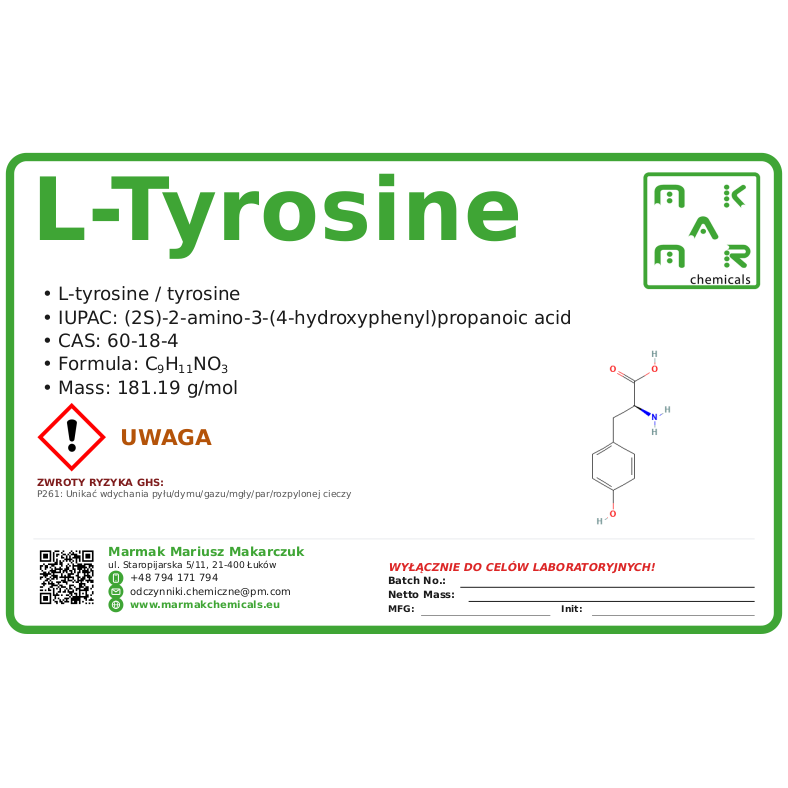
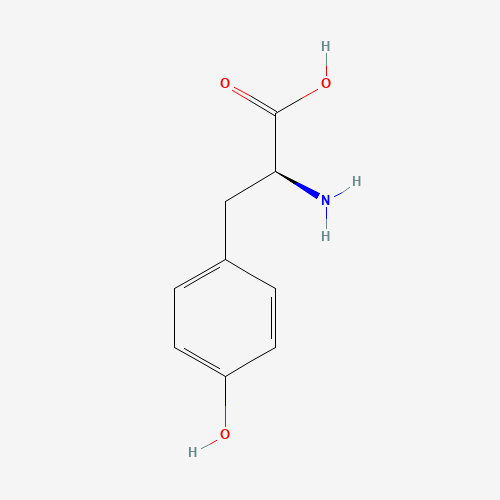

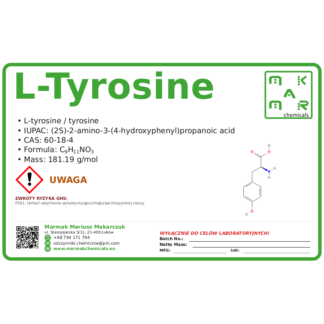
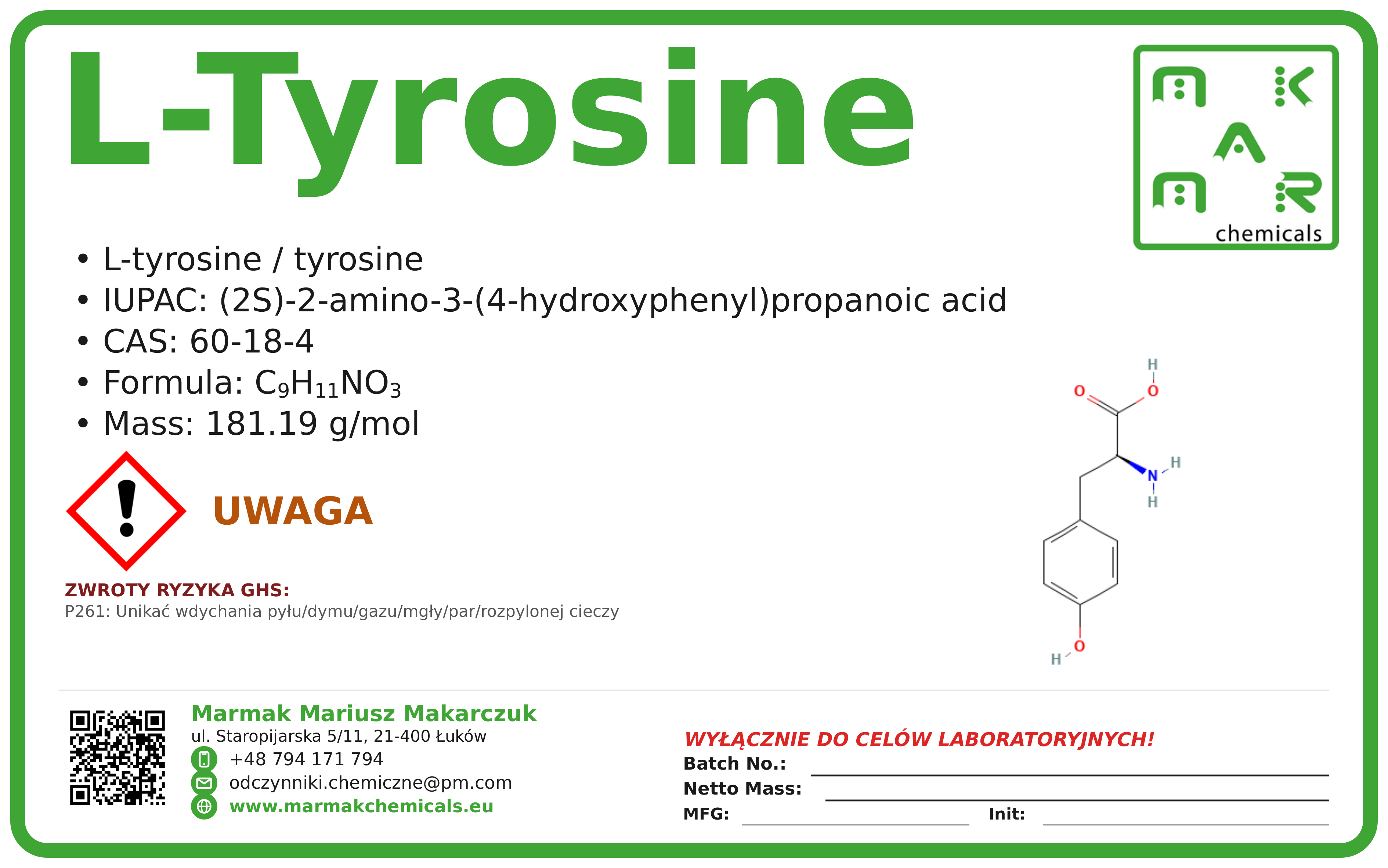
Reviews
There are no reviews yet.