Datenquellen:
PubChem, NIST Chemistry WebBook, CRC Handbook of Chemistry and Physics (103rd ed.)
Zuletzt aktualisiert: 2026-06-25
Regulatorischer Status der Substanz
Keine Einträge für diese CAS-Nummer in den geprüften Beschränkungslisten (SVHC-Kandidatenliste, REACH Anhang XVII; Datensätze unvollständig – dies ist keine Konformitätsbestätigung). CLP-Einstufung und Transportstatus (ADR): siehe Abschnitt GHS und Sicherheitsdatenblatt (SDS).
Spektren werden bei Bedarf aus 9 Quellen abgerufen. Jedes Spektrum wird in unserer Datenbank gespeichert — beim nächsten Öffnen erfolgt keine Anfrage an die externe API. Laden Sie JCAMP-DX / CSV / PNG zu jedem Spektrum herunter, ohne zu suchen.
Daten werden über MolGod_Spectra_Remote_Fetcher (JCAMP-DX-Parser) abgerufen und in der Tabelle wp_molgod_spectra_cache gespeichert. Keine doppelten Downloads, keine erneuten Anfragen an NIST bei späteren Aufrufen. Lizenzen werden eingehalten (veröffentlicht wird nur ein Deep-Link plus eigene Visualisierung).
Daten werden live aus mehreren Quellen abgerufen (Priority-Chain). JCAMP-DX / CSV / PNG stehen unter jedem Spektrum zum Download bereit. ⓘ Eine Quelle ★★☆☆☆
IR — Fourier-Transform-Infrarot
IR — Fourier-Transform-Infrarot wird geladen…
MS — Massenspektrometrie (EI 70eV)
MS — Massenspektrometrie (EI 70eV) wird geladen…
MolGod_MS_SP7
🔎 Spektrensuche (JCAMP-DX)
Laden Sie eine JCAMP-DX-Datei (.jdx, .dx, .jcm) hoch — das System berechnet die Cosine-Ähnlichkeit zu allen Spektren in der Datenbank und zeigt die TOP 10 Treffer an.
📚 Bibliografie (Chicago)
McLafferty, Fred W., ed. 2018. Wiley Registry of Mass Spectral Data. 11th ed. Hoboken, NJ: Wiley. Eine MS-Referenzbibliothek (~775k Spektren).
Stein, Stephen E., and Donald R. Scott. 1994. "Optimization and Testing of Mass Spectral Library Search Algorithms for Compound Identification." Journal of the American Society for Mass Spectrometry 5 (9): 859–866. Der Cosine- und Dot-Product-Algorithmus von NIST MS Search.
McDonald, Robert S., and Paul A. Wilks Jr. 1988. "JCAMP-DX: A Standard Form for Exchange of Infrared Spectra in Computer Readable Form." Applied Spectroscopy 42 (1): 151–162. Die JCAMP-DX-Spezifikation (erweitert auf 5.01 für NMR/MS).
McLafferty, Fred W., and František Tureček. 1993. "Interpretation of Mass Spectra." 4th ed. Mill Valley, CA: University Science Books. Cosine-Similarity-Matching und MS-Fragmentierung — die Grundlage des Suchalgorithmus.
Sumner, Lloyd W., Alexander Amberg, Dave Barrett, Michael H. Beale, Richard Beger, Clare A. Daykin, Teresa W.-M. Fan, et al. 2007. "Proposed Minimum Reporting Standards for Chemical Analysis." Metabolomics 3 (3): 211–221. MSI Level 1-4 — Standards für die Konfidenzstufe des spektralen Matchings.
Stein, Stephen E. 1999. "An Integrated Method for Spectrum Extraction and Compound Identification from Gas Chromatography/Mass Spectrometry Data." Journal of the American Society for Mass Spectrometry 10 (8): 770–781. Der AMDIS-Algorithmus — Dekonvolution + Library-Match (NIST).
Lindon, John C., George E. Tranter, and David W. Koppenaal, eds. 2017. "Encyclopedia of Spectroscopy and Spectrometry." 3rd ed. Amsterdam: Academic Press. Enzyklopädische Einträge zum Thema Spectral Library Searching.
Smith, Brian C. 2011. "Fundamentals of Fourier Transform Infrared Spectroscopy." 2nd ed. Boca Raton, FL: CRC Press. FT-IR und das JCAMP-DX-Format für Transmissionsspektren.
Larkin, Peter. 2017. "Infrared and Raman Spectroscopy: Principles and Spectral Interpretation." 2nd ed. Amsterdam: Elsevier. Grundlagen des IR/Raman-Library-Matchings und der Peak-Vorverarbeitung.
📐Physikalische & chemische Eigenschaften (DB)
8 Felder MolGod-Score: Keine Quelle
Haynes, William M., ed. 2024. CRC Handbook of Chemistry and Physics. 105th ed. Boca Raton: CRC Press/Taylor & Francis. ISBN 978-1-032-55554-4. ↗
National Institute of Standards and Technology. 2024. "NIST Chemistry WebBook, SRD 69." Gaithersburg, MD: NIST. Accessed 2025-01-01. ↗
Yaws, Carl L. 2014. The Yaws Handbook of Physical Properties for Hydrocarbons and Chemicals. 2nd ed. Oxford: Gulf Professional Publishing.
PubChem. 2024. "PubChem Compound Database." National Library of Medicine, National Institutes of Health. Accessed 2025-01-01. ↗
Marrero, J., and R. Gani. 2001. "Group-Contribution Based Estimation of Pure Component Properties." Fluid Phase Equilibria 183–184: 183–208. ↗
Joback, K. G., and R. C. Reid. 1987. "Estimation of Pure-Component Properties from Group-Contributions." Chemical Engineering Communications 57 (1–6): 233–243. ↗
Sangster, J. 1997. Octanol-Water Partition Coefficients: Fundamentals and Physical Chemistry. Chichester: Wiley. ISBN 978-0-471-97397-3.
Mannhold, Raimund, and Han van de Waterbeemd. 2001. "Substructure and Whole Molecule Approaches for Calculating Log P." Journal of Computer-Aided Molecular Design 15 (4): 337–354. ↗
Perrin, Ditlev D., Boyd Dempsey, and E. P. Serjeant. 1981. pKa Prediction for Organic Acids and Bases. London: Chapman and Hall. ISBN 0-412-21090-5.
Constantinou, Leonidas, and Rafiqul Gani. 1994. "New Group Contribution Method for Estimating Properties of Pure Compounds." AIChE Journal 40 (10): 1697–1710. ↗
Ertl, Peter, Bernhard Rohde, and Paul Selzer. 2000. "Fast Calculation of Molecular Polar Surface Area as a Sum of Fragment-Based Contributions and Its Application to the Prediction of Drug Transport Properties." Journal of Medicinal Chemistry 43 (20): 3714–3717. ↗
🔄 Umrechner für Konzentrationseinheiten LIVEMolGod_UNITCONV_1
/* translators: %s, %d itd. to wartosci dynamiczne wstawiane do komunikatu. */
Geben Sie die Konzentration L-phenylalanine in einer beliebigen Einheit ein — der Rest wird automatisch berechnet.
Cohen ER, Cvitaš T, Frey JG, Holmström B, Kuchitsu K, Marquardt R, Mills I, Pavese F, Quack M, Stohner J, Strauss HL, Takami M, Thor AJ (2007)
g/L ↔ molarity
c (mol/L) = (g/L) / MW
±0.1% (depends on MW precision)
Cohen ER, Cvitaš T, Frey JG, Holmström B, Kuchitsu K, Marquardt R, Mills I, Pavese F, Quack M, Stohner J, Strauss HL, Takami M, Thor AJ (2007)
mmol/L ↔ molarity
c (mol/L) = mmol/L × 10⁻³
Exact
Cohen ER, Cvitaš T, Frey JG, Holmström B, Kuchitsu K, Marquardt R, Mills I, Pavese F, Quack M, Stohner J, Strauss HL, Takami M, Thor AJ (2007)
Celsius ↔ Kelvin
T(K) = t(°C) + 273.15
±0.01 K (ITS-90 scale)
BIPM (Bureau International des Poids et Mesures) (2019)
Celsius ↔ Fahrenheit
T(°F) = T(°C) × 9/5 + 32
±0.1 °F
Thompson A, Taylor BN (2008)
density-corrected % ↔ molarity
c (mol/L) = (%w/w × ρ × 10) / MW, ρ in g/mL
±0.1% when ρ known to 3 decimals
Cohen ER, Cvitaš T, Frey JG, Holmström B, Kuchitsu K, Marquardt R, Mills I, Pavese F, Quack M, Stohner J, Strauss HL, Takami M, Thor AJ (2007)
📚 Bibliographie (8 autoritative Quellen)
Thompson A, Taylor BN (2008). Guide for the Use of the International System of Units (SI). NIST Special Publication 811 · DOI: 10.6028/NIST.SP.811-2008 → Primary SI standard for US scientific usage
Cohen ER, Cvitaš T, Frey JG, Holmström B, Kuchitsu K, Marquardt R, Mills I, Pavese F, Quack M, Stohner J, Strauss HL, Takami M, Thor AJ (2007). Quantities, Units and Symbols in Physical Chemistry — The IUPAC Green Book. RSC Publishing, 3rd ed. · DOI: 10.1039/9781847557889 · ISBN: 978-0-85404-433-7 → Canonical IUPAC guide for chemistry quantities/units
BIPM (Bureau International des Poids et Mesures) (2019). The International System of Units (SI), 9th edition. BIPM · ↗ → International SI definitions (incl. redefined kilogram 2019)
ISO/IEC (2022). Quantities and units — Part 1: General. International Organization for Standardization — ISO 80000-1:2022 · ↗ → General rules for physical quantities and units
ISO/IEC (2019). Quantities and units — Part 9: Physical chemistry and molecular physics. International Organization for Standardization — ISO 80000-9:2019 · ↗ → Concentration / molality / amount-of-substance conventions
Tiesinga E, Mohr PJ, Newell DB, Taylor BN (2021). CODATA recommended values of the fundamental physical constants: 2018. Rev. Mod. Phys. 93(2):025010 · DOI: 10.1103/RevModPhys.93.025010 → Avogadro, gas constant, molar volume (2019 SI revision)
IUPAC (2019). Compendium of Chemical Terminology — the IUPAC Gold Book (online). IUPAC · DOI: 10.1351/goldbook → Definitions of mass fraction, molality, normality, ppm, activity
Mills IM, Cvitaš T, Homann K, Kallay N, Kuchitsu K (1988). Quantities, Units and Symbols in Physical Chemistry. Blackwell Scientific Publications, 1st ed. · ISBN: 0-632-01773-5 → Historical predecessor of IUPAC Green Book
🧪 Assistent zur Lösungsvorbereitung WIZARDMolGod_PREP_1
Rumble, John R., ed. 2023. CRC Handbook of Chemistry and Physics. 104th ed. Boca Raton, FL: CRC Press. [link ↗]
International Association for the Properties of Water and Steam (IAPWS). 1997. "Release on the Static Dielectric Constant of Ordinary Water Substance." IAPWS R8-97. [link ↗]
Reichardt, Christian, and Thomas Welton. 2011. Solvents and Solvent Effects in Organic Chemistry. 4th ed. Weinheim: Wiley-VCH. https://doi.org/10.1002/9783527632220. [link ↗]
Hansen, Charles M. 2007. Hansen Solubility Parameters: A User's Handbook. 2nd ed. Boca Raton, FL: CRC Press. https://doi.org/10.1201/9781420006834. [link ↗]
IFA. n.d. "Water." GESTIS Substance Database. Institut für Arbeitsschutz der Deutschen Gesetzlichen Unfallversicherung. Accessed April 25, 2026. [link ↗]
Rumble, John R., ed. 2023. CRC Handbook of Chemistry and Physics. 104th ed. Boca Raton, FL: CRC Press. [link ↗]
Reichardt, Christian, and Thomas Welton. 2011. Solvents and Solvent Effects in Organic Chemistry. 4th ed. Weinheim: Wiley-VCH. https://doi.org/10.1002/9783527632220. [link ↗]
Snyder, Lloyd R., Joseph J. Kirkland, and John W. Dolan. 2010. Introduction to Modern Liquid Chromatography. 3rd ed. Hoboken, NJ: Wiley. https://doi.org/10.1002/9780470508183. [link ↗]
Smallwood, Ian M. 1996. Handbook of Organic Solvent Properties. London: Arnold. https://doi.org/10.1016/B978-0-340-64578-9.X5000-9. [link ↗]
Reichardt, Christian, and Thomas Welton. 2011. Solvents and Solvent Effects in Organic Chemistry. 4th ed. Weinheim: Wiley-VCH. https://doi.org/10.1002/9783527632220. [link ↗]
Hansen, Charles M. 2007. Hansen Solubility Parameters: A User's Handbook. 2nd ed. Boca Raton, FL: CRC Press. [link ↗]
Rumble, John R., ed. 2023. CRC Handbook of Chemistry and Physics. 104th ed. Boca Raton, FL: CRC Press. [link ↗]
Smallwood, Ian M. 1996. Handbook of Organic Solvent Properties. London: Arnold. [link ↗]
National Institute of Standards and Technology. n.d. "Methane, dichloro- (CAS 75-09-2)." NIST Chemistry WebBook, SRD 69. Accessed April 25, 2026. [link ↗]
Hansen, Charles M. 2007. Hansen Solubility Parameters: A User's Handbook. 2nd ed. Boca Raton, FL: CRC Press. [link ↗]
International Agency for Research on Cancer. 1999. "Dichloromethane." IARC Monographs on the Evaluation of Carcinogenic Risks to Humans 71: 251–315. [link ↗]
Reichardt, Christian, and Thomas Welton. 2011. Solvents and Solvent Effects in Organic Chemistry. 4th ed. Weinheim: Wiley-VCH. [link ↗]
Armarego, Wilfred L. F., and Christina Li Lin Chai. 2009. Purification of Laboratory Chemicals. 6th ed. Oxford: Butterworth-Heinemann. https://doi.org/10.1016/B978-1-85617-567-8.50003-3. [link ↗]
Hansen, Charles M. 2007. Hansen Solubility Parameters: A User's Handbook. 2nd ed. Boca Raton, FL: CRC Press. [link ↗]
National Institute of Standards and Technology. n.d. "Furan, tetrahydro- (CAS 109-99-9)." NIST Chemistry WebBook. Accessed April 25, 2026. [link ↗]
Smallwood, Ian M. 1996. Handbook of Organic Solvent Properties. London: Arnold. [link ↗]
National Institute of Standards and Technology. n.d. "Hexane (CAS 110-54-3)." NIST Chemistry WebBook. Accessed April 25, 2026. [link ↗]
Hansen, Charles M. 2007. Hansen Solubility Parameters: A User's Handbook. 2nd ed. Boca Raton, FL: CRC Press. [link ↗]
Snyder, Lloyd R., Joseph J. Kirkland, and John W. Dolan. 2010. Introduction to Modern Liquid Chromatography. 3rd ed. Hoboken, NJ: Wiley. [link ↗]
Agency for Toxic Substances and Disease Registry. 1999. Toxicological Profile for n-Hexane. Atlanta, GA: U.S. Department of Health and Human Services. [link ↗]
International Agency for Research on Cancer. 1999. "Chloroform." IARC Monographs on the Evaluation of Carcinogenic Risks to Humans 73: 131–182. [link ↗]
National Institute of Standards and Technology. n.d. "Methane, trichloro- (CAS 67-66-3)." NIST Chemistry WebBook. Accessed April 25, 2026. [link ↗]
Hansen, Charles M. 2007. Hansen Solubility Parameters: A User's Handbook. 2nd ed. Boca Raton, FL: CRC Press. [link ↗]
Reichardt, Christian, and Thomas Welton. 2011. Solvents and Solvent Effects in Organic Chemistry. 4th ed. Weinheim: Wiley-VCH. [link ↗]
Löslichkeitstheorie (angewandt bei der Kompatibilitätsvorhersage):
Yalkowsky, Samuel H., and Shri C. Valvani. 1980. "Solubility and Partitioning I: Solubility of Nonelectrolytes in Water." Journal of Pharmaceutical Sciences 69 (8): 912–922. https://doi.org/10.1002/jps.2600690814 — General Solubility Equation (GSE): logS = 0.5 − logP − 0.01(MP−25).
Hansen, Charles M. 2007. Hansen Solubility Parameters: A User's Handbook. 2nd ed. Boca Raton, FL: CRC Press. https://doi.org/10.1201/9781420006834 — HSP triplet (dD, dP, dH) + wzór Ra.
Reichardt, Christian, and Thomas Welton. 2011. Solvents and Solvent Effects in Organic Chemistry. 4th ed. Weinheim: Wiley-VCH. https://doi.org/10.1002/9783527632220 — E_T(30) polarity scale, solwatochromia.
Snyder, Lloyd R., Joseph J. Kirkland, and John W. Dolan. 2010. Introduction to Modern Liquid Chromatography. 3rd ed. Hoboken, NJ: Wiley. https://doi.org/10.1002/9780470508183 — Eluotropic series, polarity index.
PubChem Compound Database — CAS 63-91-2 lookup ↗ — logP (XLogP3), water solubility experimental + predicted.
Vollständige Bibliografie im Akkordeon REFERENZEN (am Ende der Seite) — Chicago Manual of Style 17th ed., Author-Date.
🛡️ Sicherheit — CAS 63-91-2MolGod_SAFEHUB_MAIN
Hinweis zu Datenbeschränkungen. Die Sicherheitsinformationen auf dieser Seite dienen nur zur Information und ersetzen kein vollständiges Sicherheitsdatenblatt (SDS). Konsultieren Sie vor der Verwendung des Produkts das aktuelle Sicherheitsdatenblatt des Herstellers sowie die GHS/CLP-Leitlinien. Die CLP-Einstufung bezieht sich auf die reine Bulk-Substanz, nicht auf handelsübliche Zubereitungen.
MolGod_GHS_SF1
Keine harmonisierte GHS-Einstufung für diese Substanz — siehe aktuelles Sicherheitsdatenblatt (SDS) des Lieferanten.
MolGod_TOX_SF2
☢️ Toxikologische Daten (IARC + EPA CTX)
🧬 IARC-Karzinogenitätseinstufung
IARC-Klassifizierung:
Kein individueller IARC-Eintrag für diese CAS
Keine eigene IARC-Monografie in den geprüften Verzeichnissen — dies ist KEINE Bestätigung für das Fehlen einer krebserzeugenden Wirkung. Prüfen Sie die CLP/GHS-Klassifizierung (Abschnitt CMR / GHS).
Tanchai, Nipawan. "Improvement of the phenylalanine dehydrogenase immobilization method for the production of phenylalanine.". https://doi.org/10.58837/chula.the.2007.1012. [DOI]
Anonymous. "Self-Assembly of Phenylalanine-Leucine, Leucine-Phenylalanine and Cyclo(-leucine-phenylalanine) Dipeptides through Simulations and Experiments.". https://doi.org/10.1021/acs.jpcb.2c08576.s001. [DOI]
Maria Yeng-Ying Kuo. 1977. "A kinetic study of the carboxypeptidase A catalyzed hydrolyses of Cinnamoylglycyl-L-phenylalanine (CinGP) and Hydrocinnamoylglycyl-L-phenylalanine (HCinGP) / by Maria Yeng-Ying Kuo." Miami University. 🔗
International Agency for Research on Cancer (IARC). 2024. "IARC Monographs on the Identification of Carcinogenic Hazards to Humans." Lyon: IARC. 🔗
U.S. EPA. 2024. "ECOTOX Knowledgebase." Washington, DC: U.S. Environmental Protection Agency. 🔗
ECHA. 2024. "Chemical Safety Assessment." European Chemicals Agency. 🔗
U.S. National Toxicology Program. 2024. Report on Carcinogens. 15th ed. Research Triangle Park, NC: National Institute of Environmental Health Sciences. 🔗
GESTIS. 2024. "GESTIS Substance Database." Institute for Occupational Safety and Health of the German Social Accident Insurance (DGUV). 🔗
U.S. EPA. 2024. "CompTox Chemicals Dashboard." Washington, DC: U.S. Environmental Protection Agency. 🔗
ECHA. 2023. "Regulation (EC) No 1272/2008 on Classification, Labelling and Packaging of Substances and Mixtures (CLP), Annex VI — Harmonised Classification." European Chemicals Agency. 🔗
Leist, Marcel, et al. 2014. "Consensus Report on the Future of Animal-Free Systemic Toxicity Testing." ALTEX 31 (3): 341–356. [DOI]
Hartung, Thomas. 2009. "Toxicology for the Twenty-First Century." Nature 460 (7252): 208–212. [DOI]
📚 Konsolidierte wissenschaftliche Referenzen — Chicago Author-Date 10 Quellen
Referenzen aus allen Safety-Hub-Registerkarten gesammelt. CAS: 63-91-2 ·
PubChem ↗
Parlament Europejski i Rada UE. 2008. "Rozporządzenie (WE) nr 1272/2008 w sprawie klasyfikacji, oznakowania i pakowania substancji (CLP)." Dz.Urz. UE L 353. [↗]
GHS, Vorschriften
United Nations Economic Commission for Europe (UNECE). 2021. "Globally Harmonized System of Classification and Labelling of Chemicals (GHS), Ninth Revised Edition." United Nations, Geneva. [↗]
GHS
Goldfrank, Lewis R., Robert S. Hoffman, Mary Ann Howland, et al.. 2019. "Goldfrank's Toxicologic Emergencies, 11th ed.." McGraw-Hill Education, New York. ISBN 978-1-25-985961-8.
Pierwsza pomoc, Toksykologia
National Institute for Occupational Safety and Health (NIOSH). 2023. "NIOSH Pocket Guide to Chemical Hazards (DHHS Publ. 2005-149)." U.S. Department of Health and Human Services / CDC, Cincinnati, OH. [↗]
Pierwsza pomoc, PPE, Toksykologia
European Committee for Standardization (CEN). 2016. "EN 374-1:2016 — Protective gloves against dangerous chemicals and micro-organisms." CEN, Brussels. [↗]
PPE
UNECE. 2023. "European Agreement Concerning the International Carriage of Dangerous Goods by Road (ADR 2023)." United Nations, Geneva. [↗]
Utylizacja, Regulacje
National Fire Protection Association (NFPA). 2022. "NFPA 400 — Hazardous Materials Code." NFPA, Quincy, MA. [↗]
Magazynowanie
Urben, P.G. (ed.). 2017. "Bretherick's Handbook of Reactive Chemical Hazards, 8th ed.." Butterworth-Heinemann / Elsevier, Oxford. [↗]
Magazynowanie
Ministerstwo Klimatu i Środowiska RP. 2023. "Baza danych o produktach i opakowaniach oraz o gospodarce odpadami (BDO)." Ministerstwo Klimatu i Środowiska, Warszawa. [↗]
Utylizacja
International Agency for Research on Cancer (IARC / WHO). 2024. "IARC Monographs on the Identification of Carcinogenic Hazards to Humans — List of Classifications." WHO, Lyon. [↗]
Toksykologia
Registerkarten mit eigenen Referenzen (Emergency, PPE, Storage, Waste) enthalten zusätzliche bibliografische Einträge in ihren jeweiligen Abschnitten.
📈Analytische Statistik (t-Test · RSD · Grubbs · Q-Dixon)ICH Q2
MolGod_STATS_1
Fügen Sie eine Serie von Messwiederholungen ein (CSV oder eine Zahl pro Zeile). Der Rechner berechnet Mittelwert, Standardabweichung und 95% CI und erkennt Ausreißer (Grubbs + Dixon Q).
Trennzeichen: Komma, Leerzeichen, Tab, Zeilenumbruch. Min. 3 Messungen.
📐 Statistische Formeln
x̄ = Σxᵢ / n — arithmetisches Mittel
s² = Σ(xᵢ - x̄)² / (n-1) — Stichprobenvarianz
s = √s² — Standardabweichung
RSD% = (s / x̄) × 100% — relative Standardabweichung
Wählen Sie einen Puffer aus der Liste von 20 gängigen Systemen → geben Sie den Ziel-pH-Wert ein → Sie erhalten ein exaktes Rezept mit den einzuwiegenden Massen.
Schritt 1: Puffersystem wählen
Schritt 2: Pufferparameter
Schritt 3: Ihr Rezept
Schritt-für-Schritt-Verfahren:
📐 Berechnungsdetails (Henderson-Hasselbalch)
📜 Rezeptverlauf (letzte 10)
📅Project Planner — Manager für LaborexperimenteNEU
MolGod_PLANNER_1
Planen Sie Ihr gesamtes Laborprojekt: Fügen Sie Experimente mit Reagenzien, Wiederholungen und Dauer hinzu. Sie erhalten ein Gantt-Diagramm, eine Einkaufsliste (mit Links zum Shop!), ein Budget mit 10% Reserve und eine GHS-Risikomatrix.
💡 Melden Sie sich an, um Projekte zu speichern.
Ohne Anmeldung können Sie berechnen, aber nicht speichern.
🔬 HPLC/GC-Methoden (3 Methoden)
📄
Detection of Adulterated Naodesheng Tablet (Naodesheng Pian) via In-Depth Chemical Analysis and Subsequent Reconstruction of Its Pharmacopoeia Q-Markers
Gradient: elution was set as follows: 0–5 min, 10% B; 5–14
Li C, Li X, Zeng J, Cai R, Chen S, Chen B, et al. Detection of Adulterated Naodesheng Tablet (Naodesheng Pian) via In-Depth Chemical Analysis and Subsequent Reconstruction of Its Pharmacopoeia Q-Markers. Molecules. 2024;29:1392. doi:10.3390/molecules29061392
Naodesheng Tablet (Naodesheng Pian), a traditional Chinese medicine formula for stroke treatment, is made up of five herbal medicines, i.e., Sanqi, Gegen, Honghua, Shanzha, and Chuanxiong. However, the current Pharmacopoeia quality-marker (Q-marker) system cannot detect possible adulteration. Our study tried to use a new strategy, i.e., standards-library-dependent ultra-high-performance liquid chromatography-quadrupole-Orbitrap mass spectrometry (UHPLC-Q-Orbitrap MS/MS) putative identification, to reconstruct the Q-marker system. Through the strategy, 30 isomers were successfully differentiated (such as 2′-hydroxygenistein, luteolin, and kaempferol; ginsenoside Rg2 and ginsenoside Rg3; ginsenoside Rf and ginsenoside Rg1). In particular, 11 compounds were unexpectedly found in Naodesheng, including 2′-hydroxygenistein, 7,4′-dihydroxyflavone, pectolinarigenin, 7-methoxy-4′-hydroxyisoflavone, scoparone, matrine, 3,3′,4′,5,6,7,8-heptamethoxyflavone, 5-hydroxyflavone, diosgenin, chloesteryl acetate, and (+)-4-cholesten-3-one. In total, 68 compounds were putatively identified and fully elucidated for their MS spectra. Subsequently, relevant compounds were further investigated using UV-vis scanning experiments, semi-quantitative analysis, and quantum chemical calculation. Finally, five adulterated Naodesheng Tablets were used for validation experiments. The experiment successfully detected five adulterated ones via a lower-version LC-MS analysis. On this basis, three new candidates (hydroxy safflor yellow A (HSYA), citric acid, and levistilide A), along with puerarin and notoginsenoside R1, are re-nominated as the Q-markers for LC-MS analysis. The LC-MS analysis of puerarin, notoginsenoside R1, HSYA, citric acid, and levistilide A can clearly detect adulteration regarding all five herbal medicines mentioned above. Therefore, the reconstructed Q-markers are described as a “perfect” quality control system to detect adulteration in Naodesheng and will offer a valuable recomme...
Phase: mobile phase composed of water acidified with 0
Detektion: UV 450 nm
Temp.: 18.0 °C
Inj.: 10 \u03bcL
Mahrous M, Nassar A, EL-Fiky F, Hammoda H, El-Hawiet A. Enhancing anti-inflammatory activity of Eucalyptus camaldulensis by upregulating secondary metabolites using suspension cultures techniques. Scientific Reports. 2026;16:4090. doi:10.1038/s41598-025-34963-8
Eucalyptus camaldulensis Dehn (Family Myrtaceae) is among the most prominent Eucalyptus species, extensively exploited for its anti-inflammatory efficacy. The present study undertakes a comparative phytochemical and pharmacological evaluation of leaf and tissue culture (callus) extracts and their corresponding volatile oils. Methanolic extracts from both plant sources were subjected to liquid chromatography–mass spectrometry (LC/MS), revealing 32 phytoconstituents in leaf extracts and 54 in callus extracts. Identified chemical classes included flavonoids, tannins, coumarins, and phenolic acids, with higher relative abundance in callus-derived extracts. Volatile oil analysis using gas chromatography–mass spectrometry (GC/MS) identified 58 compounds in leaf oil and 52 in callus oil. Quantitative profiling demonstrated a significant elevation in bioactive volatiles within callus oil: 1,8-cineole content showed a 2.1-fold increase compared to leaf oil, and both α-terpineol and sabinene exhibited approximately fourfold increases relative to leaf oil. Bioassays further indicated that callus extracts and volatile oils possess enhanced anti-inflammatory and antioxidant activities, exhibiting higher potency than leaf-derived counterparts. Remarkably, the anti-inflammatory activity of callus volatile oil exceeded that of the standard pharmaceutical agent indomethacin. These findings underscore the potential of in vitro tissue culture as a biotechnological tool for amplifying the yield and bioactivity of secondary metabolites in E. camaldulensis.Supplementary InformationThe online version contains supplementary material available at 10.1038/s41598-025-34963-8.
Subchronic Toxicity Studies of Cortex Dictamni Extracts in Mice and Its Potential Hepatotoxicity Mechanisms in Vitro
UHPLCMolecules : A Journal of201890% ✓CC-BYResearch method (specificity, robustness)
Säule: C18, 5 \u03bcm
Phase: mobile phase consisted of 0
Detektion: UV 450 nm
Fluss: 1.00 mL/min
Temp.: 35.0 °C
Inj.: 10 \u03bcL
Gradient: was set as follows: 5–53% B (0–20 min), 53–68% B…
Fan Q, Zhao B, Wang C, Zhang J, Wu J, Wang T, et al. Subchronic Toxicity Studies of Cortex Dictamni Extracts in Mice and Its Potential Hepatotoxicity Mechanisms in Vitro. Molecules : A Journal of Synthetic Chemistry and Natural Product Chemistry. 2018;23:2486. doi:10.3390/molecules23102486
Cortex Dictamni is a commonly-used traditional Chinese herbal medicine for the treatment of skin inflammation, tinea, and eczema. Recently, some studies reported that Cortex Dictamni might induce liver injury, suggesting more attention to its safety. The current study was designed to investigate subchronic toxicity of Cortex Dictamni aqueous extract (CDAE) and ethanol extract (CDEE) in mice and the potential hepatotoxicity mechanisms in vitro. Firstly, CDAE or CDEE groups were administrated with varying dosages (2.3, 4.6, or 9.2 g/kg/day, p.o.) in mice for 28 days in subchronic toxicity studies. General clinical signs and biochemical parameters were examined, and morphological analyses were conducted. Secondly, we identified the different constituents of CDAE and CDEE using HPLC-MS/MS and chose major components for further study. In order to determine the toxic components, we investigated the cytotoxicity of extracts and chosen components using CCK-8 assay in HepG2 cells. Furthermore, we explored the possible hepatotoxicity mechanisms of Cortex Dictamni using a high content analysis (HCA). The results showed that no significant differences of general clinical signs were observed in mice. Aspartate alanine aminotransferase (ALT) and aminotransferase (AST) were significantly increased in the high-dose CDAE and CDEE groups compared to the control group. Meanwhile, the absolute and relative liver weights and liver/brain ratio were significantly elevated, and histological examination of liver demonstrated cellular enlargement or nuclear shrinkage. In UPLC analysis, we compared the chemical constituents between CDAE and CDEE, and chose dictamnine, obakunone, and fraxinellone for hepatotoxicity evaluation in the in vitro studies. In the CCK-8 assay, CDAE, CDEE, dictamnine, obakunone, and fraxinellone decreased the cell viability in a dose-dependent manner after treatment for 48 h. Furthermore, the cell number decreased, while the nuclear intensity, cell membrane permeabili...
Löslichkeitstheorie (angewendet in der Verträglichkeitsvorhersage):
Yalkowsky, Samuel H., and Shri C. Valvani. 1980. "Solubility and Partitioning I: Solubility of Nonelectrolytes in Water." Journal of Pharmaceutical Sciences 69 (8): 912–922. https://doi.org/10.1002/jps.2600690814 — General Solubility Equation (GSE): logS = 0.5 − logP − 0.01(MP−25).
Hansen, Charles M. 2007. Hansen Solubility Parameters: A User's Handbook. 2nd ed. CRC Press. https://doi.org/10.1201/9781420006834 — HSP triplet (dD, dP, dH) + wzór Ra.
Stefanis, E., and C. Panayiotou. 2008. "Prediction of Hansen Solubility Parameters with a New Group-Contribution Method." Int J Thermophys 29: 568–585. https://doi.org/10.1007/s10765-008-0415-z
Reichardt, Christian, and Thomas Welton. 2011. Solvents and Solvent Effects in Organic Chemistry. 4th ed. Wiley-VCH. https://doi.org/10.1002/9783527632220 — E_T(30) polarity scale, solwatochromia.
Snyder, Lloyd R., Joseph J. Kirkland, and John W. Dolan. 2010. Introduction to Modern Liquid Chromatography. 3rd ed. Wiley. https://doi.org/10.1002/9780470508183 — Eluotropic series, polarity index.
Van Krevelen, D. W., and K. Te Nijenhuis. 2009. Properties of Polymers. 4th ed. Elsevier. https://doi.org/10.1016/B978-0-08-054819-7.X0001-5 — Hoftyzer–Van Krevelen group contribution dla dD/dP/dH z SMILES.
Marcus, Yizhak. 1998. The Properties of Solvents. Wiley Series in Solution Chemistry, Vol. 4. ISBN 9780471983699 — Vollständige tabellarische Sammlung von 250+ Lösungsmitteln (ε, μ, Donizität, Akzeptorzahlen).
PubChem Compound Database — CAS 63-91-2 lookup ↗ — logP (XLogP3), water solubility experimental + predicted.
Vollständige Bibliografie im Akkordeon REFERENZEN (am Ende der Seite) — Chicago Manual of Style 17th ed., Author-Date.
🧮 Löslichkeitsrechner
Löslichkeit:—
logS:—
Methode:—
⚠️ —
Löslichkeit vs. Temperatur
🌐 Hansen Solubility Sphere (3D)
Je näher am Molekül (rote Kugel), desto besser das Lösungsmittel. · Erweitert: Beschriftungen + Gitter + Achsen + Pulsation.
Ihr Molekül
Gut (Ra < 5)
Mittel (Ra 5-10)
Schwach (Ra > 10)
📚 Datenquellen HSP + Ra
Tanchai, Nipawan. "Improvement of the phenylalanine dehydrogenase immobilization method for the production of phenylalanine.". https://doi.org/10.58837/chula.the.2007.1012. [DOI ↗]
Anonymous. "Self-Assembly of Phenylalanine-Leucine, Leucine-Phenylalanine and Cyclo(-leucine-phenylalanine) Dipeptides through Simulations and Experiments.". https://doi.org/10.1021/acs.jpcb.2c08576.s001. [DOI ↗]
Maria Yeng-Ying Kuo. 1977. "A kinetic study of the carboxypeptidase A catalyzed hydrolyses of Cinnamoylglycyl-L-phenylalanine (CinGP) and Hydrocinnamoylglycyl-L-phenylalanine (HCinGP) / by Maria Yeng-Ying Kuo." Miami University. ↗
Van Krevelen, D. W., and K. Te Nijenhuis. 2009. Properties of Polymers: Their Correlation with Chemical Structure; Their Numerical Estimation and Prediction from Additive Group Contributions. 4th ed. Amsterdam: Elsevier. [DOI ↗]
Stefanis, Eirini, and Costas Panayiotou. 2008. "Prediction of Hansen Solubility Parameters with a New Group-Contribution Method." International Journal of Thermophysics 29 (2): 568–585. [DOI ↗]
Methode: Group Contribution (GC) — schnelle Schätzung von δD/δP/δH aus logP, wenn keine experimentellen Daten vorliegen. Genauigkeit ±2 MPa^½. Für höhere Präzision → HSPiP-Software.
❓ Jak przygotować roztwór standardowy fenyloalaniny o stężeniu 1 mM?
MolGod_TECHFAQ_1_Q0
Aby przygotować roztwór standardowy fenyloalaniny o stężeniu 1 mM, należy obliczyć masę substancji potrzebną do sporządzenia 1 litra roztworu. Masa molowa fenyloalaniny wynosi 165.19 g/mol. Stężenie 1 mM oznacza 1 mmol/L, czyli 1 mg/mL. Obliczenia: 1 mmol * 165.19 mg/mmol = 165.19 mg. Należy odważyć 165.19 mg fenyloalaniny i rozpuścić w wodzie destylowanej do objętości 1 litra.
Hilfreich?
❓ Jak przechowywać fenyloalaninę, aby zachować jej stabilność?
MolGod_TECHFAQ_1_Q1
Fenyloalaninę należy przechowywać w temperaturze pokojowej (15-25°C), chroniąc przed bezpośrednim światłem słonecznym i wilgocią. Zaleca się przechowywanie w szczelnie zamkniętym pojemniku z ciemnego szkła lub tworzywa sztucznego, aby zapobiec degradacji substancji.
Hilfreich?
❓ Jaka metoda analityczna jest odpowiednia do oznaczania fenyloalaniny w próbce?
MolGod_TECHFAQ_1_Q2
Dla fenyloalaniny o masie molowej 165.19 g/mol i logP (współczynnik podziału oktanol-woda) około 2.5, zalecaną metodą analityczną jest wysokosprawna chromatografia cieczowa (HPLC). Metoda ta pozwala na dokładne rozdzielenie i ilościowe oznaczenie fenyloalaniny w próbkach.
Hilfreich?
❓ Jakie są potencjalne reaktywności i niezgodności chemiczne fenyloalaniny?
MolGod_TECHFAQ_1_Q3
Fenyloalanina może ulegać hydrolizie w środowisku kwaśnym lub zasadowym, co prowadzi do degradacji substancji. Nie należy jej przechowywać ani stosować w obecności silnych utleniaczy (np. nadtlenku wodoru) lub reduktorów, które mogą powodować niepożądane reakcje chemiczne. Ponadto, fenyloalanina może tworzyć nierozpuszczalne sole z niektórymi kwasami organicznymi.
Hilfreich?
❓ W jakich praktycznych zastosowaniach laboratoryjnych wykorzystuje się fenyloalaninę?
MolGod_TECHFAQ_1_Q4
Fenyloalanina jest stosowana w laboratoriach jako standard do kalibracji chromatografów HPLC, szczególnie w analizie aminokwasów. Ponadto, wykorzystuje się ją w badaniach biochemicznych jako substrat w syntezie peptydów i białek oraz w testach enzymatycznych do oznaczania aktywności hydrolaz.
📊 Automatisch extrahierte Themen aus den Abstracts von 9 Publikationen für CAS 63-91-2.
Algorithmus: TF-IDF (Salton & Buckley 1988) — Termfrequenz × inverse Dokumentfrequenz.
Grupa funkcyjna: Amino kwas (aspartic acid precursor)
Temperatura topnienia: 230-231°C
Temperatura wrzenia: 315°C (671°F) w 400 mbar
Gęstość: 1.19 g/cm³
Rozpuszczalność w wodzie: >17 g/100 ml (25°C)
Zastosowanie
Przemysł spożywczy: Stosowana w przemyśle spożywczym jako substytut aspartamu i cyklaminianów. Jest mniej słodka niż te dwa sztuczne słodziki, ale nadal jest używana do produkcji niskokalorycznych napojów gazowanych, deserów, gumy do żucia i cukierków dietetycznych.
Przemysł farmaceutyczny: Służy jako prekursor syntezy aspartamu, a także witaminy B10. W medycynie używana jest do produkcji leków i suplementów diety.
Bezpieczeństwo
Fenyloalanina jest substancją względnie bezpieczną, jednak należy zachować ostrożność podczas pracy z nią. Jest to substancja umiarkowanie reaktywna chemicznie i może ulegać rozkładowi w wysokich temperaturach. Należy unikać bezpośredniego kontaktu z oczami i skórą, a w przypadku kontaktu przemyć odpowiednio dużą ilością wody. W razie połknięcia skonsultować się z lekarzem.”>
Additional information
Gramatura
1 g — zł17.05
Reviews
There are no reviews yet.
Be the first to review “Fenyloalanina” Cancel reply
📈 HPLC-Gradient — Optimierer (LSS)VORLAGE
Gradient basierend auf PubChem XLogP3 + LSS (Snyder et al. 2010, Kap. 9).
Snyder, Lloyd R., John W. Dolan, and Joseph J. Kirkland. 2010. Introduction to Modern Liquid Chromatography. Wiley. — Chapter 9 — gradient elution, LSS theory (cited as Snyder et al. 2010 in tool description).
Schoenmakers, Peter J. 1986. Optimization of Chromatographic Selectivity: A Guide to Method Development. Elsevier. — Numerical optimization of gradient programs.
Snyder, L. R., and J. W. Dolan. 2007. High-Performance Gradient Elution: The Practical Application of the Linear-Solvent-Strength Model. Wiley. — Foundational LSS reference for the %B_init = 5 + 8·logP heuristic implemented here.
Nikitas, Pavlos, and Adrian Pappa-Louisi. 2009. "Retention models for isocratic and gradient elution in reversed-phase liquid chromatography." Journal of Chromatography A 1216: 1737-1755. [DOI ↗] — Modern review of gradient retention models — basis for non-LSS extensions.
Carr, Peter W.. 2009. "The new physical chemistry of HPLC." Journal of Chromatography A 1216: 1764-1772. [DOI ↗]
Dong, Michael W. 2019. HPLC and UHPLC for Practicing Scientists. Wiley. https://doi.org/10.1002/9781119313793. — Modern UHPLC gradient programming, sub-2 µm scaling rules.
Wu, Naijun, and Anton M. Clausen. 2007. "Fundamental and practical aspects of ultrahigh pressure liquid chromatography for fast separations." Journal of Separation Science 30: 1167-1182. [DOI ↗]
Stoll, Dwight R., and Peter W. Carr. 2017. "Two-Dimensional Liquid Chromatography: A State of the Art Tutorial." Analytical Chemistry 89: 519-531. [DOI ↗] — Reference for orthogonal gradient design (2D-LC second dimension).
Dolan, John W.. 2013. "When to Modify Method Conditions." LCGC North America 31: 192-199.
Meyer, Veronika R. 2010. Practical High-Performance Liquid Chromatography. Wiley. — Chapter 7 — practical gradient design with isokratyczny scouting.
Stoll, Dwight R., and Peter W. Carr. 2017. "Two-Dimensional Liquid Chromatography: A State of the Art Tutorial." Analytical Chemistry 89: 519-531. [DOI ↗]
Carr, Peter W.. 2009. "The new physical chemistry of HPLC." Journal of Chromatography A 1216: 1764-1772. [DOI ↗]
Wu, Naijun, and Anton M. Clausen. 2007. "Fundamental and practical aspects of ultrahigh pressure liquid chromatography for fast separations." Journal of Separation Science 30: 1167-1182. [DOI ↗]
Engelhardt, Heinz. 2014. 100 Years of Chromatography. Wiley-VCH.
Vivó-Truyols, Gabriel, and Hans-Gerd Janssen. 2010. "Probabilistic approach to peak deconvolution in chromatography." Analytical Chemistry 82: 8525-8531. [DOI ↗]
Skoog, Douglas A., F. James Holler, and Stanley R. Crouch. 2017. "Principles of Instrumental Analysis." 7th ed. Cengage Learning. ISBN 978-1-305-57721-3.
Perkampus, Heinz-Helmut. 1992. "UV-VIS Spectroscopy and Its Applications." Springer. ISBN 978-3-642-77479-9. →
Sadek, Paul C.. 2002. "The HPLC Solvent Guide." 2nd ed. Wiley-Interscience. ISBN 978-0-471-41138-4.
Snyder, Lloyd R., Joseph J. Kirkland, and John W. Dolan. 2010. "Introduction to Modern Liquid Chromatography." 3rd ed. Wiley. ISBN 978-0-470-16754-0. →
Dong, Michael W.. 2019. "HPLC and UHPLC for Practicing Scientists." 2nd ed. Wiley. ISBN 978-1-119-31378-3. →
Stoll, Dwight R., and Peter W. Carr. 2017. "Two-Dimensional Liquid Chromatography: A State of the Art Tutorial." Analytical Chemistry 89: 519-531 →
Vivó-Truyols, Gabriel, and Hans-Gerd Janssen. 2010. "Probabilistic approach to peak deconvolution in chromatography." Analytical Chemistry 82: 8525-8531 →
Kazakevich, Yuri V., and Rosario LoBrutto, eds.. 2007. "HPLC for Pharmaceutical Scientists." Wiley-Interscience. ISBN 978-0-471-68162-4. →
Kim, Sunghwan, et al.. 2023. "PubChem 2023 update." Nucleic Acids Research 51: D1373-D1380 →
Stoll, Dwight R., and Peter W. Carr. 2017. "Two-Dimensional Liquid Chromatography: A State of the Art Tutorial." Analytical Chemistry 89: 519-531 →
Carr, Peter W.. 2009. "The new physical chemistry of HPLC." Journal of Chromatography A 1216: 1764-1772 →
Wu, Naijun, and Anton M. Clausen. 2007. "Fundamental and practical aspects of ultrahigh pressure liquid chromatography for fast separations." Journal of Separation Science 30: 1167-1182 →
Engelhardt, Heinz. 2014. "100 Years of Chromatography." 2nd ed. Wiley-VCH. ISBN 978-3-527-33473-5.
Vivó-Truyols, Gabriel, and Hans-Gerd Janssen. 2010. "Probabilistic approach to peak deconvolution in chromatography." Analytical Chemistry 82: 8525-8531 →
Berechnen Sie den USP-Tailing-Faktor (T) und die Asymmetrie (As) aus den Peak-Halbwertsbreiten. Geben Sie a (linke Halbbreite) und b (rechte Halbbreite) an, gemessen bei 5% oder 10% der Peakhöhe.
📚 References (Chicago Author-Date)
USP General Chapter <621>. 2024. "Chromatography." United States Pharmacopeial Convention. [link ↗] — Defines USP Tailing Factor T = (a+b)/(2a) measured at 5% peak height.
International Council for Harmonisation (ICH). 2023. "Validation of Analytical Procedures Q2(R2)." ICH Expert Working Group. [link ↗] — Tailing factor is a system suitability parameter (Section 6).
Foley, Joe P., and John G. Dorsey. 1983. "Equations for calculation of chromatographic figures of merit for ideal and skewed peaks." Analytical Chemistry 55: 730-737 https://doi.org/10.1021/ac00255a033 [link ↗] — Original asymmetry factor As = b/a at 10% height (Foley & Dorsey 1983).
Snyder, Lloyd R., Joseph J. Kirkland, and John W. Dolan. 2010. "Introduction to Modern Liquid Chromatography." Wiley. https://doi.org/10.1002/9780470508183 [link ↗] — Chapter 2.4 — peak shape diagnostics and remedies.
Dolan, John W.. 2003. "Peak tailing and resolution." LCGC North America 21: 610-614 [link ↗] — How tailing factor degrades effective resolution.
Vivó-Truyols, Gabriel, and Hans-Gerd Janssen. 2010. "Probabilistic approach to peak deconvolution in chromatography." Analytical Chemistry 82: 8525-8531 https://doi.org/10.1021/ac101742z [link ↗] — Modern numerical deconvolution for asymmetric peaks.
Kromidas, Stavros. 2017. "HPLC Made to Measure: A Practical Handbook for Optimization." Wiley-VCH. — Practical Tf and As thresholds for routine QC.
Dong, Michael W.. 2019. "HPLC and UHPLC for Practicing Scientists." Wiley. https://doi.org/10.1002/9781119313793 [link ↗]
Heyden, Yvan Vander, et al.. 2009. "Robustness of pharmaceutical liquid chromatographic methods." Journal of Chromatography B 877: 2120-2129 https://doi.org/10.1016/j.jchromb.2008.10.052 [link ↗]
Stoll, Dwight R., and Peter W. Carr. 2017. "Two-Dimensional Liquid Chromatography: A State of the Art Tutorial." Analytical Chemistry 89: 519-531 https://doi.org/10.1021/acs.analchem.6b03506 [link ↗]
Carr, Peter W.. 2009. "The new physical chemistry of HPLC." Journal of Chromatography A 1216: 1764-1772 https://doi.org/10.1016/j.chroma.2008.11.094 [link ↗]
Wu, Naijun, and Anton M. Clausen. 2007. "Fundamental and practical aspects of ultrahigh pressure liquid chromatography for fast separations." Journal of Separation Science 30: 1167-1182 https://doi.org/10.1002/jssc.200700026 [link ↗]
Engelhardt, Heinz. 2014. "100 Years of Chromatography." Wiley-VCH.
Vivó-Truyols, Gabriel, and Hans-Gerd Janssen. 2010. "Probabilistic approach to peak deconvolution in chromatography." Analytical Chemistry 82: 8525-8531 https://doi.org/10.1021/ac101742z [link ↗]
📊 Rechner für Auflösung und Bodenzahl (Rs, N, H)FEATURE K
Berechnen Sie die Auflösung Rs, die theoretische Bodenzahl N und HETP (H) für ein Paar von HPLC-Peaks. Geben Sie die Retentionszeiten, Peakbreiten (bei 50% oder an der Basis) und die Säulenlänge an.
📚 References (Chicago Author-Date)
Snyder, Lloyd R., Joseph J. Kirkland, and John W. Dolan. 2010. "Introduction to Modern Liquid Chromatography." 3rd ed. John Wiley & Sons. ISBN 978-0-470-16754-0. https://doi.org/10.1002/9780470508183 [link ↗] — Chapter 2 covers resolution, plate count and HETP fundamentals (Snyder et al. 2010).
USP General Chapter <621>. 2024. "Chromatography." USP-NF 2024 ed. United States Pharmacopeial Convention. [link ↗] — Defines Rs >= 1.5 acceptance criterion and N calculation methods.
Dolan, John W.. 2003. "How much resolution is enough?." LCGC North America 21: 350-353 [link ↗] — Practical guidance on Rs targets for routine method development.
Van Deemter, J. J., F. J. Zuiderweg, and A. Klinkenberg. 1956. "Longitudinal diffusion and resistance to mass transfer as causes of nonideality in chromatography." Chemical Engineering Science 5: 271-289 https://doi.org/10.1016/0009-2509(56)80003-1 [link ↗] — Origin of N = 5.54·(tr/w0.5)² half-height plate count formulation.
Giddings, J. Calvin. 1965. "Dynamics of Chromatography, Part I: Principles and Theory." Marcel Dekker. ISBN 978-0-8247-1357-7. — Resolution equation Rs = (1/4)·√N·(α-1)/α·k/(1+k) (master equation).
Foley, Joe P., and John G. Dorsey. 1983. "Equations for calculation of chromatographic figures of merit for ideal and skewed peaks." Analytical Chemistry 55: 730-737 https://doi.org/10.1021/ac00255a033 [link ↗] — Skewed-peak corrections to apparent N.
Knox, John H.. 1977. "Practical aspects of LC theory." Journal of Chromatographic Science 15: 352-364 https://doi.org/10.1093/chromsci/15.9.352 [link ↗]
Carr, Peter W.. 2009. "The new physical chemistry of HPLC." Journal of Chromatography A 1216: 1764-1772 https://doi.org/10.1016/j.chroma.2008.11.094 [link ↗]
Dong, Michael W.. 2019. "HPLC and UHPLC for Practicing Scientists." 2nd ed. Wiley. ISBN 978-1-119-31378-3. https://doi.org/10.1002/9781119313793 [link ↗]
Stoll, Dwight R., and Peter W. Carr. 2017. "Two-Dimensional Liquid Chromatography: A State of the Art Tutorial." Analytical Chemistry 89: 519-531 https://doi.org/10.1021/acs.analchem.6b03506 [link ↗]
Carr, Peter W.. 2009. "The new physical chemistry of HPLC." Journal of Chromatography A 1216: 1764-1772 https://doi.org/10.1016/j.chroma.2008.11.094 [link ↗]
Wu, Naijun, and Anton M. Clausen. 2007. "Fundamental and practical aspects of ultrahigh pressure liquid chromatography for fast separations." Journal of Separation Science 30: 1167-1182 https://doi.org/10.1002/jssc.200700026 [link ↗]
Engelhardt, Heinz. 2014. "100 Years of Chromatography." 2nd ed. Wiley-VCH. ISBN 978-3-527-33473-5.
Vivó-Truyols, Gabriel, and Hans-Gerd Janssen. 2010. "Probabilistic approach to peak deconvolution in chromatography." Analytical Chemistry 82: 8525-8531 https://doi.org/10.1021/ac101742z [link ↗]
zł100.86Select options
This product has multiple variants. The options may be chosen on the product page
🧪 Systemeignung — Live-Rechner (USP <621>)FEATURE L
Geben Sie Daten aus 5-6 Injektionen ein (Flächen, tR, Tailing, Böden) — der Rechner berechnet %RSD, Mittelwerte und prüft die Konformität mit USP <621>. Sie können CSV (kommagetrennt) einfügen oder einzelne Werte bearbeiten.
📚 References (Chicago Author-Date)
USP General Chapter <621>. 2024. "Chromatography (System Suitability section)." USP-NF 2024 ed. United States Pharmacopeial Convention. [link ↗] — Defines RSD area < 2%, tailing < 2.0, N > 2000 acceptance criteria.
International Council for Harmonisation (ICH). 2023. "Validation of Analytical Procedures Q2(R2)." ICH Expert Working Group. [link ↗] — Section 5.4 — system suitability is part of method validation.
US Food and Drug Administration (FDA). 2018. "Reviewer Guidance: Validation of Chromatographic Methods." US Food and Drug Administration. [link ↗] — CDER reviewer perspective on chromatographic validation expectations.
Snyder, Lloyd R., Joseph J. Kirkland, and John W. Dolan. 2010. "Introduction to Modern Liquid Chromatography." 3rd ed. Wiley. — Chapter 2 — system suitability fundamentals (RSD, Tf, N).
Heyden, Yvan Vander, et al.. 2009. "Robustness of pharmaceutical liquid chromatographic methods." — Robustness vs. system suitability — design-of-experiments framework.
Rozet, Eric, et al.. 2013. "Analysis of recent pharmaceutical regulatory documents on analytical method validation."
European Medicines Agency (EMA). 2011. "Guideline on bioanalytical method validation EMEA/CHMP/EWP/192217/2009." EMA. [link ↗] — EMA companion guideline with bioanalytical SS criteria.
Dong, Michael W.. 2019. "HPLC and UHPLC for Practicing Scientists." 2nd ed. Wiley. — UHPLC-specific suitability adjustments (n=5 vs. n=6).
Kazakevich, Yuri V., and Rosario LoBrutto, eds.. 2007. "HPLC for Pharmaceutical Scientists." Wiley-Interscience.
AOAC International. 2016. "Appendix F: Guidelines for Standard Method Performance Requirements." AOAC INTERNATIONAL. [link ↗] — Alternative SS thresholds for food/dietary samples.
Stoll, Dwight R., and Peter W. Carr. 2017. "Two-Dimensional Liquid Chromatography: A State of the Art Tutorial."
Carr, Peter W.. 2009. "The new physical chemistry of HPLC."
Wu, Naijun, and Anton M. Clausen. 2007. "Fundamental and practical aspects of ultrahigh pressure liquid chromatography for fast separations."
Engelhardt, Heinz. 2014. "100 Years of Chromatography." 2nd ed. Wiley-VCH.
Vivó-Truyols, Gabriel, and Hans-Gerd Janssen. 2010. "Probabilistic approach to peak deconvolution in chromatography."
⚗️ Jonizacja w funkcji pH (Henderson-Hasselbalch)MolGod_PHION_1
Typ: Amfoteryczny · pKa: 2.2 · pKa2: 9.31
pH
% jonowy
% niejonowy
0
99.4 %
0.6 %
2
61.3 %
38.7 %
4
1.6 %
98.4 %
6
0.1 %
99.9 %
8
4.7 %
95.3 %
10
83.0 %
17.0 %
12
99.8 %
0.2 %
14
100.0 %
0.0 %
Źródła dla tej substancji (12)
CRC Handbook 91st ed. Lide, David R., ed. 2010. CRC Handbook of Chemistry and Physics. 91st ed. Boca Raton, FL: CRC Press.
CRC Handbook 105th ed. Haynes, William M., David R. Lide, and Thomas J. Bruno, eds. 2024. CRC Handbook of Chemistry and Physics. 105th ed. Boca Raton, FL: CRC Press.
NIST WebBook — link Linstrom, Peter J., and William G. Mallard, eds. 2024. NIST Chemistry WebBook. NIST Standard Reference Database Number 69. Gaithersburg, MD: National Institute of Standards and Technology.
PubChem CID 6140 — link Kim, Sunghwan, Jie Chen, Tiejun Cheng, Asta Gindulyte, Jia He, Siqian He, Qingliang Li, et al. 2023. "PubChem 2023 update." Nucleic Acids Research 51 (D1): D1373-D1380. PubChem CID 6140.
DrugBank DB00120 — link Knox, Craig, Mike Wilson, Christen M. Klinger, Mark Franklin, Eponine Oler, Alex Wilson, Allison Pon, et al. 2024. "DrugBank 6.0: the DrugBank Knowledgebase for 2024." Nucleic Acids Research 52 (D1): D1265-D1275. DrugBank ID DB00120.
ChEMBL CHEMBL301523 — link Zdrazil, Barbara, Eloy Felix, Fiona Hunter, Emma J. Manners, James Blackshaw, Sybilla Corbett, Marleen de Veij, et al. 2024. "The ChEMBL Database in 2023." Nucleic Acids Research 52 (D1): D1180-D1192. ChEMBL ID CHEMBL301523.
KEGG COMPOUND C00079 — link Kanehisa, Minoru, Miho Furumichi, Yoko Sato, Masayuki Kawashima, and Mari Ishiguro-Watanabe. 2023. "KEGG for taxonomy-based analysis of pathways and genomes." Nucleic Acids Research 51 (D1): D587-D592.
IUPAC Serjeant, E. P., and Boyd Dempsey. 1979. Ionisation Constants of Organic Acids in Aqueous Solution. IUPAC Chemical Data Series No. 23. Oxford: Pergamon Press.
IUPAC Perrin, Douglas D. 1965. Dissociation Constants of Organic Bases in Aqueous Solution. IUPAC. London: Butterworths.
NIST Goldberg, Robert N., Nand Kishore, and Rebecca Lennen. 2002. "Thermodynamic Quantities for the Ionization Reactions of Buffers." Journal of Physical and Chemical Reference Data 31 (2): 231-370.
Textbook Nelson, David L., and Michael M. Cox. 2017. Lehninger Principles of Biochemistry. 7th ed. New York: W. H. Freeman.
Bibliografia metody (Chicago)
Henderson, L. J. 1908. "Concerning the Relationship between the Strength of Acids and Their Capacity to Preserve Neutrality." American Journal of Physiology 21 (4): 173-179.
Hasselbalch, K. A. 1917. "Die Berechnung der Wasserstoffzahl des Blutes aus der freien und gebundenen Kohlensäure desselben." Biochemische Zeitschrift 78: 112-144.
Po, Henry N., and N. M. Senozan. 2001. "The Henderson-Hasselbalch Equation: Its History and Limitations." Journal of Chemical Education 78 (11): 1499-1503.
Avdeef, Alex. 2012. "Absorption and Drug Development: Solubility, Permeability, and Charge State." 2nd ed. Wiley.
Avdeef, Alex. 2007. "Solubility of sparingly-soluble ionizable drugs." Advanced Drug Delivery Reviews 59 (7): 568-590.
Volgyi, Gergely, et al. 2007. "Potentiometric and spectrophotometric pKa determination of water-insoluble compounds." Analytica Chimica Acta 583 (2): 418-428.
Fini, Adamo, Giuseppe Fazio, and Giuseppina Feroci. 1997. "Solubility and solubilization properties of non-steroidal anti-inflammatory drugs." Pharmaceutica Acta Helvetiae 70 (4): 305-318.
Mauger, John W., Anthony N. Paruta, and Robert J. Gerraughty. 1972. "Solubilities of sulfadiazine, sulfisomidine, and sulfadimethoxine." Journal of Pharmaceutical Sciences 61 (1): 94-97.
Lyman, Warren J., William F. Reehl, and David H. Rosenblatt. 1990. "Handbook of Chemical Property Estimation Methods." American Chemical Society.
Marcus, Yizhak. 1998. "The Properties of Solvents." Wiley.
Serjeant, E. P., and Boyd Dempsey. 1979. Ionisation Constants of Organic Acids in Aqueous Solution. IUPAC Chemical Data Series No. 23. Oxford: Pergamon Press.
Perrin, Douglas D. 1965. Dissociation Constants of Organic Bases in Aqueous Solution. IUPAC. London: Butterworths.
Goldberg, Robert N., Nand Kishore, and Rebecca Lennen. 2002. "Thermodynamic Quantities for the Ionization Reactions of Buffers." Journal of Physical and Chemical Reference Data 31 (2): 231-370.
Haynes, William M., David R. Lide, and Thomas J. Bruno, eds. 2024. CRC Handbook of Chemistry and Physics. 105th ed. Boca Raton, FL: CRC Press.
Lide, David R., ed. 2010. CRC Handbook of Chemistry and Physics. 91st ed. Boca Raton, FL: CRC Press.
Kim, Sunghwan, Jie Chen, Tiejun Cheng, Asta Gindulyte, Jia He, Siqian He, Qingliang Li, et al. 2023. "PubChem 2023 update." Nucleic Acids Research 51 (D1): D1373-D1380.
Knox, Craig, Mike Wilson, Christen M. Klinger, Mark Franklin, Eponine Oler, Alex Wilson, Allison Pon, et al. 2024. "DrugBank 6.0: the DrugBank Knowledgebase for 2024." Nucleic Acids Research 52 (D1): D1265-D1275.
Zdrazil, Barbara, Eloy Felix, Fiona Hunter, Emma J. Manners, James Blackshaw, Sybilla Corbett, Marleen de Veij, et al. 2024. "The ChEMBL Database in 2023." Nucleic Acids Research 52 (D1): D1180-D1192.
Kanehisa, Minoru, Miho Furumichi, Yoko Sato, Masayuki Kawashima, and Mari Ishiguro-Watanabe. 2023. "KEGG for taxonomy-based analysis of pathways and genomes." Nucleic Acids Research 51 (D1): D587-D592.
Linstrom, Peter J., and William G. Mallard, eds. 2024. NIST Chemistry WebBook. NIST Standard Reference Database Number 69. Gaithersburg, MD: National Institute of Standards and Technology.
Nelson, David L., and Michael M. Cox. 2017. Lehninger Principles of Biochemistry. 7th ed. New York: W. H. Freeman.
Tanchai, Nipawan. "Improvement of the phenylalanine dehydrogenase immobilization method for the production of phenylalanine.". https://doi.org/10.58837/chula.the.2007.1012. [DOI]
Anonymous. "Self-Assembly of Phenylalanine-Leucine, Leucine-Phenylalanine and Cyclo(-leucine-phenylalanine) Dipeptides through Simulations and Experiments.". https://doi.org/10.1021/acs.jpcb.2c08576.s001. [DOI]
Maria Yeng-Ying Kuo. 1977. "A kinetic study of the carboxypeptidase A catalyzed hydrolyses of Cinnamoylglycyl-L-phenylalanine (CinGP) and Hydrocinnamoylglycyl-L-phenylalanine (HCinGP) / by Maria Yeng-Ying Kuo." Miami University.
Linstrom, Peter J., and William G. Mallard, eds. 2023. NIST Chemistry WebBook, NIST Standard Reference Database Number 69. Gaithersburg, MD: National Institute of Standards and Technology. [DOI]
Mayerhöfer, Thomas G., Samir Pahlow, and Jürgen Popp. 2020. "The Bouguer-Beer-Lambert Law: Shining Light on the Obscure." ChemPhysChem 21 (18): 2029-2046. [DOI]
Skoog, Douglas A., F. James Holler, and Stanley R. Crouch. 2017. Principles of Instrumental Analysis. 7th ed. Boston: Cengage Learning. ISBN 978-1-305-57721-3.
Lindon, John C., George E. Tranter, and David W. Koppenaal, eds. 2017. "Encyclopedia of Spectroscopy and Spectrometry." 3rd ed. Amsterdam: Academic Press. ISBN 978-0-12-803224-4.
Field, Leslie D., Sev Sternhell, and John R. Kalman. 2013. "Organic Structures from Spectra." 5th ed. Chichester: Wiley. ISBN 978-1-119-96582-6.
Reusch, William. 2013. "Virtual Textbook of Organic Chemistry: Spectroscopy." East Lansing, MI: Michigan State University.
Lampman, Gary M., Donald L. Pavia, George S. Kriz, and James R. Vyvyan. 2010. "Spectroscopy." 4th ed. Belmont, CA: Cengage Learning. ISBN 978-0-495-88992-9.
Kalsi, P. S. 2010. "Spectroscopy of Organic Compounds." 6th ed. New Delhi: New Age International. ISBN 978-81-224-2032-9.
Williams, Dudley H., and Ian Fleming. 2008. "Spectroscopic Methods in Organic Chemistry." 6th ed. London: McGraw-Hill. ISBN 978-0-07-711559-0.
Sadek, Paul C. 2002. The HPLC Solvent Guide. 2nd ed. Hoboken: Wiley. ISBN 978-0-471-41242-2.
Banwell, Colin N., and Elaine M. McCash. 1994. "Fundamentals of Molecular Spectroscopy." 4th ed. London: McGraw-Hill. ISBN 978-0-07-707976-1.
Perkampus, Heinz-Helmut. 1992. UV-VIS Spectroscopy and Its Applications. Berlin: Springer. https://doi.org/10.1007/978-3-642-77479-9.
Fieser, Louis F. 1949. "Extension of Woodward's Rules for Prediction of Conjugated Diene Absorption." Journal of the American Chemical Society 71 (5): 1854-1857. [DOI]
Woodward, Robert B. 1942. "Structure and the Absorption Spectra of Alpha,Beta-Unsaturated Ketones." Journal of the American Chemical Society 64 (1): 72-75. [DOI]
Beer, August. 1852. "Bestimmung der Absorption des rothen Lichts in farbigen Flüssigkeiten." Annalen der Physik und Chemie 86: 78-88. https://doi.org/10.1002/andp.18521620505.
Lambert, Johann Heinrich. 1760. Photometria. Augsburg: Sumptibus Vidae.
ℹ️ Status: no_data
No UV spectral data found for L-Phenylalanine. Possible reasons: (1) Compound has no UV chromophore structure, (2) Not in NIST/CrossRef/PubChem databases, (3) Inorganic salt or small molecule without aromatic rings.
Stereochemia, skręcalność właściwa i rekomendowana kolumna chiralna HPLC dla CAS 63-91-2 (CIP per Cahn-Ingold-Prelog 1966).
Vorhersagedaten — CIP-Konfiguration aus der SMILES-Struktur abgeleitet. Spezifische Drehung und Säulenauswahl sind Schätzwerte. Vor der analytischen Anwendung mit ChemSpider/PubChem und einem CD-Spektrum verifizieren.
Centra stereogeniczne
1
Konfiguracja
(S) — lewoskrętna konfiguracja absolutna (CIP)
Skręcalność właściwa [α]D20
-35.00°
(−) lewoskrętne • rozp.: H2O • c=1.5, 25°C
Enancjomer (para)
CAS 673-06-3
Rekomendowana kolumna HPLC
Crownpak CR(+)
Faza ruchoma (eluent)
HClO4(aq) pH 1.5
Bibliografia (Chicago author-date)
Eliel, Ernest L., Samuel H. Wilen, and Lewis N. Mander. 1994. "Stereochemistry of Organic Compounds." New York: Wiley.
Cahn, Robert S., Christopher Ingold, and Vladimir Prelog. 1966. "Specification of Molecular Chirality." Angewandte Chemie International Edition 5 (4): 385-415. https://doi.org/10.1002/anie.196603851.
Francotte, Eric, and Wolfgang Lindner, eds. 2006. "Chirality in Drug Research." Weinheim: Wiley-VCH.
U.S. FDA. 1992. "FDA's Policy Statement for the Development of New Stereoisomeric Drugs." Chirality 4 (5): 338-340. https://doi.org/10.1002/chir.530040513.
Patani, George A., and Edmond J. LaVoie. 1996. "Bioisosterism: A Rational Approach in Drug Design." Chemical Reviews 96 (8): 3147-3176.
Meanwell, Nicholas A. 2011. "Synopsis of Some Recent Tactical Application of Bioisosteres in Drug Design." Journal of Medicinal Chemistry 54 (8): 2529-2591.
Davies, Mark, Michał Nowotka, George Papadatos, et al. 2015. "ChEMBL Web Services: Streamlining Access to Drug Discovery Data and Utilities." Nucleic Acids Research 43 (W1): W612-W620.
Easson, Leslie H., and Edgar Stedman. 1933. "Studies on the relationship between chemical constitution and physiological action: molecular dissymmetry and physiological activity." Biochemical Journal 27 (4): 1257-1266. https://doi.org/10.1042/bj0271257.
Pirkle, William H., and Thomas C. Pochapsky. 1989. "Considerations of chiral recognition relevant to the liquid chromatography separation of enantiomers." Chemical Reviews 89 (2): 347-362. https://doi.org/10.1021/cr00092a006.
Dale, James A., and Harry S. Mosher. 1973. "Nuclear magnetic resonance enantiomer reagents: configurational correlations via nuclear magnetic resonance chemical shifts of diastereomeric mandelate, O-methylmandelate, and α-methoxy-α-trifluoromethylphenylacetate (MTPA) esters." Journal of the American Chemical Society 95 (2): 512-519. https://doi.org/10.1021/ja00783a034.
Beesley, Thomas E., and Raymond P. W. Scott. 1998. Chiral Chromatography. Chichester: John Wiley & Sons.
Allenmark, Stig G. 1991. Chromatographic Enantioseparation: Methods and Applications. 2nd ed. New York: Ellis Horwood.
Wainer, Irving W., ed. 1993. Drug Stereochemistry: Analytical Methods and Pharmacology. 2nd ed. New York: Marcel Dekker.
Aboul-Enein, Hassan Y., and Irving W. Wainer, eds. 1997. The Impact of Stereochemistry on Drug Development and Use. New York: John Wiley & Sons.
Ahuja, Satinder, ed. 2000. Chiral Separations by Liquid Chromatography. ACS Symposium Series 471. Washington, DC: American Chemical Society.
Maier, Norbert M., Pilar Franco, and Wolfgang Lindner. 2001. "Separation of enantiomers: needs, challenges, perspectives." Journal of Chromatography A 906 (1-2): 3-33. https://doi.org/10.1016/S0021-9673(00)00532-X.
Schurig, Volker. 2001. "Separation of enantiomers by gas chromatography." Journal of Chromatography A 906 (1-2): 275-299. https://doi.org/10.1016/S0021-9673(00)00505-7.
Okamoto, Yoshio, and Eiji Yashima. 1998. "Polysaccharide derivatives for chromatographic separation of enantiomers." Angewandte Chemie International Edition 37 (8): 1020-1043. https://doi.org/10.1002/(SICI)1521-3773(19980504)37:8<1020::AID-ANIE1020>3.0.CO;2-5.
Lämmerhofer, Michael. 2010. "Chiral recognition by enantioselective liquid chromatography: mechanisms and modern chiral stationary phases." Journal of Chromatography A 1217 (6): 814-856. https://doi.org/10.1016/j.chroma.2009.10.022.
Caner, Hava, Eli Groner, Liron Levy, and Israel Agranat. 2004. "Trends in the development of chiral drugs." Drug Discovery Today 9 (3): 105-110. https://doi.org/10.1016/S1359-6446(03)02904-0.
Agranat, Israel, Hava Caner, and John Caldwell. 2002. "Putting chirality to work: the strategy of chiral switches." Nature Reviews Drug Discovery 1 (10): 753-768. https://doi.org/10.1038/nrd915.
Crosby, John. 1991. "Synthesis of optically active compounds: a large-scale perspective." Tetrahedron 47 (27): 4789-4846. https://doi.org/10.1016/S0040-4020(01)80950-6.
Nguyen, Lien Ai, Hua He, and Chuong Pham-Huy. 2006. "Chiral drugs: an overview." International Journal of Biomedical Science 2 (2): 85-100.
Eriksson, Tommy, Sven Björkman, and Peter Höglund. 2001. "Clinical pharmacology of thalidomide." European Journal of Clinical Pharmacology 57 (5): 365-376. https://doi.org/10.1007/s002280100320.
Evans, Andrew M. 2007. "Comparative pharmacology of S(+)-ibuprofen and (RS)-ibuprofen." Clinical Rheumatology 20 (Suppl 1): S9-S14. https://doi.org/10.1007/BF03342661.
IUPAC. 1996. "Basic terminology of stereochemistry (IUPAC recommendations 1996)." Pure and Applied Chemistry 68 (12): 2193-2222. https://doi.org/10.1351/pac199668122193.
Mislow, Kurt, and Jay Siegel. 1984. "Stereoisomerism and local chirality." Journal of the American Chemical Society 106 (11): 3319-3328. https://doi.org/10.1021/ja00323a043.
Francotte, Eric R. 2001. "Enantioselective chromatography as a powerful alternative for the preparation of drug enantiomers." Journal of Chromatography A 906 (1-2): 379-397. https://doi.org/10.1016/S0021-9673(00)00951-1.
Welch, Christopher J. 1994. "Evolution of chiral stationary phase design in the Pirkle laboratories." Journal of Chromatography A 666 (1-2): 3-26. https://doi.org/10.1016/0021-9673(94)80367-6.
Armstrong, Daniel W., Yibing Tang, Shengsheng Chen, et al. 1994. "Macrocyclic antibiotics as a new class of chiral selectors for liquid chromatography." Analytical Chemistry 66 (9): 1473-1484. https://doi.org/10.1021/ac00081a019.
Pirkle, William H., Donn W. House, and Jerald M. Finn. 1980. "Broad spectrum resolution of optical isomers using chiral high-performance liquid chromatographic bonded phases." Journal of Chromatography A 192 (1): 143-158. https://doi.org/10.1016/S0021-9673(80)80043-3.
European Directorate for the Quality of Medicines & HealthCare. 2024. European Pharmacopoeia 11.5: Chapter 2.2.7 Optical rotation. Strasbourg: EDQM Council of Europe.
United States Pharmacopeial Convention. 2024. USP-NF General Chapter <781> Optical Rotation. Rockville, MD: USP.
Gal, Joseph. 2017. "Pasteur and the art of chirality." Nature Chemistry 9 (7): 604-605. https://doi.org/10.1038/nchem.2790.
Pasteur, Louis. 1848. "Mémoire sur la relation qui peut exister entre la forme cristalline et la composition chimique, et sur la cause de la polarisation rotatoire." Comptes rendus de l'Académie des sciences 26: 535-538.
Le Bel, Joseph A. 1874. "Sur les relations qui existent entre les formules atomiques des corps organiques et le pouvoir rotatoire de leurs dissolutions." Bulletin de la Société Chimique de France 22: 337-347.
van 't Hoff, Jacobus Henricus. 1874. "Voorstel tot uitbreiding der tegenwoordige in de scheikunde gebruikte structuur-formules in de ruimte, benevens een daarmede samenhangende opmerking omtrent het verband tusschen optisch actief vermogen en chemische constitutie van organische verbindingen." Utrecht: J. Greven.
📤 Betten Sie dieses Molekül auf Ihrer Website ein
MolGod_EMBED_1
Haben Sie einen Blog, ein Forum oder einen wissenschaftlichen Dienst? Betten Sie das interaktive 3D-Molekül auf Ihrer Website ein — jeder Ihrer Leser sieht es, und darunter gibt es einen Link zu unserem Shop, wo er das Reagenz kaufen kann.
📱 QR code (zum Druck auf Flyern / Etiketten / Katalogen)
Platzieren Sie ihn in einem Produktkatalog, auf einem Flaschenetikett oder einem Flyer. Der Kunde scannt ihn — sieht das 3D-Molekül auf seinem Telefon, mit einem Link zu Ihrem Shop.
Wenn Sie den Link teilen, ruft Facebook/LinkedIn/Discord automatisch die Bildvorschau ab:
📋 Lizenz: Der Embed behält einen Backlink zu Marmak Chemicals (erforderlich — der Shop ist die Datenquelle). Chemische Daten stammen von PubChem (CC0 — gemeinfrei). Der Embed ist KOSTENLOS für Bildungs-, kommerzielle und Hobbyzwecke.
📚 REFERENZEN (Gesammelte Bibliografie, Chicago Author-Date) 104 Einträge
MolGod_REFS_1
Alle wissenschaftlichen Quellen, die in den Akkordeons oben für CAS 63-91-2 zitiert werden. Format: Chicago Manual of Style, 17. Aufl., Autor-Datum-System.
AIST. 2026. Spectral Database for Organic Compounds (SDBS): CAS 63-91-2. Tsukuba, Japan: National Institute of Advanced Industrial Science and Technology. https://sdbs.db.aist.go.jp/. (Accessed 2026-08-01.)
PubChem. 2026. PubChem Compound Summary: CAS 63-91-2. Bethesda, MD: National Center for Biotechnology Information (NCBI), National Library of Medicine. https://pubchem.ncbi.nlm.nih.gov/#query=63-91-2. (Accessed 2026-08-01.)
European Chemicals Agency (ECHA). 2024. "Annex VI to Regulation (EC) No 1272/2008 (CLP) — Harmonised Classification and Labelling." ECHA, Helsinki / Official Journal of the European Union. https://echa.europa.eu/regulations/clp/clp-classification.
National Institute for Occupational Safety and Health (NIOSH). 2017. "Recommendations for Chemical Protective Clothing: A Companion to the NIOSH Pocket Guide." U.S. Department of Health & Human Services / CDC. https://www.cdc.gov/niosh/ncpc/default.html.
Connors, Kenneth A., Gordon L. Amidon, and Valentino J. Stella. 1986. Chemical Stability of Pharmaceuticals: A Handbook for Pharmacists, 2nd ed.. New York: Wiley. https://doi.org/10.1002/0471734683.
Rumble, John R., ed. 2019. CRC Handbook of Chemistry and Physics: 100th Edition. Boca Raton, FL: CRC Press. https://hbcp.chemnetbase.com/.
IARC. 2026. IARC Monographs on the Identification of Carcinogenic Hazards to Humans: CAS 63-91-2. Lyon, France: International Agency for Research on Cancer, World Health Organization. (Accessed 2026-08-01.)
📄 Wissenschaftliche Artikel (peer-reviewed)
Stefanis, Emmanuel, and Costas Panayiotou. 2008. "Prediction of Hansen Solubility Parameters with a New Group-Contribution Method." International Journal of Thermophysics 29: 568-585. https://doi.org/10.1007/s10765-008-0415-z.
Stoll, Vincent S., and John S. Blanchard. 1990. "Buffers: Principles and Practice: In Methods in Enzymology, vol. 182." San Diego: Academic Press. https://doi.org/10.1016/0076-6879(90)82008-P.
European Parliament. 2008. "Regulation (EC) No 1272/2008 on Classification, Labelling and Packaging of Substances and Mixtures (CLP)." Official Journal of the European Union L 353: 1–1355.
United Nations. 2021. Globally Harmonized System of Classification and Labelling of Chemicals (GHS). 9th revised ed. ST/SG/AC.10/30/Rev.9. New York and Geneva: United Nations. https://unece.org/ghs-rev9-2021.
Snyder, Lloyd R., John W. Dolan, and Joseph J. Kirkland. 2010. Introduction to Modern Liquid Chromatography. Wiley.
Schoenmakers, Peter J.. 1986. Optimization of Chromatographic Selectivity: A Guide to Method Development. Elsevier.
Snyder, L. R., and J. W. Dolan. 2007. High-Performance Gradient Elution: The Practical Application of the Linear-Solvent-Strength Model. Wiley.
Nikitas, Pavlos, and Adrian Pappa-Louisi. 2009. "Retention models for isocratic and gradient elution in reversed-phase liquid chromatography." Journal of Chromatography A 1216: 1737-1755. https://doi.org/10.1016/j.chroma.2008.10.005.
Wu, Naijun, and Anton M. Clausen. 2007. "Fundamental and practical aspects of ultrahigh pressure liquid chromatography for fast separations." Journal of Separation Science 30: 1167-1182. https://doi.org/10.1002/jssc.200700026.
Engelhardt, Heinz. 2014. 100 Years of Chromatography. Wiley-VCH.
Vivó-Truyols, Gabriel, and Hans-Gerd Janssen. 2010. "Probabilistic approach to peak deconvolution in chromatography." Analytical Chemistry 82: 8525-8531. https://doi.org/10.1021/ac101742z.
Van Deemter, J. J., F. J. Zuiderweg, and A. Klinkenberg. 1956. "Longitudinal diffusion and resistance to mass transfer as causes of nonideality in chromatography." https://doi.org/10.1016/0009-2509(56)80003-1.
Giddings, J. Calvin. 1965. "Dynamics of Chromatography, Part I: Principles and Theory." Marcel Dekker.
Wu, Naijun, and Anton M. Clausen. 2007. "Fundamental and practical aspects of ultrahigh pressure liquid chromatography for fast separations." https://doi.org/10.1002/jssc.200700026.
Snyder, L. R., J. J. Kirkland, and J. L. Glajch. 1997. "Practical HPLC Method Development." Wiley.
Vivó-Truyols, Gabriel, and Hans-Gerd Janssen. 2010. "Probabilistic approach to peak deconvolution in chromatography." https://doi.org/10.1021/ac101742z.
Sadek, Paul C.. 2002. "The HPLC Solvent Guide." Wiley-Interscience.
Foley, Joe P., and John G. Dorsey. 1983. "Equations for calculation of chromatographic figures of merit for ideal and skewed peaks." https://doi.org/10.1021/ac00255a033.
Snyder, Lloyd R., Joseph J. Kirkland, and John W. Dolan. 2010. "Introduction to Modern Liquid Chromatography." Wiley. https://doi.org/10.1002/9780470508183.
United States Pharmacopeial Convention. 2024. "USP <621> Chromatography." In United States Pharmacopeia and National Formulary, USP 47-NF 42. Rockville, MD: USP. https://www.uspnf.com/.
International Organization for Standardization. 2017. "ISO/IEC 17025:2017 General Requirements for the Competence of Testing and Calibration Laboratories." Geneva: ISO. https://www.iso.org/standard/66912.html.
Kolthoff, Izaak Maurits, and Philip J. Elving, eds. 1978. Treatise on Analytical Chemistry, Part I: Theory and Practice. 2nd ed. New York: Wiley-Interscience.
Skoog, Douglas A., F. James Holler, and Stanley R. Crouch. 2018. Principles of Instrumental Analysis. 7th ed. Boston: Cengage Learning.
Christian, Gary D., Purnendu K. Dasgupta, and Kevin A. Schug. 2014. Analytical Chemistry. 7th ed. Hoboken, NJ: Wiley.
Snyder, Lloyd R., Joseph J. Kirkland, and John W. Dolan. 2010. "Introduction to Modern Liquid Chromatography." John Wiley & Sons. https://doi.org/10.1002/9780470508183.
U.S. FDA. 2026. "FDA Guidance and Resources: CAS 63-91-2." Silver Spring, MD: U.S. Food and Drug Administration. https://www.fda.gov/media/74954/download. (Accessed 2026-08-01.)
International Organization for Standardization. 1994. "ISO 5725-2:1994 Accuracy (Trueness and Precision) of Measurement Methods and Results — Part 2: Basic Method for the Determination of Repeatability and Reproducibility of a Standard Measurement Method." Geneva: ISO. https://www.iso.org/standard/11834.html.
Grubbs, Frank E. 1950. "Sample Criteria for Testing Outlying Observations." Annals of Mathematical Statistics 21 (1): 27–58.
Dixon, Wilfrid J. 1950. "Analysis of Extreme Values." Annals of Mathematical Statistics 21 (4): 488–506.
Snedecor, George W., and William G. Cochran. 1989. Statistical Methods. 8th ed. Ames, IA: Iowa State University Press.
Student [William Sealy Gosset]. 1908. "The Probable Error of a Mean." Biometrika 6 (1): 1–25.
International Organization for Standardization. 2005. "ISO 3534-1:2006 Statistics — Vocabulary and Symbols — Part 1: General Statistical Terms and Terms Used in Probability." Geneva: ISO. https://www.iso.org/standard/40145.html.
Thompson, Michael, Stephen L. R. Ellison, and Roger Wood. 2002. "Harmonized Guidelines for Single-Laboratory Validation of Methods of Analysis." Pure and Applied Chemistry 74 (5): 835–855.
Ministerstwo Klimatu i Srodowiska. 2026. "Baza Danych o Odpadach (BDO): CAS 63-91-2." Warszawa: Ministerstwo Klimatu i Srodowiska. https://bdo.mos.gov.pl/. (Accessed 2026-08-01.)
Pohanish, Richard P.. 2017. "Sittig's Handbook of Toxic and Hazardous Chemicals and Carcinogens." Elsevier.
Lewis, Richard J.. 2012. "Sax's Dangerous Properties of Industrial Materials." Wiley.
NIOSH. 2024. "Pocket Guide to Chemical Hazards." U.S. Department of Health and Human Services. https://www.cdc.gov/niosh/npg/.
U.S. OSHA. 2026. "Occupational Safety and Health Guidance: CAS 63-91-2." Washington, DC: U.S. Occupational Safety and Health Administration. https://www.osha.gov/chemicaldata. (Accessed 2026-08-01.)
IPCS INCHEM. 2024. "International Programme on Chemical Safety — Waste Management Guidelines." WHO/UNEP/ILO. https://www.inchem.org/.
International Organization for Standardization. 2017. "ISO/IEC 17025:2017 General requirements for the competence of testing and calibration laboratories." ISO. https://www.iso.org/standard/66912.html.
World Health Organization. 2010. "WHO Good Manufacturing Practices for Pharmaceutical Products: Main Principles (WHO Technical Report Series No. 957, Annex 3)." WHO Press. https://www.who.int/publications/m/item/trs957-annex3.
Pharmaceutical Inspection Co-operation Scheme (PIC/S). 2021. "Guide to Good Manufacturing Practice for Medicinal Products PE 009-15." PIC/S Secretariat, Geneva. https://picscheme.org/en/publications.

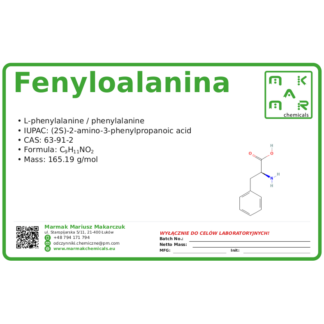
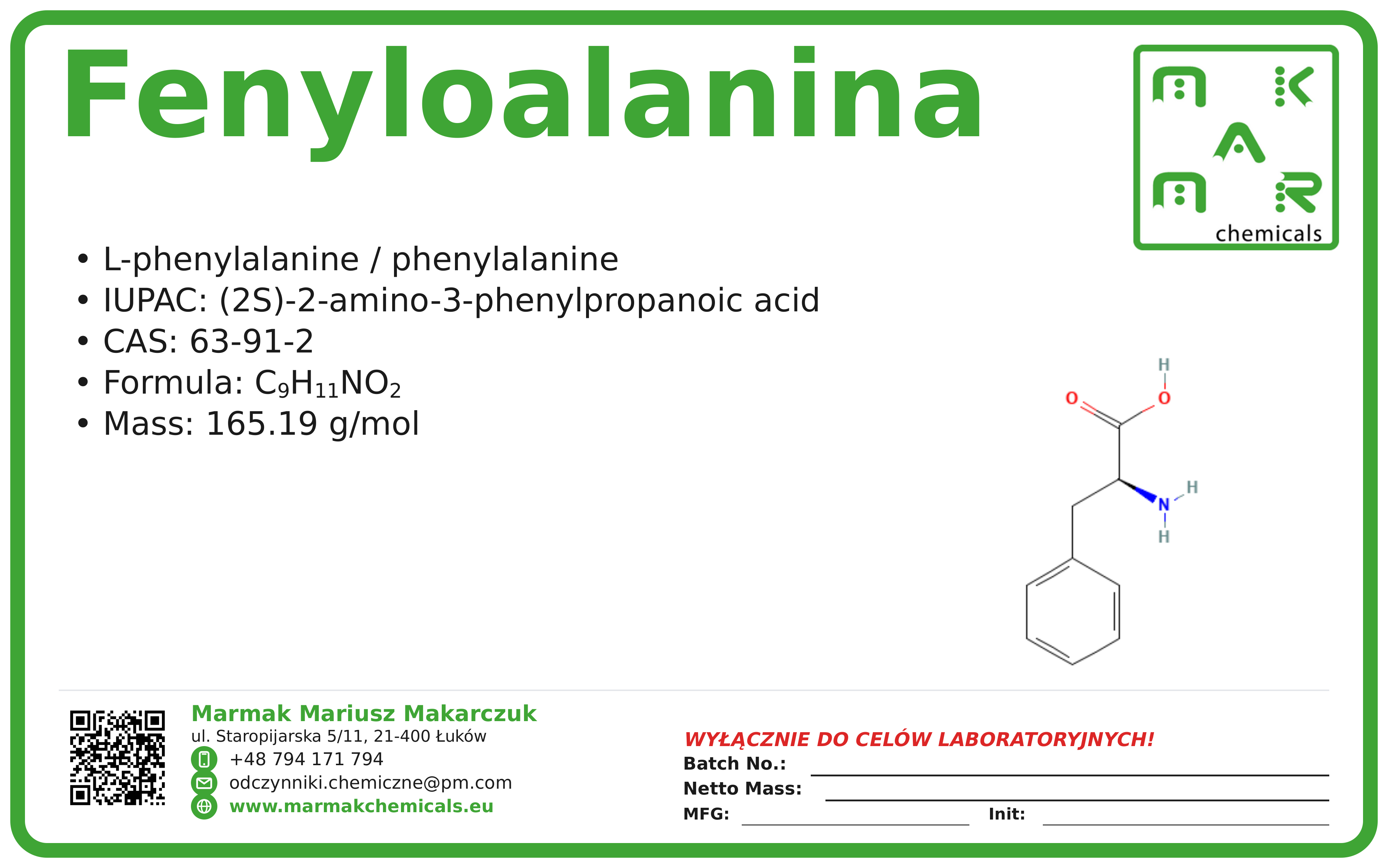
Reviews
There are no reviews yet.